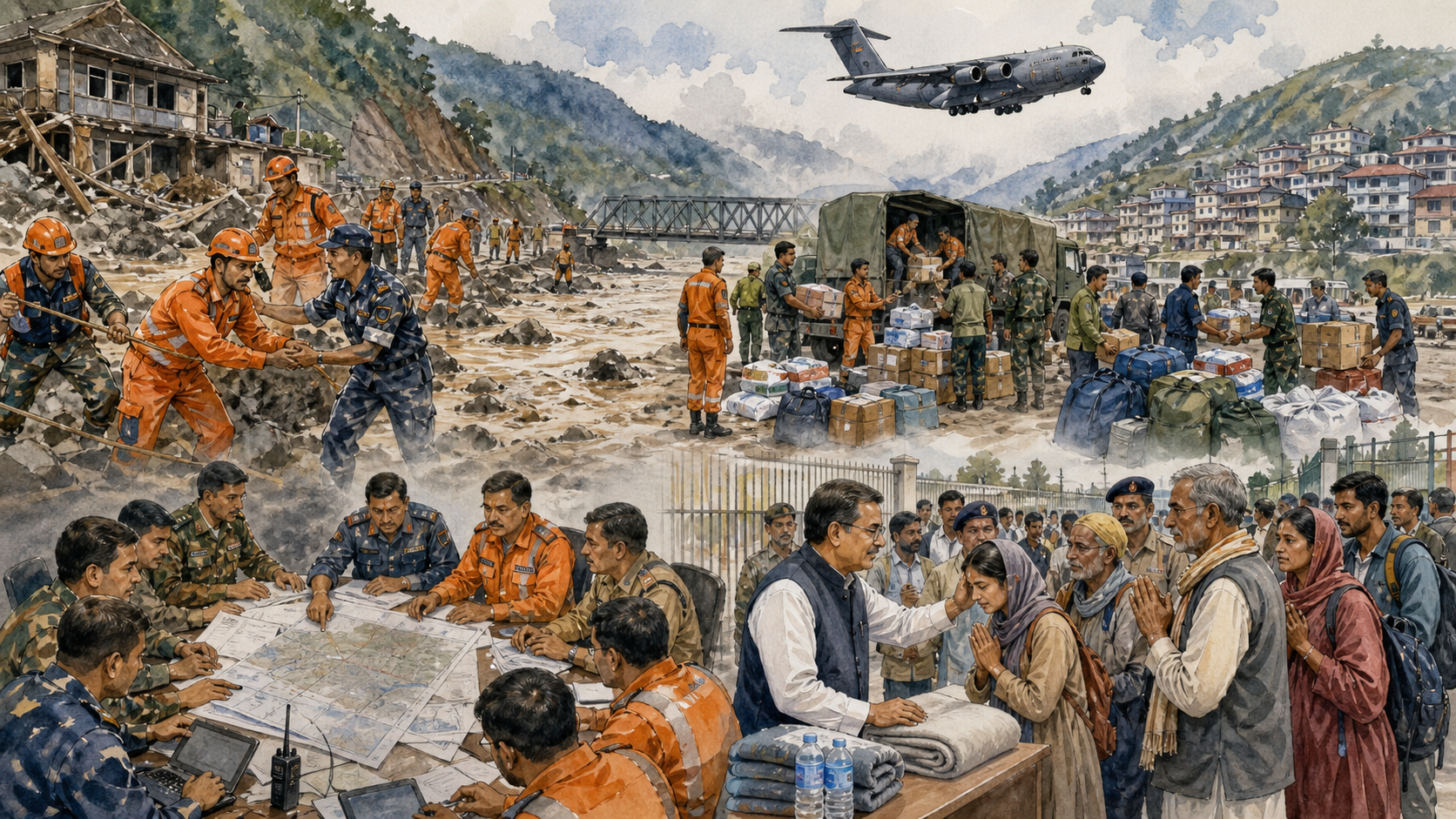
The flash floods that struck the Nepal-China border region have produced a grave humanitarian emergency, with lives lost, families searching for relatives and transport routes damaged across difficult Himalayan terrain. India's response has combined diplomatic coordination, relief supplies, rescue support and assistance to its own nationals. The Ministry of External Affairs said on 30 August that 108 Indian nationals had been rescued in Nepal, while people awaiting departure from China were reported safe and in contact through official channels.
The numbers can change as teams restore communication, verify names and reach isolated places. That uncertainty should encourage careful reporting rather than speculation. A disaster register may initially include duplicate names, people who later make contact and travellers whose location is not confirmed. Authorities must publish updates with timestamps and explain what terms such as missing, uncontactable, rescued and evacuated mean. Families need accuracy more than dramatic totals.
A response across several governments
India offered National Disaster Response Force assistance to Nepal and used Indian Air Force aircraft to carry emergency relief. The Union Home Ministry also placed border administrations and rescue teams on alert after a sudden rise in the Trishuli river linked to suspected flash-flood or glacial-lake activity. These actions show the layered nature of Himalayan disaster response. The MEA works with foreign authorities and embassies, the Home Ministry coordinates domestic preparedness, the armed forces provide logistics, and states manage border reception and onward travel.
Bihar's role illustrates the last mile. A group of more than 100 pilgrims from Maharashtra stranded in Nepal was evacuated through Bihar and sent onward by train after coordination among state authorities. This was not a substitute for national diplomacy; it was the point where national coordination became food, transport, medical attention and a safe route home. In a federal country, disaster capability depends on such handoffs working without confusion over which government receives credit.
Humanitarian assistance must follow need
India and Nepal share an open border, deep family links, trade routes and river systems. Supporting Nepal in a catastrophe is both a moral duty and a practical neighbourhood responsibility. Relief should be guided by requests from Nepali authorities so that flights and supplies match actual shortages. Water-purification equipment, medical kits, shelter materials, communications gear and engineering support may be more valuable than uncoordinated donations that overwhelm damaged roads and warehouses.
Local responders possess essential knowledge of terrain, communities and immediate needs. Indian teams should operate in support of Nepal's command structures and share information openly. Search-and-rescue work in unstable valleys is dangerous, especially when fresh rain, landslides or barrier lakes threaten secondary disasters. Protecting responders requires weather intelligence, geotechnical assessment, communications redundancy and clear decisions on when an area is too hazardous to enter.
Families need one trusted information system
Multiple helplines are useful only when records are integrated. A common case-management system should connect calls to the MEA control room, embassy inquiries, tour operators, state governments and border posts. Each case needs a unique reference, verified identity details, last known location and a visible status history. Privacy protections are necessary, but families should not have to repeat the same information to several agencies or rely on social-media rumours for updates.
Tour companies and pilgrimage organisers also have responsibilities. Passenger manifests, emergency contacts, route plans and local partners should be maintained in a standard digital format. Travellers must receive risk briefings for remote mountain routes, including the possibility of communication loss. Insurance and evacuation arrangements should be disclosed before departure. Regulation cannot eliminate natural hazards, but it can ensure that authorities know who is travelling and how to reach operators during a crisis.
From rescue to identification
Large disasters often require a difficult transition from rescue to victim identification. India can assist with forensic expertise, DNA protocols and family liaison if requested. This work must be dignified and methodical. Samples require documented custody, accredited laboratories and careful communication so that families are not exposed to avoidable uncertainty or false matches. International cooperation is especially important when victims and missing people come from several countries.
The response should also produce a joint lessons review. Satellite monitoring, river gauges, cross-border warning messages and mobile alerts need to move faster than floodwater. The disaster reportedly involved glacial processes in a rapidly warming mountain environment. India, Nepal and China have different political relationships, but hydrological data upstream can be lifesaving downstream. Technical warning channels should remain active even when broader diplomacy is difficult.
Prepare the Himalayan border as a system
Border districts require mapped evacuation routes, pre-identified shelters, multilingual warnings, fuel and medical stocks, satellite communications and regular drills. Rail and bus plans for onward movement should be prepared before the monsoon and pilgrimage seasons. States such as Bihar and Uttar Pradesh should know which reception centres activate when Nepal routes fail. The Union government can standardise protocols while allowing district officials to act quickly on local conditions.
India's response deserves recognition because institutions have moved across diplomatic, military, national and state levels during an exceptionally difficult emergency. The appropriate tone is resolve with humility. Rescue totals do not erase loss, and relief flights do not complete recovery. The durable achievement will be a system that gives families reliable information, supports Nepal according to its needs, brings stranded citizens home and learns enough from this tragedy to provide earlier warning next time.