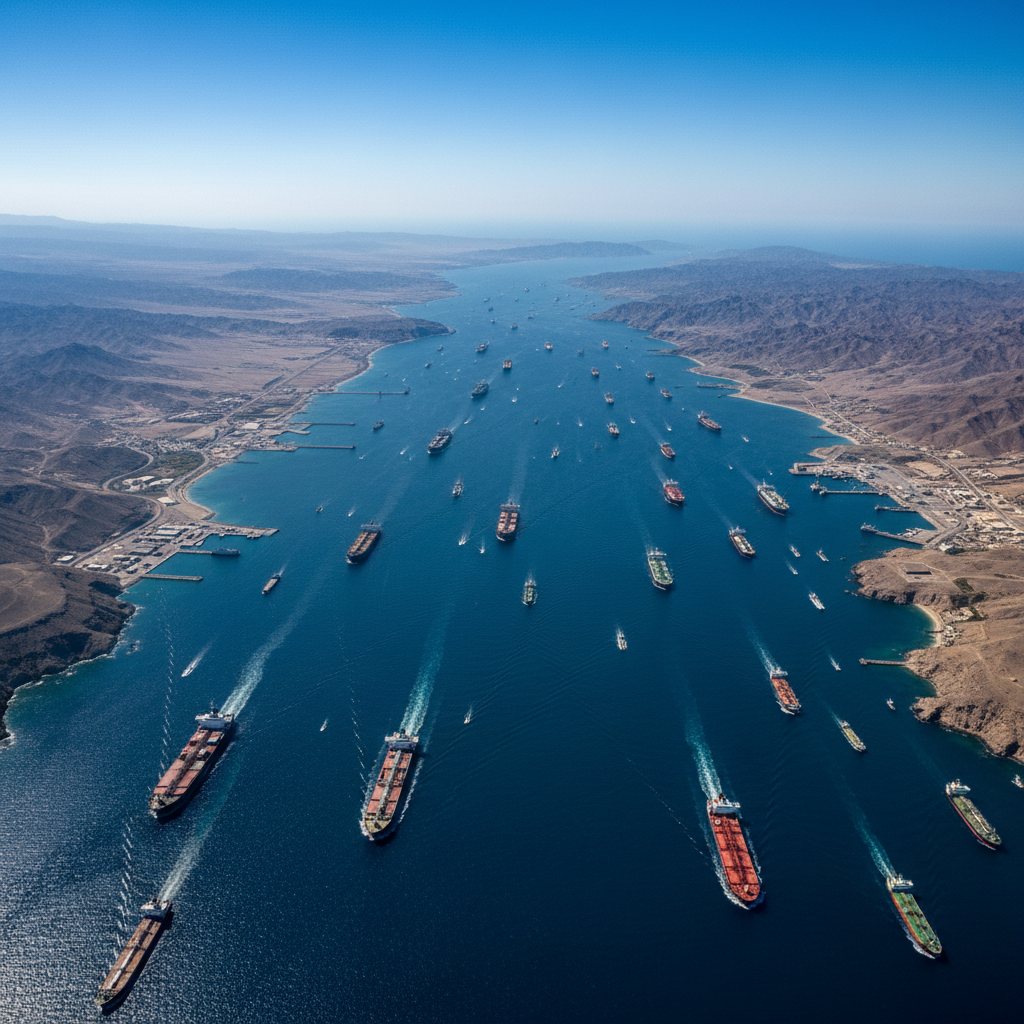
India has been granted passage through the Strait of Hormuz by Iran, a development with significant implications for India's energy security and its role in regional geopolitics. The decision, which also extends to China, Russia, Pakistan, and other nations considered 'friendly' by Iran, arrives at a time of considerable instability in West Asia, underscoring the strategic importance of this narrow waterway.
The Strait of Hormuz, a crucial chokepoint connecting the Persian Gulf and the Gulf of Oman, is one of the world's most important maritime passages. Its strategic significance stems from the sheer volume of oil and liquefied natural gas (LNG) that transits through it daily, supplying energy to nations across the globe. Any disruption to traffic through the strait can have profound consequences for global energy markets and international trade.
KEY FACTS
- Approximately 20% of global oil and LNG passes through the Strait of Hormuz.
- The Strait connects the Persian Gulf and the Gulf of Oman.
- Iran has granted passage to India, China, Russia, and Pakistan.
- The decision was made amidst ongoing tensions in West Asia.
The decision by Iran to allow passage to India and other nations can be interpreted in several ways. On one hand, it could be seen as a gesture of goodwill, aimed at fostering stronger relationships with key Asian powers. Allowing these nations continued access to vital energy supplies could be a way for Iran to demonstrate its commitment to regional stability, despite the ongoing tensions. On the other hand, it could also be a calculated move to assert its control over the strait and project its influence in the region. By controlling access to this critical waterway, Iran can exert considerable leverage over global energy markets and the economies of nations that rely on its passage.
Historically, the Strait of Hormuz has been a flashpoint for conflict and geopolitical maneuvering. During the Iran-Iraq War in the 1980s, the strait witnessed numerous attacks on oil tankers, leading to a period known as the "Tanker War." More recently, tensions have flared up due to incidents involving oil tankers and accusations of sabotage, further highlighting the vulnerability of this vital waterway. The presence of multiple naval powers in the region, including the United States, adds another layer of complexity to the security situation.
For India, the uninterrupted passage through the Strait of Hormuz is of paramount importance. India is heavily reliant on imported oil and gas to meet its growing energy demands. A significant portion of these imports originates from countries in the Middle East and passes through the Strait of Hormuz. Any disruption to this supply route could have serious consequences for India's economy, potentially leading to energy shortages and price increases.
By The Numbers
The decision by Iran to grant passage to India can be seen as a positive development, ensuring the continued flow of energy supplies to the country. However, it also underscores the need for India to diversify its energy sources and reduce its dependence on any single region. Investing in renewable energy, exploring alternative supply routes, and strengthening strategic partnerships with other energy-producing nations are all crucial steps in ensuring India's long-term energy security.
The geopolitical implications of this decision are also noteworthy. By granting passage to India, China, and Russia, Iran is signaling its willingness to engage with these powers, despite its strained relations with the West. This could potentially lead to a realignment of alliances in the region, with India, China, and Russia playing a more prominent role in shaping the security landscape. However, it also raises questions about the potential for increased competition and rivalry among these powers, as they vie for influence in the region.
The situation in the Strait of Hormuz remains volatile, and the risk of disruptions to shipping cannot be entirely discounted. Ongoing tensions between Iran and the United States, as well as the presence of various non-state actors in the region, continue to pose a threat to maritime security. India, along with other nations that rely on the strait for their energy supplies, will need to remain vigilant and work together to ensure the safety and security of this vital waterway.
The Indian government has been closely monitoring the situation in the Strait of Hormuz and has taken steps to protect its interests. The Indian Navy maintains a presence in the region to safeguard Indian shipping and ensure the freedom of navigation. India has also been engaging in diplomatic efforts to promote stability and de-escalate tensions in the region.
The decision by Iran to allow passage through the Strait of Hormuz is a complex issue with far-reaching implications. While it provides some reassurance to India and other nations that rely on the strait for their energy supplies, it also underscores the need for continued vigilance and proactive measures to ensure maritime security and diversify energy sources. The future of the Strait of Hormuz, and the broader security landscape in West Asia, will continue to be shaped by the interplay of geopolitical forces and the actions of various regional and international actors.
The long-term implications of Iran's decision are still unfolding. Analysts note that this move could be a part of a larger strategy to strengthen ties with Asian powers and counter the influence of the United States and its allies in the region. It also highlights the increasing importance of the Indo-Pacific region in global geopolitics, as nations like India and China play a more prominent role in shaping the security landscape.
The Strait of Hormuz remains a critical artery for global trade and energy security. The ability of nations like India to navigate this waterway freely is essential for their economic well-being and their ability to project influence in the region. As tensions continue to simmer in West Asia, the importance of maintaining stability and ensuring the freedom of navigation in the Strait of Hormuz will only continue to grow.