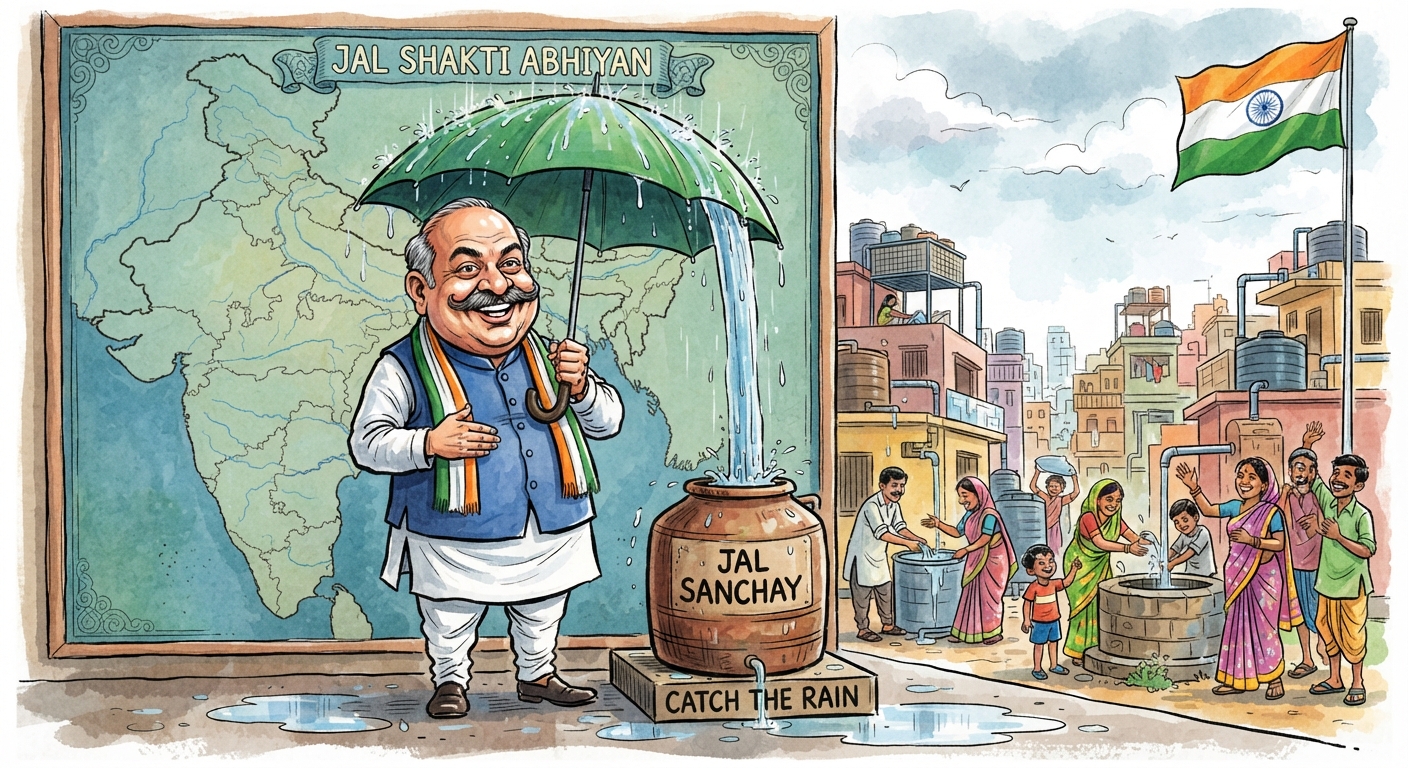
The Ministry of Jal Shakti has taken a significant step towards water conservation by expanding the Catch the Rain campaign across urban India. This initiative, which was launched to promote water harvesting and conservation, has gained momentum with the active participation of various government departments and community members.
According to the Department of Drinking Water and Sanitation, a progress report released on July 25, 2026, highlights the achievements of the campaign. One notable example is the Nandyal District, which has implemented major infrastructure upgrades, significantly augmenting local water storage capacity. This upgrade is expected to have a positive impact on the region's water security, especially during the peak monsoon season.
KEY FACTS
- The Department of Drinking Water and Sanitation released a progress report on water conservation on July 25, 2026.
- Nandyal District implemented major infrastructure upgrades to augment local water storage capacity.
- The MoHUA accelerated the campaign across hundreds of urban local bodies to ensure water-secure cities before peak monsoon season.
- Rainwater harvesting structures and roof-top collecting systems were mandated across government buildings.
- Community participation and geotagging of traditional water bodies were established as core performance metrics.
The Ministry of Housing and Urban Affairs (MoHUA) has played a crucial role in accelerating the campaign across hundreds of urban local bodies. This effort aims to ensure that cities are water-secure before the peak monsoon season, which is critical for managing flood risk and maintaining a steady water supply. The campaign's focus on community participation has also helped raise awareness about the importance of water conservation and the role that individuals can play in it.
The Ground Reality
The expansion of the Catch the Rain campaign is a significant step towards addressing the country's water challenges. India, with its vast and diverse geography, faces unique water management challenges. The campaign's emphasis on rainwater harvesting and community participation is a recognition of the need for a decentralized approach to water conservation.
By The Numbers
As the campaign continues to gain momentum, it is essential to recognize the importance of community participation and the role that individuals can play in water conservation. The government's efforts to promote rainwater harvesting and mandate the installation of rainwater harvesting structures in government buildings are critical steps towards reducing the burden on urban water supply systems.
Strategic Implications
The expansion of the Catch the Rain campaign has significant implications for the country's water security. By promoting water conservation and harvesting, the government can reduce the risk of water scarcity and flooding, which are critical challenges in many urban areas. The campaign's focus on community participation also helps to raise awareness about the importance of water conservation and the role that individuals can play in it.
According to official sources, the Catch the Rain campaign is a critical step towards ensuring water-secure cities and promoting sustainable water management practices.
The campaign's success will depend on the continued participation of community members and the effective implementation of water conservation measures. As the country prepares for the peak monsoon season, the government's efforts to promote water harvesting and conservation will be critical in managing flood risk and maintaining a steady water supply.
Future Prospects
The expansion of the Catch the Rain campaign is a significant step towards addressing the country's water challenges. As the campaign continues to gain momentum, it is essential to recognize the importance of community participation and the role that individuals can play in water conservation. With the government's continued support and the active participation of community members, the campaign is likely to have a positive impact on the country's water security and promote sustainable water management practices.