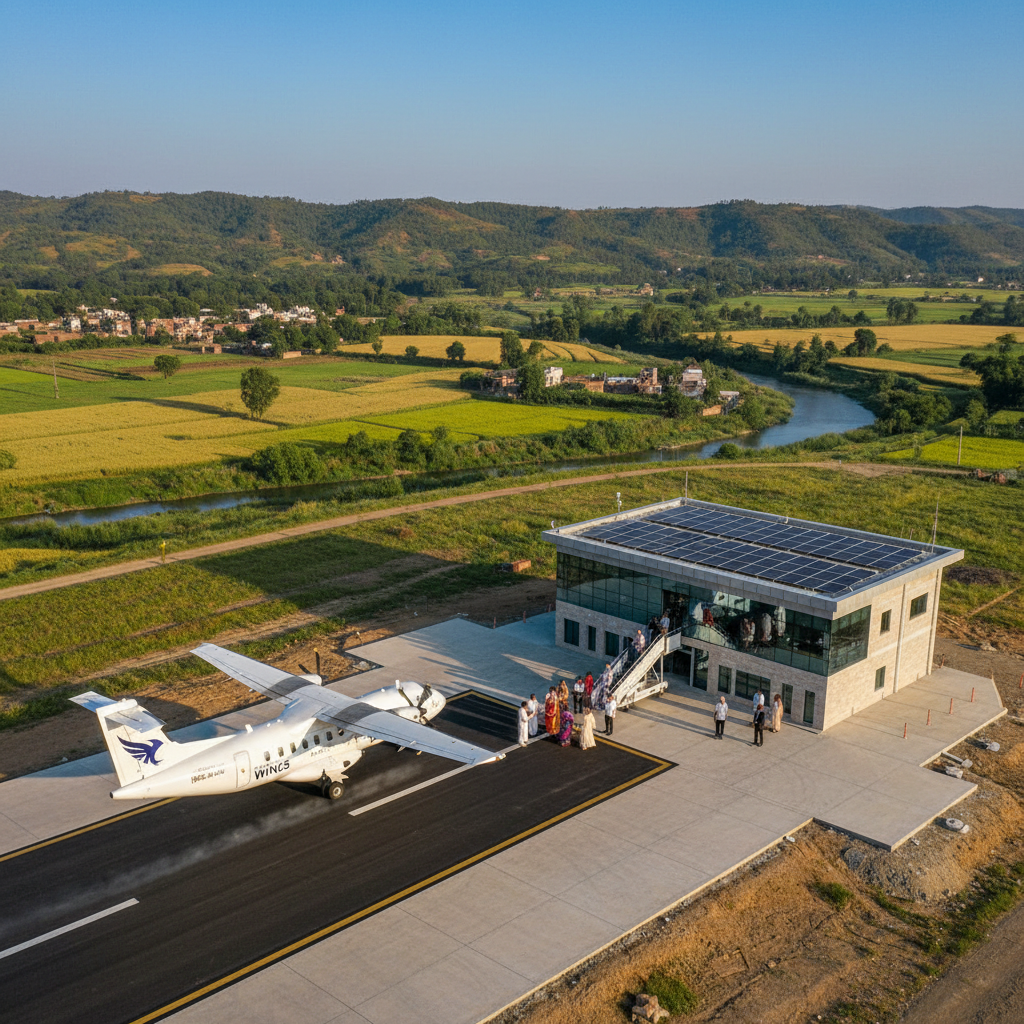
The Union Cabinet has given the green light to a revamped UDAN (Ude Desh ka Aam Nagrik) scheme, a program designed to bolster regional air connectivity throughout India. This approval comes with a significant financial commitment, signaling the government's intent to prioritize and expand air travel accessibility to underserved areas. The revamped scheme aims to address existing challenges and create a more sustainable ecosystem for regional airlines and airport development.
The UDAN scheme, since its inception, has sought to connect smaller cities and towns to the national aviation network, fostering economic growth and providing citizens with faster and more convenient travel options. The initial phases of the scheme have seen varying degrees of success, with some routes flourishing while others have struggled due to factors such as operational costs and passenger demand. This revamp represents a strategic effort to learn from past experiences and implement improvements that will ensure the long-term viability of the program.
KEY FACTS
- The revamped UDAN scheme has an approved outlay of ₹28,840 crore.
- The scheme aims to establish 100 new airports.
- The scheme includes plans for 200 new helipads.
- The revamped scheme shifts the airline subsidy burden to the exchequer.
One of the key elements of the revamped UDAN scheme is the shift in the financial model. Previously, airlines bore a significant portion of the subsidy burden. The revised approach transfers this burden to the exchequer, making it more financially attractive for airlines to participate in the scheme. This change is expected to incentivize airlines to operate on regional routes, connecting smaller cities and towns that may not have been commercially viable otherwise. By reducing the financial risk for airlines, the government hopes to encourage greater participation and expand the reach of the UDAN scheme.
The plan to develop 100 new airports and 200 helipads is a central component of the revamped UDAN scheme. This ambitious infrastructure development project aims to create a robust network of aviation facilities across the country, particularly in regions that currently lack adequate air connectivity. The construction of new airports and helipads will not only improve accessibility but also stimulate economic activity in these areas, creating jobs and attracting investment. The selection of locations for these new facilities will be crucial to the success of the scheme, requiring careful consideration of factors such as population density, economic potential, and existing transportation infrastructure.
The development of regional air connectivity has broader implications for India's economic growth and social development. Improved air travel can facilitate trade and commerce, connect businesses to new markets, and promote tourism. It can also improve access to healthcare and education, particularly in remote and underserved areas. Furthermore, enhanced air connectivity can contribute to national integration by connecting people from different regions and cultures.
By The Numbers
The success of the revamped UDAN scheme will depend on several factors, including effective implementation, coordination between various government agencies, and the active participation of airlines and other stakeholders. The government will need to ensure that the new airports and helipads are built to high standards and that they are equipped with the necessary infrastructure and services. It will also need to work closely with airlines to develop sustainable business models for regional routes and to address any operational challenges that may arise.
The aviation sector in India has witnessed significant growth in recent years, driven by factors such as rising incomes, increasing urbanization, and the expansion of the middle class. However, much of this growth has been concentrated in major metropolitan areas, leaving many smaller cities and towns underserved. The UDAN scheme represents an effort to address this imbalance and to ensure that the benefits of air travel are more widely distributed across the country.
The historical context of aviation policy in India reveals a gradual shift towards greater liberalization and privatization. In the early decades after independence, the aviation sector was largely dominated by state-owned airlines. However, in the 1990s, the government began to open up the sector to private investment, leading to the emergence of a number of new airlines. This liberalization has resulted in increased competition, lower fares, and improved service quality. The UDAN scheme can be seen as a continuation of this trend, aimed at further expanding the reach of air travel and promoting regional development.
The development of new airports and helipads also presents opportunities for technological innovation and sustainable practices. The government can encourage the use of green building materials and energy-efficient technologies in the construction of these facilities. It can also promote the adoption of sustainable aviation fuels and other measures to reduce the environmental impact of air travel. By embracing innovation and sustainability, India can position itself as a leader in the development of environmentally responsible aviation.
The revamped UDAN scheme is not without its potential challenges. One of the main challenges will be ensuring the financial sustainability of regional routes. Many regional routes have low passenger loads, making it difficult for airlines to operate profitably. The government will need to carefully monitor the performance of these routes and to provide ongoing support to airlines as needed. Another challenge will be coordinating the development of new airports and helipads with other infrastructure projects, such as roads and railways. Effective coordination will be essential to ensure that these facilities are well-connected and that they contribute to the overall development of the region.
The success of the UDAN scheme will also depend on the availability of skilled manpower. The aviation sector requires a highly trained workforce, including pilots, engineers, air traffic controllers, and airport staff. The government will need to invest in training programs to ensure that there is an adequate supply of skilled workers to support the expansion of the aviation sector. These programs should focus on providing practical training and on equipping workers with the skills they need to succeed in a rapidly changing industry.
The implementation of the UDAN scheme will require close collaboration between the central government, state governments, and local authorities. State governments will play a key role in identifying suitable locations for new airports and helipads and in providing land and other resources for their construction. Local authorities will be responsible for ensuring that these facilities are integrated into the local transportation network and that they contribute to the overall development of the community. Effective coordination between these different levels of government will be essential to the success of the scheme.
The revamped UDAN scheme represents a significant investment in India's aviation infrastructure and a renewed commitment to regional development. By addressing the challenges of financial sustainability, infrastructure development, and manpower training, the government hopes to create a thriving regional aviation sector that connects smaller cities and towns to the national network and promotes economic growth and social development. The scheme's success hinges on effective implementation, collaboration between stakeholders, and a commitment to innovation and sustainability.
The long-term impact of the UDAN scheme will extend beyond the aviation sector, contributing to broader economic and social transformation. By improving connectivity and accessibility, the scheme can help to bridge the gap between urban and rural areas, promote inclusive growth, and create opportunities for all citizens. The development of new airports and helipads can also serve as catalysts for regional development, attracting investment, creating jobs, and improving the quality of life for local residents.



