The Government of India has decided to hold Har Ghar Tiranga 2026 from August 9 to 17, taking the Independence Day campaign across the country and to Indian communities abroad. This year’s programme carries an additional cultural meaning: it is being linked with the 150th anniversary of India’s national song, Vande Mataram.
An official Government of India advisory issued by the Embassy in Astana confirms the dates and asks members of the diaspora to participate. The decision shows how a campaign launched in 2022 under Azadi Ka Amrit Mahotsav has developed into a recurring exercise in public participation rather than a ceremony confined to government buildings.
A national flag, a national song and public participation
Citizens are being encouraged to display the national flag and upload a “Selfie with Tiranga” through the official Har Ghar Tiranga portal. For the 2026 edition, approved lyrics of Vande Mataram can be added to uploaded photographs, connecting the visual symbol of the Republic with the song that helped inspire the freedom movement.
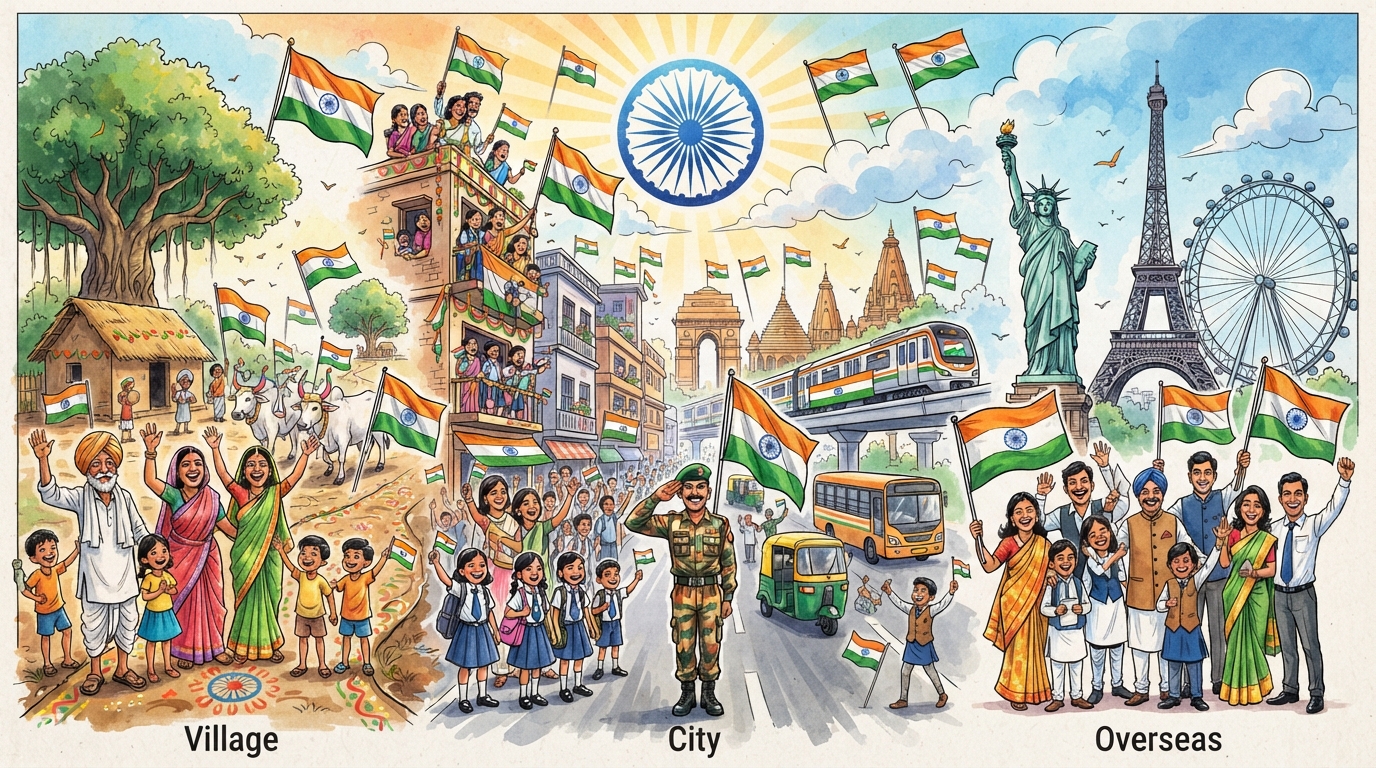
The campaign’s reach beyond India is significant. A family in Patna, a student in Pune, a soldier at a remote post and an Indian professional abroad can participate in the same national week. That shared act does not erase India’s differences; it gives those differences a common constitutional symbol.
The Tiranga is most powerful when participation remains voluntary, respectful and open to every citizen. It belongs to the Republic, not to a party or a single ideology. Schools, resident associations, panchayats, businesses and missions abroad can use the week for flag-hoisting, discussions on the freedom movement, community service and readings from India’s constitutional history.
Respect must continue after the celebration
A successful campaign also requires attention to flag etiquette. Organisers should use correctly proportioned flags with a clear navy-blue Ashoka Chakra, avoid damaged flags and ensure that flags are not discarded on roads after August 17. Citizens can consult the Ministry of Home Affairs resources on the national flag for the applicable rules and guidance.
The decision to run Har Ghar Tiranga across nine days gives communities enough time to move beyond a one-day photo opportunity. Cleanliness drives, support for veterans’ families, local-history exhibitions and youth programmes can translate patriotism into public duty.
At its best, Har Ghar Tiranga 2026 can be both celebratory and civic. The flag represents freedom won through sacrifice, equality promised by the Constitution and responsibility shared by citizens. Linking it with 150 years of Vande Mataram gives this Independence Day season a strong bridge between historical memory and the India being built today.