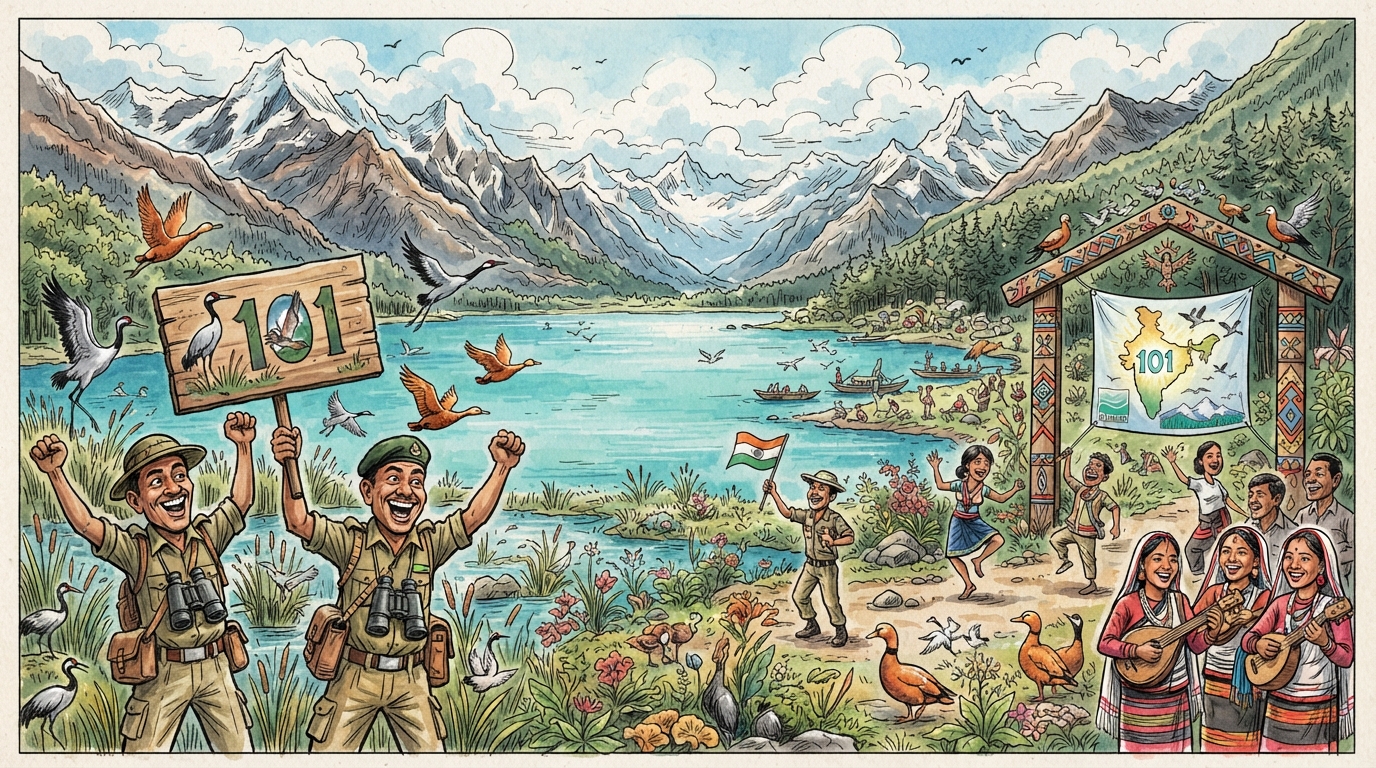
Glaw Lake in Arunachal Pradesh has been designated India's 101st Ramsar Site, marking the state's first entry on the international list of wetlands of importance. The announcement adds a high-altitude Eastern Himalayan ecosystem to India's rapidly expanding wetland-conservation network.
Environment, Forest and Climate Change Minister Bhupender Yadav described the recognition as a step for biodiversity, water security, climate resilience and sustainable livelihoods. The August 4 report by Akashvani News places the freshwater lake within the Kamlang Tiger Reserve and Wildlife Sanctuary.
A small site with wide ecological value
The lake and its catchment support more than 150 recorded tree species and 49 orchid species, according to the report. Wetlands such as Glaw Lake store water, support wildlife, moderate local climatic conditions and sustain communities downstream. In mountainous terrain, their protection also contributes to soil stability and watershed health.
Ramsar status is recognition, not automatic protection. It can bring stronger planning, monitoring and international visibility, but conservation still depends on local institutions, scientific data and the participation of communities that understand the landscape.
From 26 sites to 101
India had 26 Ramsar Sites in 2014 and now has 101. The numerical growth matters because it reflects a broader effort to identify wetlands that were often overlooked in conventional development planning. Yet the quality of management must grow with the list.
For Glaw Lake, the next priorities should include a transparent ecological baseline, regular water-quality monitoring, careful visitor management and safeguards against construction or waste that could damage the catchment. Conservation plans should also recognise local knowledge and ensure that livelihood measures benefit nearby communities.
Arunachal Pradesh contains some of India's richest biodiversity and some of its most fragile ecosystems. Its first Ramsar designation is therefore both a celebration and a responsibility. If the recognition leads to better science, durable financing and locally grounded protection, Glaw Lake can become a model for conserving high-altitude wetlands across the Eastern Himalayas.
Source: News On AIR, August 4, 2026.