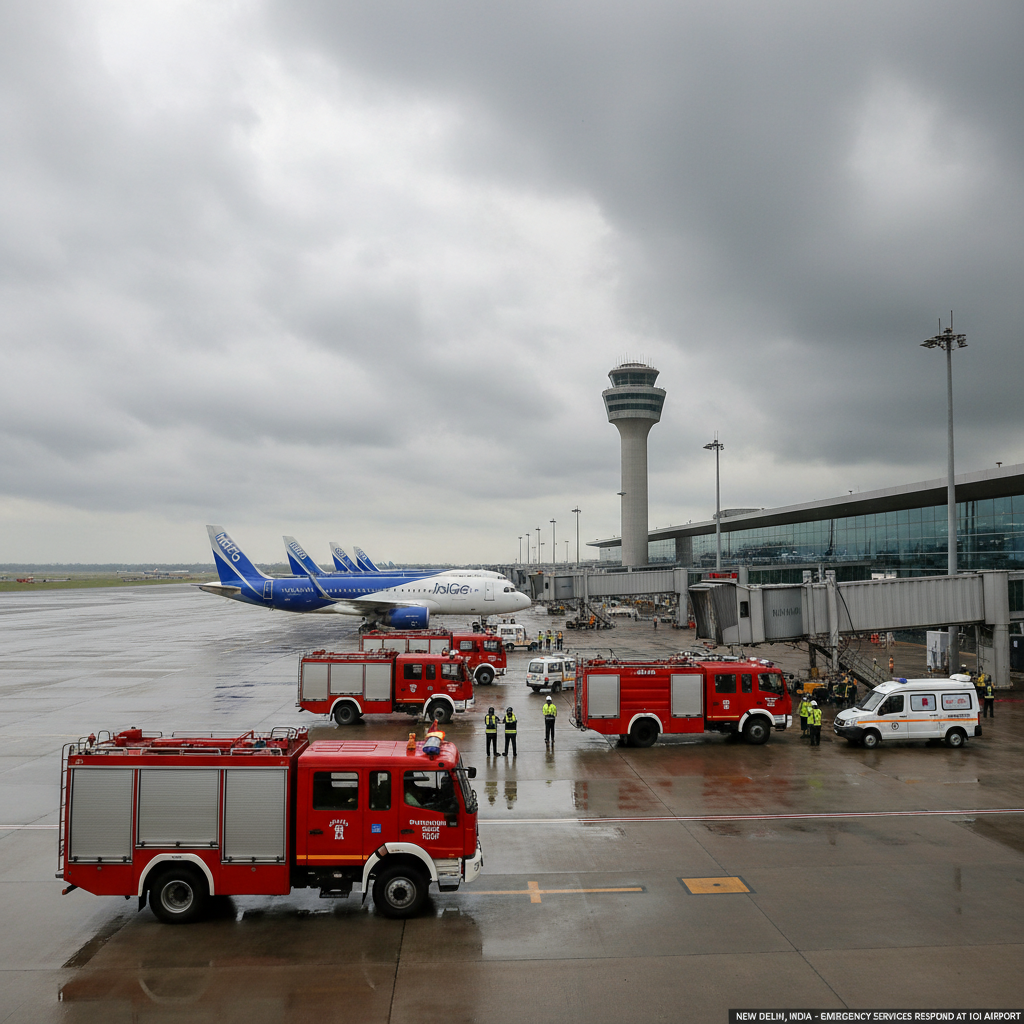
A full emergency was declared at Delhi's Indira Gandhi International Airport on March 28, 2026, after an IndiGo flight from Visakhapatnam experienced engine failure, prompting immediate activation of the airport's comprehensive emergency response protocols. The incident, which occurred at one of India's busiest aviation hubs, underscored the critical importance of rapid emergency response systems in ensuring passenger safety during aircraft emergencies.
According to reports from NDTV and India TV, the emergency declaration triggered a coordinated response involving airport fire services, medical teams, and ground support personnel. While specific details regarding the number of passengers aboard the affected aircraft or the extent of engine damage remain under investigation, the incident represents a significant aviation safety event that required full emergency procedures at the country's primary international gateway.
KEY FACTS
- Full emergency declared at Delhi IGI Airport on March 28, 2026
- IndiGo flight from Visakhapatnam experienced engine failure
- Delhi IGI handles over 70 million passengers annually
- Airport operates with Category 10 fire and rescue services
- IndiGo operates India's largest domestic fleet with over 300 aircraft
The declaration of a full emergency at an airport represents the highest level of alert, typically reserved for situations involving aircraft in distress with potential for significant casualties or damage. This classification triggers the immediate mobilization of all emergency services, including fire trucks, ambulances, and specialized rescue equipment positioned strategically around the airport perimeter to respond within mandated timeframes established by international aviation safety standards.
Engine failures, while rare in modern aviation, remain one of the most serious in-flight emergencies that pilots and crew can encounter. Modern aircraft are designed with redundant systems and extensive safety protocols to handle single-engine failures, particularly during critical phases of flight such as takeoff and landing. The training regimens for commercial pilots include extensive simulator sessions specifically focused on engine failure scenarios, ensuring crews can respond effectively to maintain aircraft control and execute safe emergency landings.
Delhi's Indira Gandhi International Airport, as India's busiest aviation facility, maintains comprehensive emergency response capabilities designed to handle various crisis scenarios. The airport's emergency services operate under strict international standards established by the International Civil Aviation Organization, requiring specific response times and equipment readiness levels. These protocols have been refined through regular drills and real-world incident management over decades of operations.
By The Numbers
The timing and location of this emergency highlight the complex operational challenges faced by major international airports in managing both routine operations and crisis response. Delhi IGI Airport handles approximately 1,400 flight movements daily, requiring seamless coordination between air traffic control, ground services, and emergency response teams. Any disruption to normal operations can create cascading effects throughout the aviation system, potentially affecting thousands of passengers and dozens of flights.
IndiGo, India's largest domestic carrier by market share, operates one of the country's most extensive route networks with over 300 aircraft in its fleet. The airline has built its reputation on operational reliability and cost-effective service delivery across domestic and international markets. Any significant safety incident involving the carrier inevitably draws scrutiny from aviation regulators and industry observers, particularly given the airline's dominant position in India's rapidly growing aviation sector.
Historical data on aviation incidents demonstrates that engine failures, while uncommon, occur across all airlines and aircraft types globally. The aviation industry's response to such incidents has consistently focused on learning from each event to improve safety protocols, maintenance procedures, and crew training standards. Modern turbofan engines used in commercial aviation undergo rigorous testing and maintenance schedules designed to minimize the likelihood of in-flight failures.
"A full emergency was declared at Delhi's Indira Gandhi International Airport following an engine failure on an IndiGo flight from Visakhapatnam" — India TV
The regulatory framework governing aviation safety in India operates under the oversight of the Directorate General of Civil Aviation, which maintains strict standards for aircraft maintenance, pilot training, and operational procedures. Following any significant incident, investigators from the Aircraft Accident Investigation Bureau typically conduct thorough examinations to determine causal factors and recommend systemic improvements where necessary.
Emergency response protocols at major airports involve coordination between multiple agencies and services, each with specific roles in ensuring passenger safety and operational continuity. Fire and rescue services must be capable of responding to aircraft emergencies within three minutes of an alert, while medical teams stand ready to provide immediate treatment for any injuries. Ground handling crews coordinate aircraft towing and passenger evacuation procedures when required.
The economic implications of aviation incidents extend beyond immediate operational disruptions to encompass broader impacts on airline operations, airport efficiency, and passenger confidence. Major airports like Delhi IGI maintain comprehensive insurance coverage and contingency planning to address various emergency scenarios while minimizing disruptions to regular flight schedules and passenger services.
Industry analysts note that modern aviation safety systems have evolved to provide multiple layers of protection against catastrophic failures. Aircraft manufacturers incorporate redundant systems throughout critical components, while airlines implement preventive maintenance programs designed to identify potential issues before they result in operational failures. Regulatory authorities worldwide continue to refine safety standards based on incident analysis and technological advancement.
The investigation into this engine failure incident will likely examine multiple factors including aircraft maintenance records, crew response procedures, weather conditions, and mechanical component analysis. Such investigations typically require several months to complete, with findings contributing to the broader aviation safety knowledge base used by manufacturers, airlines, and regulators worldwide to prevent similar occurrences.
As India's aviation sector continues its rapid expansion, incidents like this emergency at Delhi IGI Airport serve as important reminders of the critical importance of maintaining robust safety standards and emergency response capabilities. The successful management of this incident, pending final investigation results, demonstrates the effectiveness of established protocols while highlighting the ongoing need for vigilance in aviation safety operations across the country's growing network of airports and airlines.