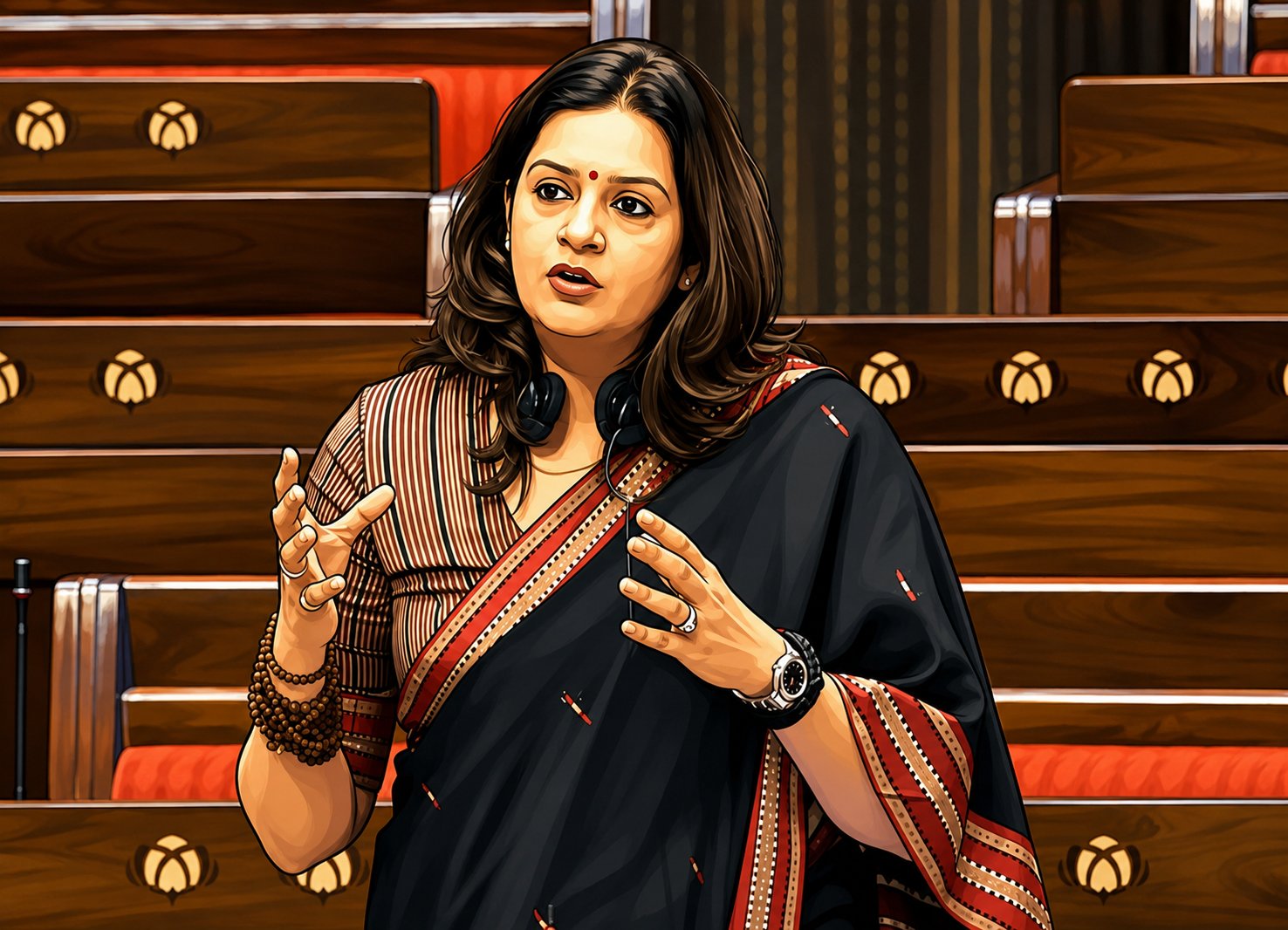
From Parliament to Pedagogy: Priyanka Chaturvedi's New Chapter Offers Lessons for Indian Parliamentarians
In a significant shift that has garnered attention across India's political and academic circles, Priyanka Chaturvedi, a prominent figure and former Member of Parliament in the Rajya Sabha, has embarked on a new journey, moving beyond the direct electoral fray to embrace roles in academia and public policy. This transition, announced in early July 2026, sees her stepping into a teaching position at O.P. Jindal Global University and taking the helm of the Women-Led Futures vertical at the Observer Research Foundation (ORF). Her move offers a compelling case study for other parliamentarians considering their post-political careers and underscores the evolving landscape of public service in India.
Chaturvedi's decision to pivot from active politics after dedicating over two decades to the field reflects a broader trend where seasoned public figures seek to leverage their experience in new capacities. While many politicians remain within the electoral system or take on advisory roles within their parties, Chaturvedi's embrace of academia and policy research presents an alternative path—one focused on shaping future generations and contributing to policy discourse from an institutional standpoint.
A New Role in Academia and Policy
Priyanka Chaturvedi began her teaching journey at O.P. Jindal Global University in the Spring semester of 2026 and is set to continue in the upcoming Fall semester. Expressing gratitude for the opportunity, she highlighted the stimulating environment of a classroom filled with "curious young minds, eager to learn." This engagement with students allows her to impart her extensive practical knowledge of governance, policy-making, and political dynamics directly to aspiring leaders and public policy professionals. Her experience as a parliamentarian, particularly in the Rajya Sabha, provides a unique lens through which to analyze and discuss India's legislative processes, challenges, and opportunities.
Concurrently, Chaturvedi has taken on a leadership role at the Observer Research Foundation, heading its Women-Led Futures vertical. This initiative aligns with India's G20 vision of Women-Led Development, a crucial area of focus for national and international policy. Her involvement here signifies a continued commitment to advocating for women's representation and empowerment, albeit from a different platform. The ORF, a leading independent global think tank, provides an ideal environment for her to contribute to substantive policy research and advocacy, building on her past legislative efforts.
Lessons for Fellow Parliamentarians
Chaturvedi's transition offers several valuable lessons for other parliamentarians, particularly those who may be contemplating their future beyond active electoral politics:
1. Leveraging Experience Beyond Electoral Politics:
Many politicians possess a wealth of experience in governance, public administration, and policy formulation. Chaturvedi's move demonstrates that this expertise can be effectively channeled into academia, think tanks, or other non-governmental organizations. Such roles allow former parliamentarians to continue contributing to national development by shaping intellectual discourse, mentoring young talent, and influencing policy through research and analysis.
2. The Importance of Continuous Learning and Adaptation:
Her decision to step into a teaching role underscores the importance of continuous learning and adaptation. Engaging with students and researchers in an academic setting requires a different skill set than political campaigning or legislative debates. It demands a capacity for structured analysis, pedagogical approaches, and the ability to synthesize complex information for diverse audiences. This adaptability can serve as a model for others seeking to reinvent their public service careers.
3. Advocating for Causes from New Platforms:
While Chaturvedi expressed disappointment over the failure to pass The Constitution (131st Amendment) Bill, 2026, which aimed to ensure 33% representation for women, her new role at ORF's Women-Led Futures vertical allows her to continue championing women's issues. This highlights that advocacy for critical causes does not necessarily end with a parliamentary term. Think tanks, civil society organizations, and academic institutions offer powerful platforms for sustained advocacy and policy influence, often with greater intellectual freedom and a focus on long-term systemic change.
4. Building a Legacy Beyond Political Office:
Chaturvedi's announcement of a forthcoming book also indicates a desire to reflect on her two-decade political career and share her insights. This act of documenting one's journey and observations can be a significant contribution to political literature and public understanding. For many parliamentarians, a post-political career can be an opportunity to consolidate their experiences, write memoirs, or engage in public speaking, thus building a legacy that extends beyond their time in office.
The Broader Context: Evolving Public Service
Chaturvedi's career trajectory reflects a broader evolution in the concept of public service in India. While parliamentary roles remain central, there is a growing recognition that impactful contributions can be made through various avenues. The increasing complexity of public policy issues, coupled with the need for specialized knowledge and interdisciplinary approaches, has opened doors for experienced individuals to contribute in diverse capacities.
Furthermore, the move towards academia and policy research can offer a degree of intellectual independence that might be challenging to maintain within the strictures of party politics. It allows for a more nuanced engagement with policy challenges, fostering evidence-based solutions and critical discourse.
Conclusion
Priyanka Chaturvedi's transition from a Rajya Sabha MP to a public policy professional and academic is more than just a personal career change; it's a blueprint for how seasoned politicians can continue to serve the nation. By embracing roles that leverage their experience in teaching, research, and advocacy, former parliamentarians can enrich India's intellectual capital, mentor future leaders, and contribute to policy development from a fresh perspective. Her journey underscores that public service is a multifaceted endeavor, extending far beyond the confines of legislative chambers, and offers a compelling model for what a post-parliamentary career can look like in Neo Bharat.
