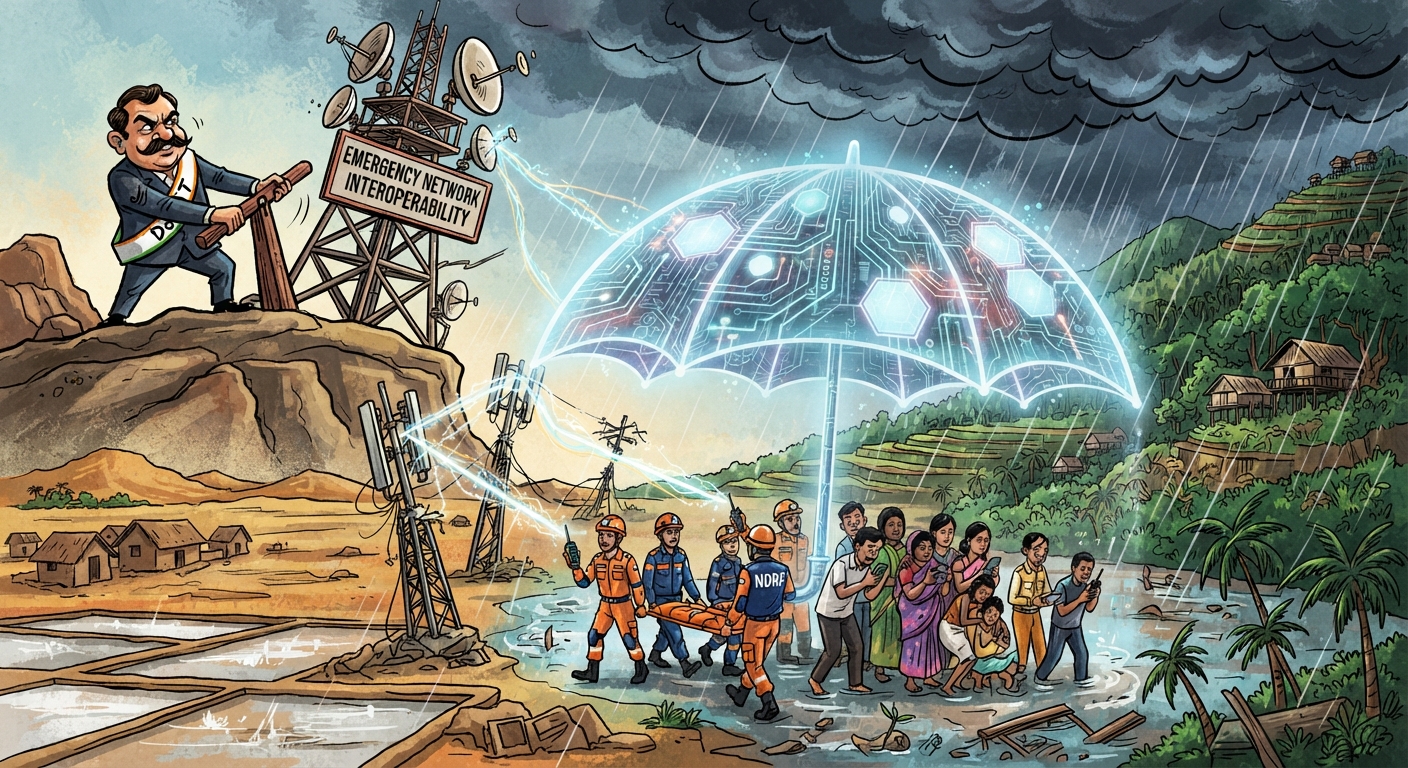
When extreme climate events threaten to sever communication channels, the integrity of a nation's emergency response hinges on the resilience of its telecommunications network. Demonstrating swift administrative foresight and modern technological adaptability, the Department of Telecommunications (DoT) under the Ministry of Communications officially activated Intra-Circle Roaming (ICR) on July 25, 2026. The crucial measure was deployed across severely affected districts in Nagaland, Gujarat, and the Union Territory of Dadra & Nagar Haveli and Daman & Diu to maintain vital connectivity during ongoing flood relief operations.
Torrential monsoonal downpours and severe flooding in recent days resulted in substantial localized damage to physical telecom infrastructure across parts of the western and northeastern regions. Submerged equipment, power outages, and physical line disruptions threatened to isolate vulnerable communities and impede rescue personnel. However, the immediate enforcement of ICR prevented a widespread blackout of cellular networks, enabling affected citizens to stay connected regardless of their primary service provider.
Rapid Mobilization and Network Resilience
Under the Intra-Circle Roaming protocol, mobile subscribers located within designated disaster zones are granted automatic, seamless access to whichever cellular network remains operational, irrespective of whether they subscribe to Reliance Jio, Bharti Airtel, Vodafone Idea, or BSNL. By pooling the collective capacity of all active telecom service providers, the intervention ensures that localized destruction of specific towers or transmission nodes does not deprive citizens of cellular signals during life-threatening situations.
KEY FACTS
- Intra-Circle Roaming (ICR) officially activated by the DoT on July 25, 2026.
- Coverage extended across flood-hit districts in Gujarat, Nagaland, and Dadra & Nagar Haveli and Daman & Diu.
- Enables seamless, cross-network connectivity for all mobile subscribers in impacted areas.
- Disaster response forces granted priority network access to expedite search and rescue operations.
- Initiative implemented following severe localized infrastructure damage from heavy rainfall.
This protocol reflects a mature, citizen-first governance approach where commercial boundaries between telecom operators are temporarily suspended in the public interest. The seamless handover between networks happens automatically at the backend, requiring no manual configuration or additional expense from the end user. Such interventions highlight the structural strength of India's modernized telecom framework, which treats digital connectivity not merely as a commercial service, but as an essential strategic utility during national emergencies.
Priority Infrastructure for First Responders
Beyond providing an uninterrupted communication framework for civilians, the government's order prioritized the operational requirements of emergency personnel. Disaster response teams, including the National Disaster Response Force (NDRF), State Disaster Response Forces (SDRF), local administration officials, and medical services, were granted priority network access across the affected regions. This prioritized bandwidth allocation ensures that mission-critical communications remain unhindered even in congested cell zones.
"The activation of Intra-Circle Roaming during disaster scenarios ensures that no citizen is left without a communication lifeline, while prioritizing critical network access for emergency responders on the ground." — Official Statement
In complex terrain such as the hilly reaches of Nagaland or the inundation-prone coastal and low-lying belts of Gujarat and Daman & Diu, real-time coordination between field teams and district control rooms is the single most critical factor in saving lives. Prioritized data and voice channels allow relief commanders to map flooded zones, deploy amphibious rescue vehicles, and deliver medical supplies with pinpoint accuracy.
By The Numbers
A Shift Toward Proactive Crisis Governance
The swift activation of ICR highlights a broader institutional evolution in India's disaster management posture over the past decade. Historically, natural calamities were often followed by prolonged communication blackouts, where restoring telecommunications took days or weeks after physical floodwaters receded. Under the current policy paradigm, digital resilience is integrated directly into national disaster mitigation strategies.
Strengthening Civilisational and Strategic Outposts
The geographic span of this activation—stretching from the western industrial coast of Gujarat and Daman & Diu to the strategically vital northeastern state of Nagaland—underscores the Modi government's policy of equitable development and robust disaster protection across all corners of the republic. For decades, remote border states and island territories faced systemic delay in emergency relief due to fragmented infrastructure. Today, centralized monitoring systems and robust coordination between the Union Ministry of Communications, state governments, and telecom operators ensure that relief mechanisms are deployed simultaneously nationwide.
As climate volatility presents recurring challenges across different topographies, the institutionalization of emergency measures like Intra-Circle Roaming demonstrates that India's digital transformation is equipped with the governance mechanisms needed to protect lives and secure communication channels during crises.