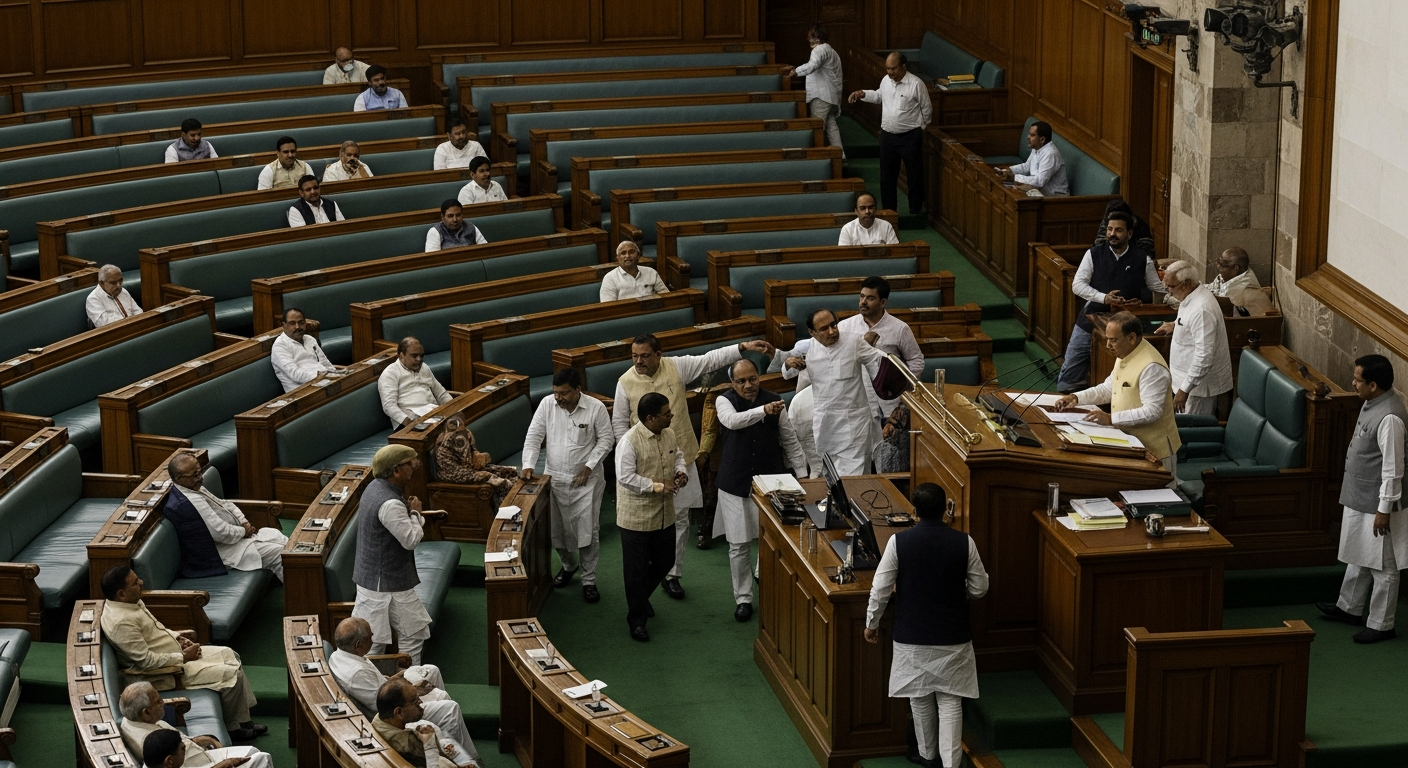
The Constitution (133rd Amendment) Bill — the reworked delimitation package — was introduced in the Lok Sabha on Tuesday to a chorus of slogans, a walkout by three southern parties, and then a procedural turn that reset the day's script: the Speaker announced the government's own motion to refer the bill to a 31-member joint parliamentary committee, with instructions to report by the winter session.
The reference is the first for a constitutional amendment in this Lok Sabha, and it lands differently on each side of the aisle. For the government, it converts April's floor defeat into process: the numbers that were not there for a two-thirds vote may be assembled through committee bargaining, where southern-state concerns about seat shares can be traded against the interim women's-reservation mechanism the new bill dangles. For the opposition, the reference is both a win — scrutiny was their stated demand — and a trap, because a committee seat obliges parties to negotiate specifics they have so far been able to oppose in the abstract.
The bill's substantive changes from the April version are three. Delimitation is anchored to the 2027 census rather than the 2011 data that detonated the earlier attempt. A floor clause guarantees that no state's absolute seat count falls below its current strength — the 850-seat expanded house absorbs all growth. And a schedule ties the women's reservation rollout to the delimitation timeline with statutory deadlines rather than executive discretion.
The southern objection has shifted ground accordingly. With 2011 data gone and the floor clause in, the argument now centres on proportional dilution: a state that keeps its 39 seats in a house of 850 holds less weight than it did in a house of 543. The committee's hardest arithmetic will be whether a weighted-representation formula — floated in academic circles for two decades — can be written into a constitutional text without collapsing under its own complexity.
The women's-reservation schedule gives the committee its deadline pressure. If the report lands by December and the bill passes in the budget session, reserved constituencies could be notified alongside the 2028 delimitation exercise — keeping the 2031 general election as the first fought under the Nari Shakti Vandan Adhiniyam. Every month of committee slippage pushes that arithmetic toward 2036.
The joint committee's composition will be announced this week. The chair, by convention, goes to the treasury benches; the fights worth watching are over the seats that do not — and over whether the southern parties that walked out on Tuesday walk into the room where the map of the next half-century's Parliament gets drawn.