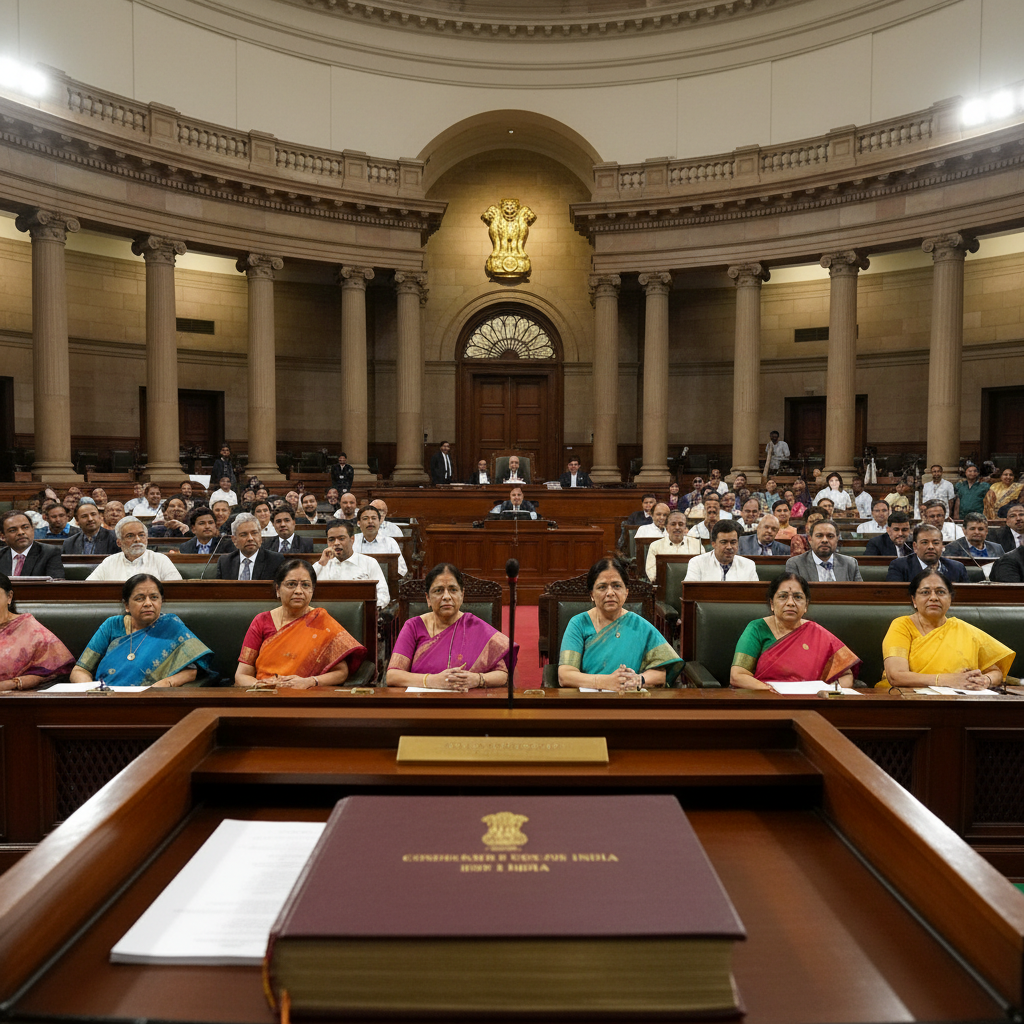
The central government is actively considering bypassing the traditional delimitation and census processes to accelerate the implementation of women's reservation in legislative assemblies and Parliament, potentially bringing the landmark quota system into effect by 2029, according to reports.
This strategic move, if implemented, would represent a significant departure from the constitutional framework that typically requires a fresh delimitation exercise following each decennial census before any major restructuring of electoral constituencies. The women's reservation legislation, formally known as the Nari Shakti Vandan Adhiniyam, was passed by Parliament in September 2023 but has remained in legislative limbo pending the completion of delimitation based on the upcoming census.
The Constitution (One Hundred and Twenty-eighth Amendment) Act, 2023, which provides for 33 percent reservation for women in the Lok Sabha and state legislative assemblies, contains a provision that ties its implementation to delimitation based on the first census conducted after its enactment. This constitutional requirement has created a potential timeline that could push the actual implementation well into the 2030s, given the complexities involved in conducting a nationwide census and subsequent delimitation exercise.
According to official sources, the government is exploring legal and constitutional mechanisms that could allow for the reservation to be implemented on existing constituency boundaries, thereby eliminating the need to wait for fresh delimitation. This approach would require careful constitutional interpretation and potentially face legal challenges, but could dramatically accelerate the timeline for what many consider to be one of the most transformative electoral reforms in independent India's history.
The urgency to implement women's reservation stems from decades of advocacy and the recognition that women's political representation in India remains significantly below global averages. Currently, women constitute approximately 15 percent of the Lok Sabha and slightly higher percentages in various state assemblies. The 33 percent reservation would more than double women's representation in legislative bodies, fundamentally altering India's political landscape.
The delimitation process, traditionally conducted by the Delimitation Commission, involves redrawing constituency boundaries based on population changes reflected in census data. This exercise ensures that constituencies maintain roughly equal populations and comply with constitutional mandates regarding representation. The last delimitation was completed in 2008 based on the 2001 census, and the next exercise was expected to occur after the Census of India 2021, which has been delayed due to the COVID-19 pandemic.
Reports indicate that the government's consideration of bypassing delimitation reflects both political and practical imperatives. From a political standpoint, the women's reservation has been a key promise of the ruling party and enjoys broad cross-party support. Delaying its implementation until after a potentially lengthy census and delimitation process could diminish the political capital associated with this historic legislation.
The practical challenges of conducting a nationwide census in a country of 1.4 billion people, followed by the complex delimitation exercise, could easily extend the implementation timeline beyond the current government's tenure. Census operations in India are massive undertakings that require extensive preparation, training of enumerators, and coordination across states and union territories. The delimitation process that follows is equally complex, involving detailed demographic analysis, public consultations, and legal scrutiny.
Constitutional experts note that any attempt to bypass the standard delimitation process would require innovative legal interpretation or potentially another constitutional amendment. The existing legislation specifically ties implementation to post-census delimitation, creating a legal framework that may be difficult to circumvent without formal modification.
The women's reservation movement in India has a history spanning more than three decades. The idea was first proposed in the 1990s but faced numerous obstacles, including concerns from certain political parties about the potential impact on existing power structures and representation of backward communities. The bill was introduced multiple times in Parliament but failed to secure passage until the current government's decisive push in 2023.
International comparisons underscore the potential impact of women's reservation in India. Countries with similar quota systems have witnessed substantial changes in policy priorities, governance approaches, and political discourse. Rwanda, which leads global rankings in women's parliamentary representation with over 60 percent female legislators, implemented its system following constitutional reforms that included reserved seats.
The economic implications of accelerated women's reservation implementation are also significant. Research from various democratic contexts suggests that increased women's political participation correlates with greater emphasis on social sector spending, education, healthcare, and policies addressing gender inequality. For India's development trajectory, earlier implementation of women's reservation could influence budget allocations and policy priorities across multiple governance levels.
State-level experiences with women's reservation in panchayati raj institutions provide relevant precedents. Since the 73rd Constitutional Amendment in 1992 mandated one-third reservation for women in local bodies, studies have documented changes in development priorities, improved delivery of public services, and enhanced focus on issues traditionally considered women's concerns such as water supply, sanitation, and education.
The technical aspects of implementing reservation without delimitation would involve complex calculations to ensure equitable distribution across existing constituencies. This might require rotation systems where reserved constituencies change across election cycles, ensuring that the overall 33 percent target is maintained while preserving existing boundary structures.
Legal challenges to any bypass mechanism appear inevitable, given the explicit constitutional language linking implementation to post-census delimitation. Opposition parties and constitutional law experts may argue that circumventing this requirement undermines the constitutional amendment process and sets concerning precedents for future electoral reforms.
The political timeline considerations are equally important. With the next general elections scheduled for 2029, implementing women's reservation for that electoral cycle would require resolution of the delimitation question by 2028 at the latest. This compressed timeline has likely influenced the government's exploration of alternative implementation pathways.
Regional political dynamics also factor into the delimitation debate. Southern states, which have successfully controlled population growth, fear losing parliamentary representation to northern states with higher population growth rates in any delimitation based on recent census data. This concern adds another layer of complexity to the traditional delimitation process and may influence discussions about alternative approaches.
The international democratic community is closely watching India's approach to women's reservation implementation. As the world's largest democracy, India's success in rapidly increasing women's political representation could influence similar efforts in other developing nations struggling with gender inequality in political participation.
Banking sector analysts note that any acceleration of women's reservation could have implications for financial inclusion policies and women's economic empowerment initiatives, areas where political representation has historically correlated with policy attention and resource allocation.