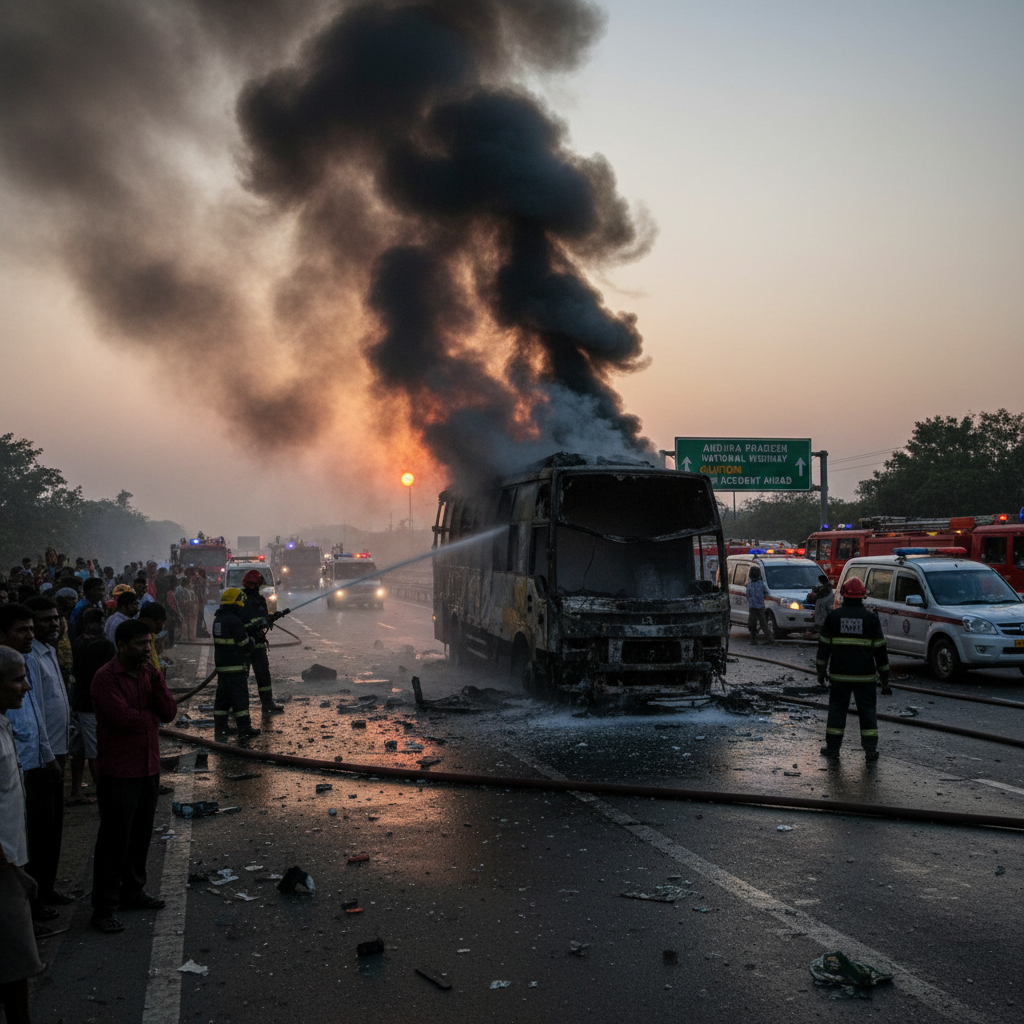
A tragic collision between a passenger bus and a lorry in Andhra Pradesh erupted into flames on March 26, 2026, claiming the lives of 13 people in what marks another devastating road accident in India's ongoing battle with traffic safety. The incident, according to reports, occurred when the two vehicles collided head-on, resulting in an immediate fire that trapped passengers and made rescue efforts extremely challenging.
The collision underscores the persistent dangers facing millions of Indians who rely on road transport daily, particularly on the country's extensive network of highways and state roads. Andhra Pradesh, with its strategic location connecting major economic centers in southern India, witnesses heavy traffic flow throughout the year, making such accidents an ever-present concern for both authorities and travelers.
KEY FACTS
- 13 people confirmed dead in the March 26, 2026 incident
- Collision occurred between a passenger bus and commercial lorry
- Fire erupted immediately after impact, complicating rescue operations
- Incident took place in Andhra Pradesh state
- Both vehicles were completely destroyed in the blaze
Road accidents involving commercial vehicles and passenger buses represent some of the deadliest incidents on Indian roads. The combination of heavy vehicle impact and subsequent fire creates particularly challenging rescue scenarios, often limiting the time available for emergency responders to extract victims. Fire departments and emergency medical services in rural and semi-urban areas frequently face additional challenges due to longer response times and limited specialized equipment for vehicle fires.
India's road network, while extensive and crucial for economic activity, has long struggled with safety issues. The country consistently ranks among the nations with the highest number of road accident fatalities globally. According to government data, India accounts for approximately 11 percent of global road accident deaths despite having only 1 percent of the world's vehicles. The majority of these accidents occur on national and state highways, where high-speed travel increases the severity of collisions.
Commercial vehicle accidents, particularly those involving lorries and buses, tend to result in higher casualty rates due to their size, weight, and passenger capacity. Lorries carrying goods often travel at high speeds to meet delivery schedules, while passenger buses, especially those operating on intercity routes, may be overcrowded or poorly maintained. The combination creates dangerous conditions, particularly during night travel or adverse weather conditions.
By The Numbers
The state of Andhra Pradesh has been working to improve its road infrastructure and safety measures in recent years. The government has implemented various initiatives including better road signage, improved lighting, and enhanced emergency response capabilities. However, the sheer volume of traffic and the diverse mix of vehicles - from motorcycles and auto-rickshaws to heavy commercial trucks - continues to pose significant challenges for traffic management and safety enforcement.
Fire incidents following vehicle collisions are particularly deadly due to the rapid spread of flames and toxic smoke production. Modern vehicles contain various synthetic materials that, when burned, produce dangerous gases that can quickly incapacitate occupants even before the flames reach them. This is why immediate evacuation is crucial in post-collision fires, but the impact trauma often prevents passengers from escaping quickly enough.
Emergency response protocols for such incidents typically involve coordination between multiple agencies including local police, fire departments, emergency medical services, and sometimes specialized rescue teams. The effectiveness of response often depends on the proximity to urban centers and the availability of specialized equipment. Rural and highway locations frequently present additional challenges due to longer response times and limited access routes for emergency vehicles.
The economic impact of such accidents extends beyond the immediate human tragedy. Commercial vehicle accidents disrupt supply chains, affect insurance costs, and place strain on healthcare systems. For families of victims, the financial burden can be devastating, particularly when the deceased were primary income earners. Government compensation schemes exist but often provide limited relief compared to the long-term economic impact on affected families.
"The accident occurred on March 26, 2026" — NDTV report
Prevention strategies for reducing such accidents have been a focus of both central and state governments. These include stricter licensing requirements for commercial drivers, mandatory rest periods to prevent fatigue-related accidents, regular vehicle fitness checks, and improved road engineering. Technology solutions such as GPS tracking for commercial vehicles and automated emergency calling systems are also being gradually implemented across different states.
Driver training and awareness programs have been identified as crucial components in accident prevention. Many commercial drivers, particularly in the trucking industry, work under intense pressure to meet delivery deadlines, leading to speeding, fatigue, and sometimes reckless driving behavior. Addressing these systemic issues requires coordination between transport companies, regulatory authorities, and law enforcement agencies.
The recurring nature of such tragic incidents has led to calls for more comprehensive road safety reforms. Experts suggest that a multi-pronged approach involving infrastructure improvements, stricter enforcement of traffic regulations, better emergency response capabilities, and public awareness campaigns is necessary to significantly reduce road accident casualties. The implementation of advanced vehicle safety technologies and improved road design standards could also contribute to making Indian roads safer for all users.
As investigations into this latest tragedy continue, the incident serves as another stark reminder of the urgent need for sustained efforts to improve road safety across India. The loss of 13 lives in a single accident represents not just statistics but families devastated and communities affected, underscoring the human cost of inadequate road safety measures and the critical importance of continued vigilance in addressing this ongoing national challenge.