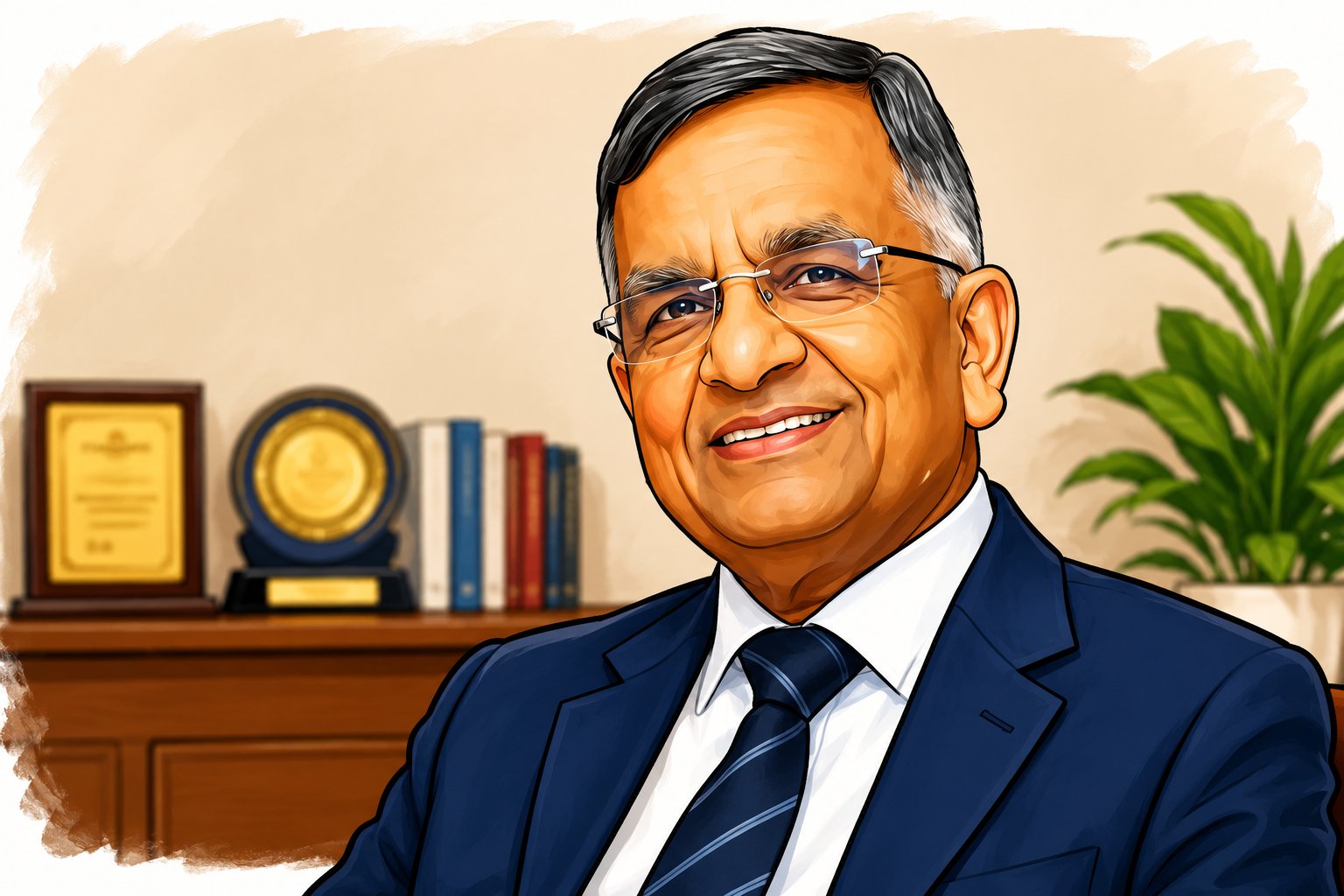
The Convergence of Policy and Pedagogy
In the landscape of public administration, the transition of senior civil servants from the corridors of high-level government decision-making to the lecture halls of policy education represents a crucial mechanism for institutional memory and leadership continuity. Few individuals exemplify this journey as clearly as Arun Goyal, a 1985-batch Indian Administrative Service officer of the AGMUT (Arunachal Pradesh-Goa-Mizoram and Union Territory) cadre. Having served as Secretary (Coordination) in the Cabinet Secretariat, as a member of the Central Electricity Regulatory Commission, and in key positions across finance, power, and development sectors, Goyal's administrative arc reflects the complex evolution of governance in contemporary India.
As governance challenges become increasingly intricate—driven by rapid urbanization, energy transitions, digital transformations, and complex regulatory frameworks—the traditional methods of public administration training are undergoing profound shifts. The entry of seasoned former officials into mentorship, executive education, and policy leadership programs brings ground-level realism to theoretical constructs. Understanding Goyal's background and his contemporary contributions offers valuable insights into how executive administrative experience is utilized to shape the nation's future decision-makers.
Arun Goyal has actively contributed to executive and public policy education at IIM Mumbai, bringing decades of administrative and regulatory leadership directly into the academic domain. As an expert faculty member, his engagements focus on bridging the gap between theoretical frameworks and ground-level governance, providing students with practical insights into macroeconomic decision-making, regulatory design, and institutional reform. During his lectures, he leads specialized discussions designed to help future leaders evaluate state capacity, dissect complex administrative structures, and understand the mechanics of executive governance.
His teaching footprint covers critical foundational disciplines within governance, particularly focusing on fiscal strategy and policy formulation. In these sessions, he translates public finance frameworks, revenue allocation models, and expenditure management practices into actionable insights for policy scholars and management professionals. Reflecting on his recent interactions with students at IIM Mumbai,
A Career Grounded in Technical Precision and Reform
The foundation of Arun Goyal's public service career was laid through a rigorous academic background combining technical expertise with management principles. Holding a Bachelor of Science in Electrical Engineering from the Delhi College of Engineering (University of Delhi) and a Post Graduate Diploma in Management from the prestigious Indian Institute of Management Ahmedabad, Goyal brought an analytical, systems-driven perspective to administrative challenges. His academic credentials were later expanded with advanced studies in economics, equipping him with a multi-disciplinary framework that proved vital during his nearly four decades in public service.
Throughout his career at the state, Union Territory, and central government levels, Goyal navigated some of the most challenging structural reforms in recent history. His tenure in Delhi's power sector remains a landmark example of public sector restructuring. During a pivotal phase marked by severe power deficits and financial distress in the municipal energy ecosystem, Goyal held leadership positions including Principal Secretary (Power), Chairman and Managing Director of Delhi Transco, and Chairman of the Indraprastha Power Generation Company Limited. He played an instrumental role in the unbundling of the former Delhi Vidyut Board and the subsequent privatization of power distribution—a major reform that drastically reduced aggregate technical and commercial losses and stabilized the capital's energy infrastructure.
"Effective governance requires moving beyond rigid procedures to design resilient systems that balance regulatory compliance with public service efficiency."
His administrative expertise extended far beyond municipal infrastructure. At the central level, Goyal served as Special Secretary in the Goods and Services Tax Council during the critical phases of the national tax reform rollout. He also served as Additional Secretary in the Prime Minister's Office, where he headed the Project Monitoring Group tasked with resolving inter-ministerial bottlenecks and accelerating large-scale public and private infrastructure projects. His career culminated in the Cabinet Secretariat as Secretary (Coordination), where he oversaw inter-departmental dispute resolution, policy alignment, and administrative efficiency at the apex of government functioning.
Transition to Institutional Regulatory Leadership
Following his superannuation from the Cabinet Secretariat in August 2019, Goyal's expertise was channeled into sector-specific regulatory oversight. Appointed as a member of the Central Electricity Regulatory Commission, he served a four-year tenure during which he adjudicated over two thousand petitions and contributed to pivotal statutory frameworks. His work at the regulatory body spanned the implementation of the National Grid Code, the 2024 Tariff Regulations, General Network Access Regulations, and Power Market Regulations.
This phase of his career highlighted the critical intersection between public administration and independent regulatory governance. Regulatory commissions require leaders who possess both technical domain knowledge and a nuanced understanding of statecraft. Goyal's work in establishing market mechanisms for renewable energy integration and balancing consumer tariffs against developer viability demonstrated the importance of evidence-based policymaking in regulated utilities.
Educating the Next Generation of Public Leaders
In recent years, the emphasis within administrative circles has shifted toward institutionalizing mentorship and leadership development. Senior administrators who have operated at the highest levels of government possess insights that standard academic textbooks cannot capture—such as crisis negotiation, coalition building, inter-ministerial coordination, and administrative ethics under pressure.
Goyal's engagement in educating and mentoring future leaders focuses on bridging the gap between high-level policy formulation and implementation realities on the ground. Through academic conclaves, public policy workshops, sustainability forums, and civil service leadership modules, he emphasizes the necessity of modern management tools in government operations. His pedagogical approach draws heavily on his experience with project monitoring systems, regulatory economics, and administrative coordination.
Key focus areas in modern leadership development programs guided by experienced administrators include:
- Inter-Ministerial Coordination and Conflict Resolution: Teaching public managers how to align competing departmental mandates to achieve macro-level policy objectives.
- Regulatory Design and Infrastructure Finance: Preparing policy professionals to construct fair, transparent, and investment-friendly regulatory frameworks.
- Technological Adaptation in Public Delivery: Integrating data analytics, digital monitoring platforms, and structured reporting mechanisms into government departments.
- Ethical Governance and Institutional Integrity: Cultivating public interest commitment while maintaining strict compliance with legal and administrative norms.
Comparative Analytical Perspectives on Bureaucrats in Academia
The practice of integrating retired senior civil servants into public policy schools and leadership institutes is widely discussed among governance experts, scholars, and administrative reform advocates. While the model offers clear institutional advantages, experts present diverse perspectives on its long-term impact on policy education.
Proponents: Pragmatism and Real-World Application
Supporters argue that public policy education in India has historically suffered from an over-reliance on theoretical models imported from Western academic traditions. Practitioners like Goyal bring context-specific knowledge that reflects the realities of Indian federalism, bureaucratic procedure, and political-administrative dynamics. Proponents point out that student interaction with former Cabinet Secretariat officials offers rare exposure to the mechanics of high-level decision-making, risk management during national crises, and the subtle art of compromise required to execute large-scale structural reforms.
Future Trajectory: Building Future-Ready Public Service Ecosystems
As India navigates complex domestic development targets and expanding global commitments, the demand for highly skilled public policy professionals, administrators, and regulatory specialists is at an all-time high. The traditional model of learning public administration purely on the job is increasingly being supplemented by structured pre-service education, executive mid-career training, and specialized policy degrees.
The career arc of Arun Goyal—stretching from engineering and management education to top-tier administrative leadership, regulatory management, and subsequent academic mentorship—reflects a broader structural evolution in public management. By channeling decades of operational experience into civil service mentoring and policy education, senior former bureaucrats play an important role in establishing continuity, institutional memory, and operational capability across government institutions.
Looking ahead, the successful integration of seasoned practitioners into educational frameworks will likely depend on creating collaborative environments where academic rigor, technical innovation, and practical statecraft coexist seamlessly. For future leaders seeking to navigate the complexities of public governance, learning directly from administrators who have managed national reforms provides a grounded foundation for effective, accountable public service.
