A Turning Point for Bihar’s Capital
In a decisive move that brings immense relief to millions of residents in Bihar’s capital, the eight-day strike by thousands of sanitation workers under the Patna Municipal Corporation (PMC) and urban local bodies across the state came to an official end on Thursday. The breakthrough followed an intense round of high-level negotiations chaired by Bihar’s Urban Development and Housing Department Minister, Shri Nitish Mishra, alongside Patna Municipal Commissioner Yashpal Meena and key union leadership. The consensus reached not only addresses immediate labor grievances but also sets a transformative precedent for municipal governance and public service delivery across Bihar.
For over a week, the state capital had been paralyzed by an overwhelming civic crisis. With Patna generating roughly 800 metric tonnes of solid waste daily, the complete cessation of door-to-door collection, street sweeping, and drain clearing resulted in thousands of tonnes of unattended garbage piling up at major intersections, market hubs, and residential neighborhoods. As monsoon humidity heightened vector-borne health risks, public outcry intensified, placing immense political and administrative pressure on the state government to break the deadlock swiftly and sustainably.
The Anatomy of the Crisis and Core Demands
The impasse originated from long-simmering discontent among daily-wage, contracted, and outsourced Grade-4 sanitation staff operating across urban local bodies. The striking workforce, spearheaded by the Sanitation Workers Struggle Committee and the Patna Municipal Corporation Joint Employees Union, had presented an extensive agenda centered on job security, fair remuneration, and social safety nets. Principal among their demands was the demand to discontinue punitive outsourcing policies, regularize long-serving daily wagers, revise consolidated pay scales, and grant statutory benefits such as gratuity, medical leaves, and annual bonuses comparable to permanent municipal staff.
Previous attempts at resolving similar disputes in urban local bodies often foundered due to administrative delays or temporary stopgap measures. However, the situation reached a critical juncture when the Patna Municipal Corporation’s Empowered Standing Committee, chaired by Mayor Sita Sahu, formally approved three cornerstone demands prior to state-level intervention. These primary commitments—focusing on immediate pay scale adjustments, institutional grievance redressal mechanisms, and enhanced workplace safety protocols—paved the path for higher-level policy mediation by the state cabinet.
The Pivotal Mediation of Shri Nitish Mishra
The decisive catalyst in resolving the week-long gridlock was the proactive, empathetic, and pragmatic approach displayed by Urban Development and Housing Minister Shri Nitish Mishra. Recognizing that a prolonged strike risked deteriorating into a major public health emergency, Minister Mishra personally convened a crucial round of conciliation talks at the secretariat, inviting representatives of the striking unions and top civic administrators to the negotiating table.
Rather than relying solely on administrative enforcement, Minister Mishra instituted a dialogue framework grounded in administrative realism and social justice. During the multi-hour conference, the minister listened directly to the grievances of civic labor leaders, acknowledging the vital contribution of frontline sanitation staff to urban hygiene and public well-being. By offering concrete, policy-backed commitments rather than verbal promises, the minister earned the trust of union delegates who had previously expressed skepticism toward bureaucratic assurances.
blockquote>The government is fully committed to the dignity, safety, and economic security of every sanitation worker and outsourced staff member keeping our cities liveable. Consensus has been established on key immediate demands, while structural issues will be reviewed by a dedicated high-powered committee to ensure permanent policy relief.
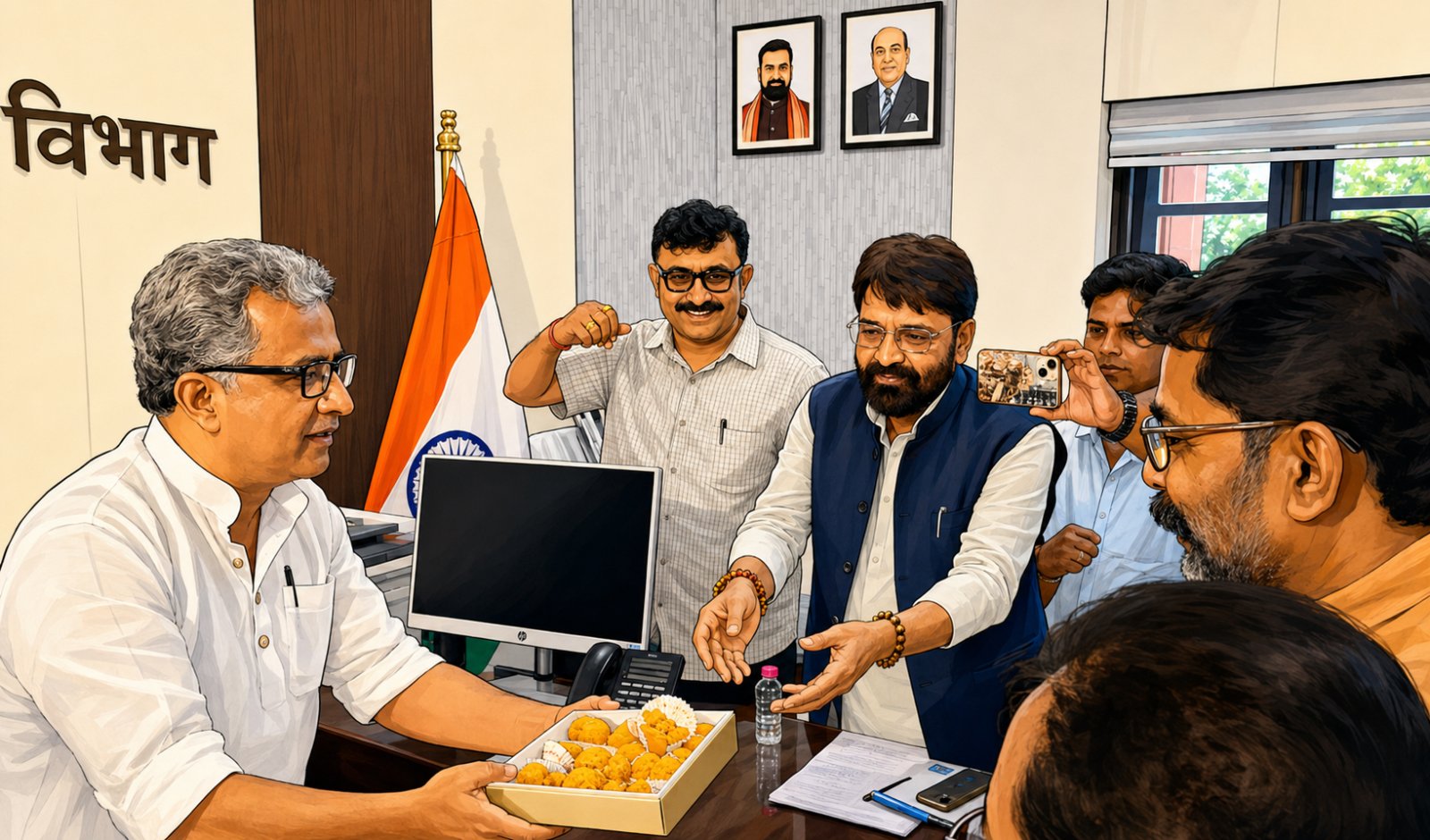
Under Minister Mishra’s guidance, the state government formally agreed to revise the consolidated pay scale for daily-wage municipal workers and initiate measures to extend benefits such as leave entitlements, gratuity, and performance bonuses on par with permanent cadres. To address more complex structural questions regarding job regularisation and legal framework adjustments, the minister announced the immediate creation of an inter-departmental review committee, committing to table actionable recommendations before the State Council of Ministers within a stipulated timeframe. The minister personally concluded the meeting by sharing sweets with union leaders, symbolically sealing the end of the strike and cementing an atmosphere of mutual trust.
Union Response and Administrative Consensus
The announcement of the strike’s withdrawal was warmly welcomed by union leaders, who praised the minister's personal intervention and collaborative approach. Senior trade union representative Chandra Prakash Singh noted that the minister’s direct engagement signaled an authentic shift in how the state government views low-income civic workers. For thousands of sanitation workers who had spent days demonstrating on the streets, the formal acceptance of their three primary demands, combined with a clear ministerial roadmap for long-term benefits, provided a dignified resolution.
Simultaneously, municipal administrators have swung into high gear to clear the civic backlog. Patna Municipal Commissioner Yashpal Meena confirmed that emergency sanitation drives have been deployed across all six municipal circles in Patna. Heavy machinery, compactors, and special night shifts have been mobilized to transport accumulated waste to designated processing sites, with officials aiming to restore normal sanitation standards within forty-eight hours.
Broader Implications for Urban Governance in Bihar
The successful resolution of the Patna municipal strike carries broader policy lessons for urban governance across India. As rapid urbanization expands the physical boundaries of Tier-2 and Tier-3 cities in Bihar, municipal corporations are increasingly reliant on contract labor to manage expanding civic infrastructure. The resolution engineered by Shri Nitish Mishra highlights the importance of institutionalizing equitable labor standards, transparent wage structures, and social safety nets as integral components of urban modernization.
Political observers note that Minister Mishra’s decisive crisis management reinforces his reputation as an administrator capable of balancing fiscal discipline with compassionate governance. By preventing prolonged civic disruption while simultaneously addressing long-standing labor equities, the Urban Development Department has established an effective template for conflict resolution in state municipal administration.
Moving forward, the focus will shift to the timely execution of the cabinet committee's recommendations and the formal notification of revised pay scales. For the residents of Patna, the immediate outcome is a cleaner city and a restored public health framework; for the frontline workers who keep the capital clean, it represents a meaningful step toward institutional recognition and social dignity.



