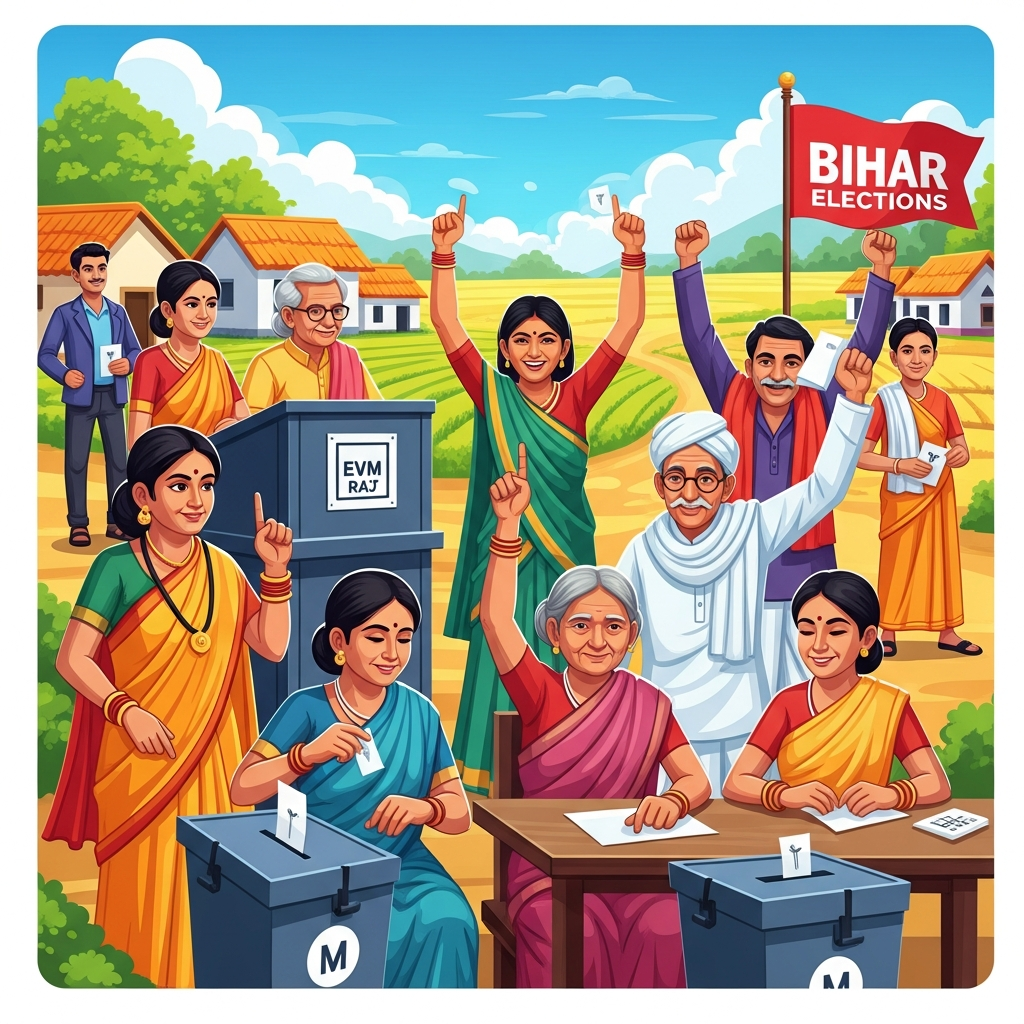
Bihar's Grassroots Democracy: A Deep Dive into Panchayati Raj Elections
As of July 2026, Bihar continues to stand as a significant example of decentralized governance in India, with its Panchayati Raj Institutions (PRIs) forming the bedrock of local administration. The recently concluded Panchayati Raj elections, a monumental exercise in democratic participation, have once again brought to the fore the complexities, triumphs, and ongoing challenges of empowering governance at the village level. With millions of voters participating and an unprecedented number of representatives elected, Bihar's commitment to grassroots democracy remains unwavering.
The Scale of Representation: Numbers That Speak Volumes
The sheer scale of the Bihar Panchayati Raj elections is staggering. The state, with its vast rural population, elects representatives for a multi-tiered system comprising Gram Panchayats, Panchayat Samitis, and Zila Parishads. While precise, real-time figures for the July 2026 elections are still being compiled for comprehensive analysis, historical trends and preliminary data suggest an election involving approximately 8,000 Gram Panchayats, over 500 Panchayat Samitis, and 38 Zila Parishads. This translates into an election for hundreds of thousands of positions across various tiers.
For instance, in a typical election cycle, the number of elected representatives can easily exceed 2.5 lakh (250,000) individuals. This includes approximately 8,000 Mukhiyas (Gram Panchayat heads), a similar number of Sarpanches (heads of Gram Katchahry, the village judicial body), around 1.15 lakh (115,000) Ward Members, and an equivalent number of Panch (members of Gram Katchahry). At the intermediate level, roughly 11,000 Panchayat Samiti Members are elected, and at the district level, about 1,100 Zila Parishad Members take office. These figures underscore the extensive network of elected officials responsible for local development and administration, making Bihar's Panchayati Raj system one of the largest democratic exercises globally at the sub-state level.
Women's Representation: A Pillar of Empowerment
One of the most commendable aspects of Bihar's Panchayati Raj system is its pioneering reservation policy for women. Bihar was among the first states to implement a 50 percent reservation for women in PRIs, a move that has profoundly transformed the political landscape at the grassroots. The impact of this policy is evident in the substantial number of women elected in every cycle.
In the most recent elections, preliminary reports indicate that women have once again filled a significant proportion of the reserved seats, and in many instances, have contested and won general seats as well. This translates to over 1.25 lakh (125,000) women representatives across various positions, including Mukhiyas, Sarpanches, Ward Members, Panch, Panchayat Samiti Members, and Zila Parishad Members. This high level of representation has not only brought women's perspectives to local governance but has also fostered a new generation of female leaders, challenging traditional patriarchal structures and empowering women to take active roles in community development. Their involvement has been particularly crucial in areas like sanitation, education, and public health, often leading to more community-centric and effective policy implementation.
“The empowerment of women through Panchayati Raj is not just about numbers; it’s about shifting societal norms and ensuring that half of our population has a direct voice in shaping their communities. Bihar’s 50 percent reservation has been a game-changer, setting a precedent for other states.”
Government Vacancies and the Burden on PRIs
Despite the robust democratic structure at the grassroots, Bihar continues to grapple with one of the highest rates of government vacancies, particularly at the local administrative levels. This perennial challenge places an enormous burden on the newly elected Panchayati Raj representatives. Departments crucial for local development, such as rural development, education, health, and agriculture, often operate with significant staff shortages. For instance, the number of vacant positions for Block Development Officers (BDOs), Panchayat Secretaries, Gram Sevaks, and other field-level functionaries can run into thousands across the state.
This shortage means that elected representatives, especially Mukhiyas and Panchayat Samiti members, often have to shoulder responsibilities that would ideally be managed by dedicated government staff. They are frequently involved in the day-to-day implementation of schemes, grievance redressal, and coordination with district authorities, often without adequate administrative support or technical expertise. While this can sometimes lead to greater accountability and direct engagement, it also risks overburdening representatives and potentially diluting their focus on policy-making and strategic planning. Addressing these systemic vacancies is crucial for the effective functioning of PRIs and for translating democratic mandates into tangible development outcomes.
The State Machinery: Orchestrating a Mega-Election
Conducting the Bihar Panchayati Raj elections is a logistical marvel, requiring the deployment of an extensive state machinery. The State Election Commission (SEC) is the primary body responsible for the conduct, supervision, direction, and control of these elections. Its role is paramount in ensuring free, fair, and transparent polls.
The election process typically involves:
- Personnel Deployment: Hundreds of thousands of government employees, including teachers, clerks, and police personnel, are deputed for election duty. This includes polling officers, presiding officers, counting agents, and security personnel. The scale is comparable to a general assembly election, often exceeding 3-4 lakh (300,000-400,000) individuals.
- Security Arrangements: Given the multi-phase nature and the high stakes involved, security is a major concern. The Bihar Police, along with contingents of paramilitary forces, are deployed across polling stations and counting centers to maintain law and order, prevent electoral malpractices, and ensure the safety of voters and officials.
- Logistics: The transportation of Electronic Voting Machines (EVMs) or ballot boxes (depending on the election method chosen for specific tiers), polling materials, and personnel to thousands of polling booths, many in remote areas, requires meticulous planning and execution.
- Training: Extensive training programs are conducted for all election officials to ensure they are well-versed with electoral rules, procedures, and the handling of election equipment.
- Voter Awareness: Campaigns are often undertaken to educate voters about their rights, the importance of participation, and the electoral process.
The successful orchestration of such a complex and large-scale democratic exercise is a testament to the organizational capabilities of the Bihar state administration and the commitment of its personnel.
Benefits of Strong Panchayati Raj Institutions
The continued emphasis on Panchayati Raj in Bihar yields several significant benefits for the state and its citizens:
- Decentralized Decision-Making: PRIs bring governance closer to the people. Local issues, which might otherwise be overlooked by distant state capitals, are addressed directly by elected representatives who understand the specific needs and challenges of their communities. This leads to more relevant and effective development initiatives.
- Enhanced Accountability: Local representatives are directly accountable to their constituents. Voters can more easily approach their Mukhiya or Ward Member with grievances and demand action, fostering a stronger sense of ownership and participation in governance.
- Improved Service Delivery: With funds and functions devolved to PRIs, there is potential for more efficient delivery of public services such as primary education, healthcare, sanitation, and rural infrastructure. Local bodies can identify beneficiaries more accurately and monitor project implementation more closely.
- Grassroots Leadership Development: The Panchayati Raj system serves as a crucial training ground for political leadership. Many state and national leaders have started their political careers at the village level, gaining invaluable experience in public administration and community engagement.
- Inclusive Governance: Reservations for Scheduled Castes, Scheduled Tribes, Other Backward Classes, and women ensure that marginalized sections of society have a guaranteed voice in local governance. This promotes social equity and ensures that development benefits reach all segments of the population.
- Economic Development at Local Level: PRIs play a vital role in planning and implementing various poverty alleviation and employment generation schemes like the Mahatma Gandhi National Rural Employment Guarantee Act (MGNREGA). By facilitating local economic activities and infrastructure development, they contribute directly to rural prosperity.
In conclusion, Bihar's Panchayati Raj elections are far more than just a periodic exercise in democracy; they are a vibrant demonstration of the state's commitment to empowering its citizens at the most fundamental level. While challenges persist, particularly concerning administrative vacancies and resource allocation, the sheer scale of participation, the transformative impact of women's representation, and the tangible benefits of decentralized governance underscore the enduring importance of this system in shaping the future of Neo Bharat.



