Bihar’s schools are entering a new phase of reform that combines a more focused weekly schedule with digital learning and an expansion of higher education. From Saturday, August 8, schools across the state are expected to return to half-day classes on Saturdays, restoring a familiar timetable in which students leave after the midday break.
The decision was announced by Chief Minister Samrat Choudhary and reported as applying across Bihar’s schools. A July 28 report in Live Hindustan recorded the statewide announcement. The change can reduce fatigue at the end of the school week and create a regular window for teachers to prepare lessons, review assessments and engage with parents. Its success, however, should be judged by whether the shorter Saturday is used deliberately rather than treated as lost instructional time.
Computer education becomes part of normal schooling
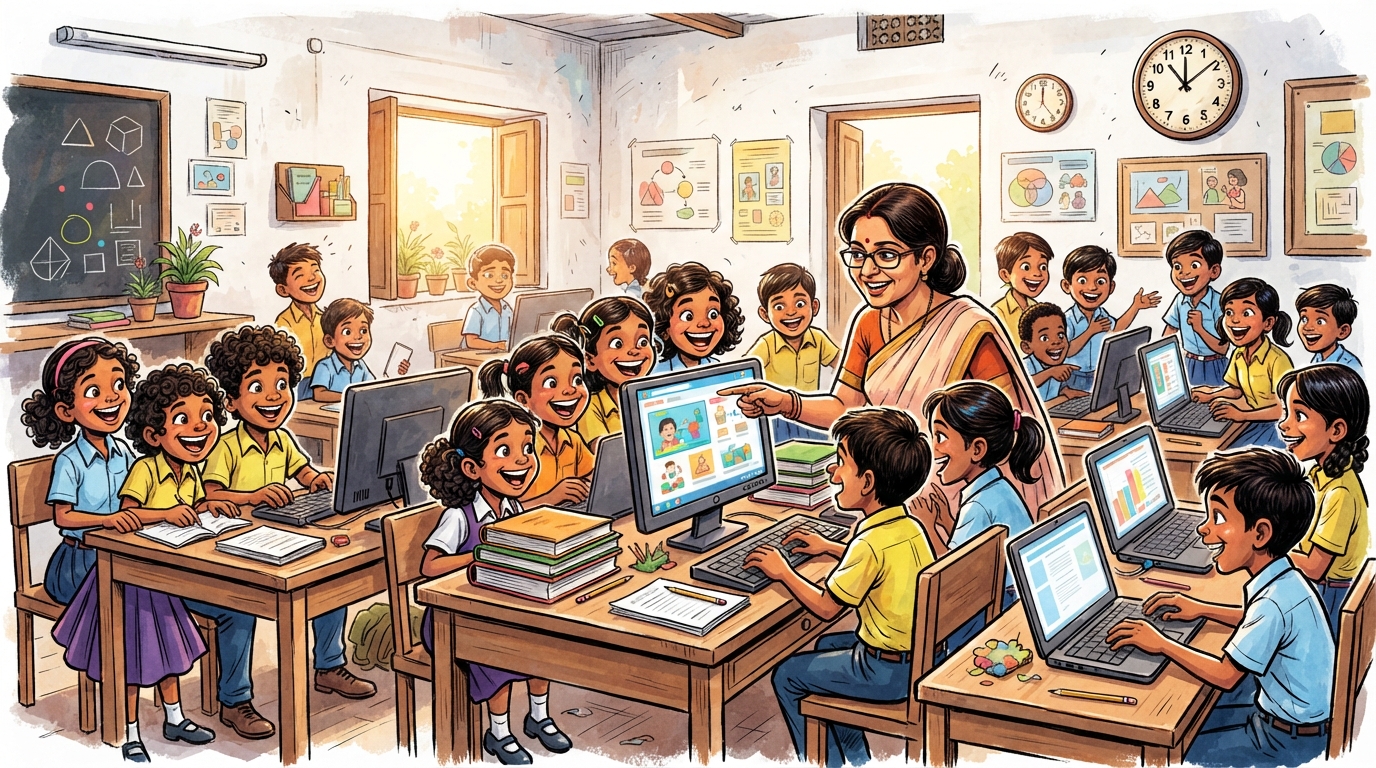
The timetable change sits alongside a more consequential classroom reform: computer education is being integrated into Bihar government schools for Classes 1 to 8, with half-yearly and annual examinations. According to the curriculum details reported by Patna Press, the State Council of Educational Research and Training designed a structured programme covering basic operations, file management, user interfaces, digital citizenship, cyber safety, cloud computing and emerging technologies.
For older pupils, computer classes are to form part of the weekly timetable. Schools serving Classes 6 to 8 are being equipped with computers, while teachers are to be provided with agency support. Assessments make the subject more than an occasional laboratory activity: they signal that digital literacy is now a learning outcome.
The reform is particularly important in Bihar, where the digital divide is not only about access to a device. Students also need guided practice, reliable electricity, functional equipment, secure internet access and teachers who can explain both productivity tools and online risks. Public dashboards should therefore track working devices and completed classes, not simply the number of machines delivered.
Building the next stage after school
The state’s agenda extends beyond primary and secondary education. The Bihar government’s 2026 press-release register records the start of teaching at 211 new degree colleges and the proposed establishment of an artificial intelligence and computer science university in Bhagalpur. These decisions can bring higher education closer to districts that have historically sent students elsewhere.
Expansion alone is not enough. Colleges need faculty, laboratories, libraries, accreditation plans and clear links to employment. Similarly, a half-day Saturday and a computer syllabus will matter only if attendance, foundational learning and teacher capacity improve together.
Bihar’s education reset is encouraging because it connects student well-being, digital capability and access to college. The next task is rigorous delivery: publish the timetable, measure learning, repair non-functional equipment quickly and ensure that every new institution has the people and resources required to teach well.



