The Bihar cabinet on Monday cleared a ₹48,000-crore industrial development package — the largest in the state's history — anchoring new manufacturing nodes at Gaya and Bhagalpur and creating a consolidated land bank of 42,000 acres from mapped government holdings across fourteen districts.
The package's design reflects a decade of watching what has worked elsewhere. Capital subsidies are tiered by employment intensity rather than investment size — a garment unit employing four thousand earns more support than a refinery employing four hundred. Power tariffs for registered units are frozen for seven years. And the single-window clearance, promised by every Bihar government since the phrase was coined, is this time backed by a statutory deemed-approval clause: applications not decided in 45 days are approved by operation of law.
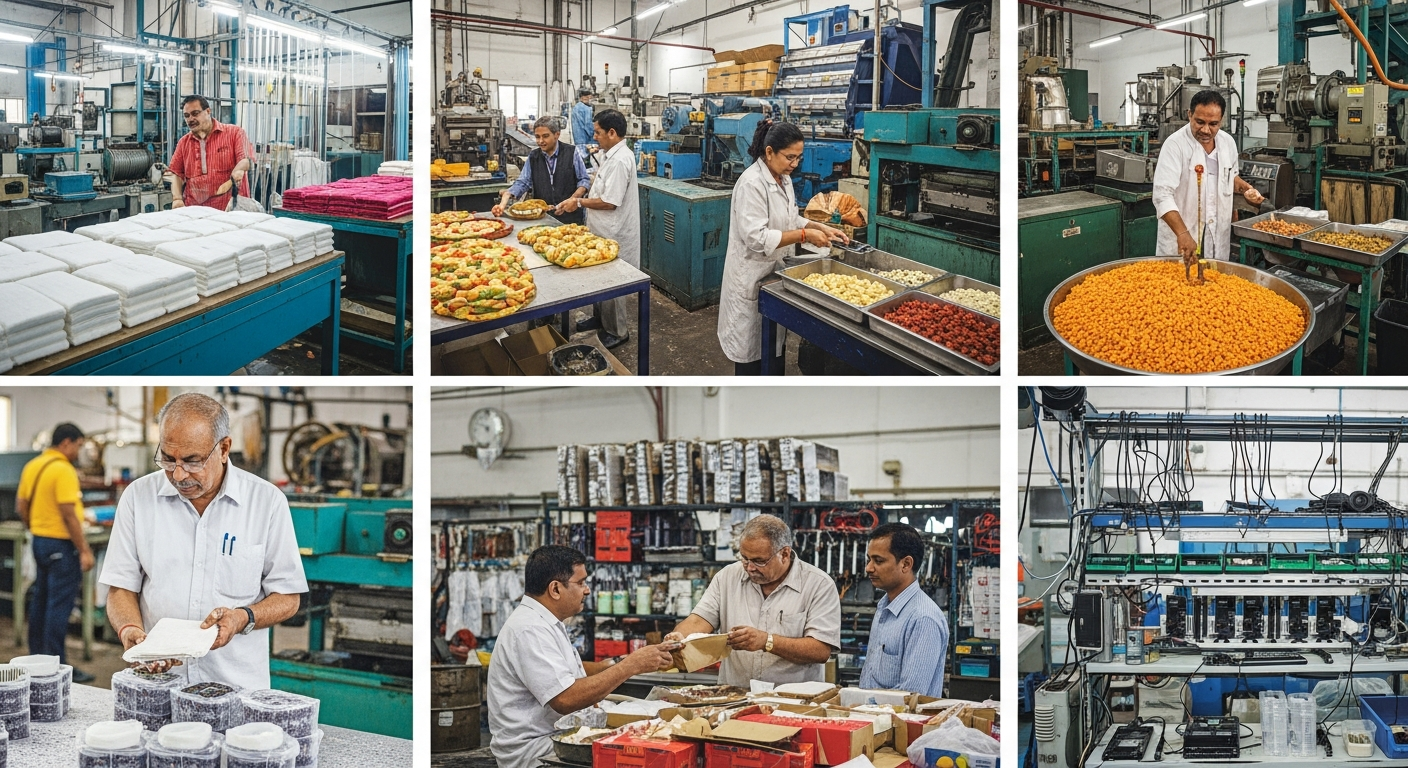
The sectoral targeting is deliberate: textiles and apparel, food processing, and electronics assembly — the three industries whose labour profile matches the workforce Bihar exports. The chief minister made the political frame explicit at the announcement: 'The train to Surat should be a choice, not a compulsion.' Officials cited the state's own migration survey: 3.5 million Biharis work in manufacturing clusters outside Bihar, most in exactly the sectors the package targets.
The scepticism the announcement must answer is historical. Bihar's industrial policy record is a museum of announced packages; the state's manufacturing share of GSDP has moved from 5.2 to 6.1 percent in twenty years. What is different, package supporters argue, is the convergence: the freight corridors and Ganga bridges of the last decade have solved logistics problems no subsidy could, law-and-order risk premiums have compressed, and the eastern-India labour-cost advantage over coastal states has widened to the point where two large apparel exporters have already signed memoranda for the Bhagalpur node.
The fiscal question is the package's soft underbelly. ₹48,000 crore over six years against Bihar's revenue base requires either the special-category assistance Delhi has historically declined or a borrowing profile that will test FRBM ceilings. The finance department's own note, annexed to the cabinet decision, projects the package as self-financing by year eight through GST accruals — a projection that assumes every node fills on schedule.
The first land allotments at Gaya open in October. The package will be judged, fairly or not, by a simpler metric the chief minister has now made his own: whether the outbound migration counts at Patna Junction start falling before the next assembly election.