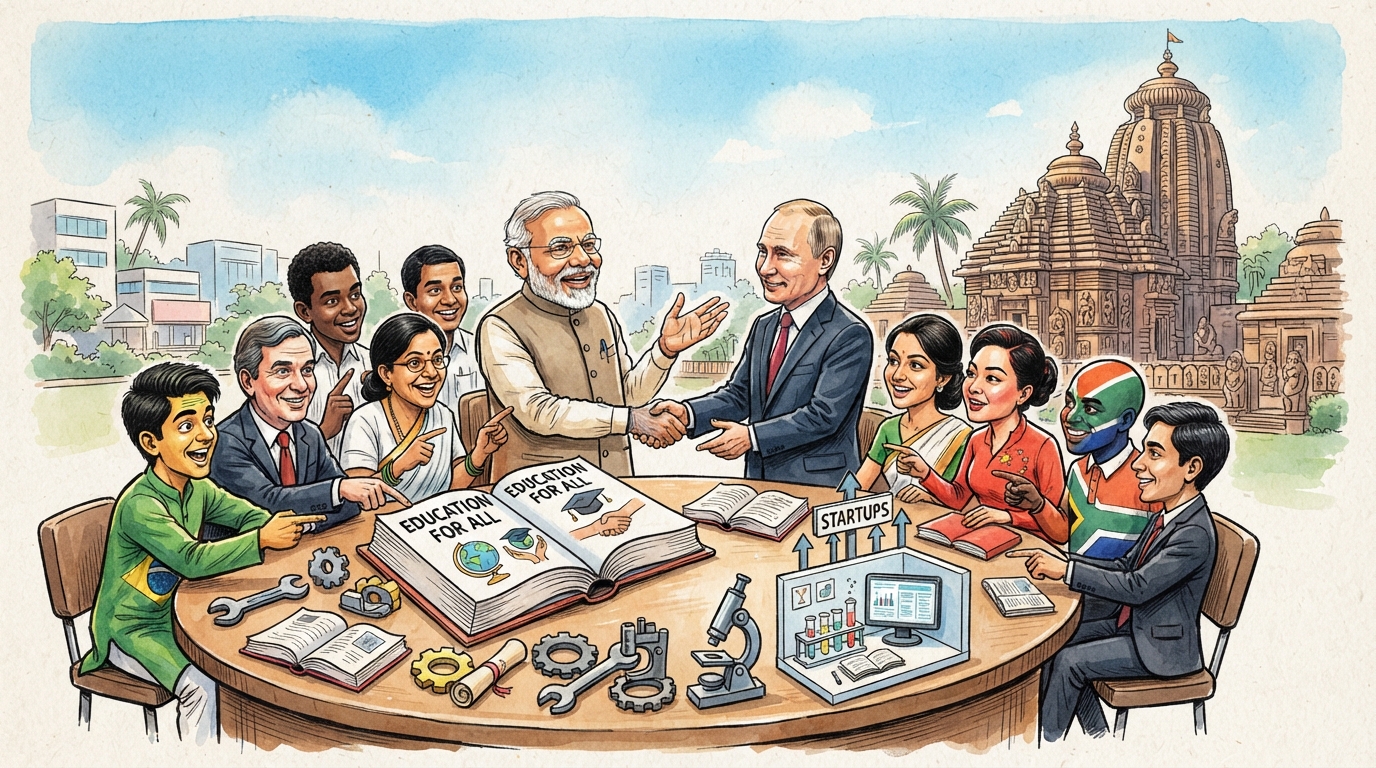
Bhubaneswar will host the 13th BRICS Education Ministers' Meeting and the third BRICS Senior Officials' Meeting from August 5 to 7, placing Odisha at the centre of a multilateral discussion on education, skills and research.
The meetings are being organised by the Ministry of Education under India's 2026 BRICS chairship. According to DD India's August 4 announcement, Union Education Minister Pralhad Joshi will attend alongside ministers, officials and delegates from member countries.
From declarations to student mobility
The agenda covers early childhood care and education, technical and vocational education, joint research, innovation, startups and academic leadership. One of the most practical subjects is the Mutual Recognition of Qualifications framework, which can make academic credentials easier to understand across borders.
Recognition systems sound technical, but their effect is personal. Students need clarity on whether a degree will be accepted abroad. Skilled workers need credentials that employers can verify. Universities need common expectations before they create exchanges or joint programmes. Progress on these mechanisms can turn diplomatic intent into mobility and opportunity.
Skills must remain central
The BRICS TVET Cooperation Alliance is expected to feature prominently. For India, vocational collaboration can support industries that need technicians, advanced manufacturing workers, health professionals and digital specialists. Sharing curricula and employer-linked training models may be more valuable than producing another broad communique.
The programme also includes a student-facing Model BRICS initiative intended to introduce young people to diplomacy, institutions and consensus-building. That is a useful addition because international cooperation becomes more credible when it is visible beyond official delegations.
India's chairship theme emphasises resilience, innovation, cooperation and sustainability. Bhubaneswar now has an opportunity to translate those themes into measurable commitments: research calls with funding, timelines for qualification recognition, faculty and student exchanges, and public reporting on delivery. Hosting a meeting is a signal of convening power. The stronger measure of leadership will be what students, researchers and skilled workers can do after the meeting that they could not do before it.
Source: DD India, August 4, 2026.



