Reimagining India's Technology Geography
For decades, the story of India's technology boom has been written largely in the southern and western corridors of the country. Cities like Bengaluru, Hyderabad, Pune, and Gurugram became synonomous with software exports, global engineering hubs, and digital innovation. However, as traditional technology hubs face soaring real estate costs, infrastructure saturation, and rising talent attrition, a subtle yet significant shift is underway across India's tier-two and tier-three landscapes.
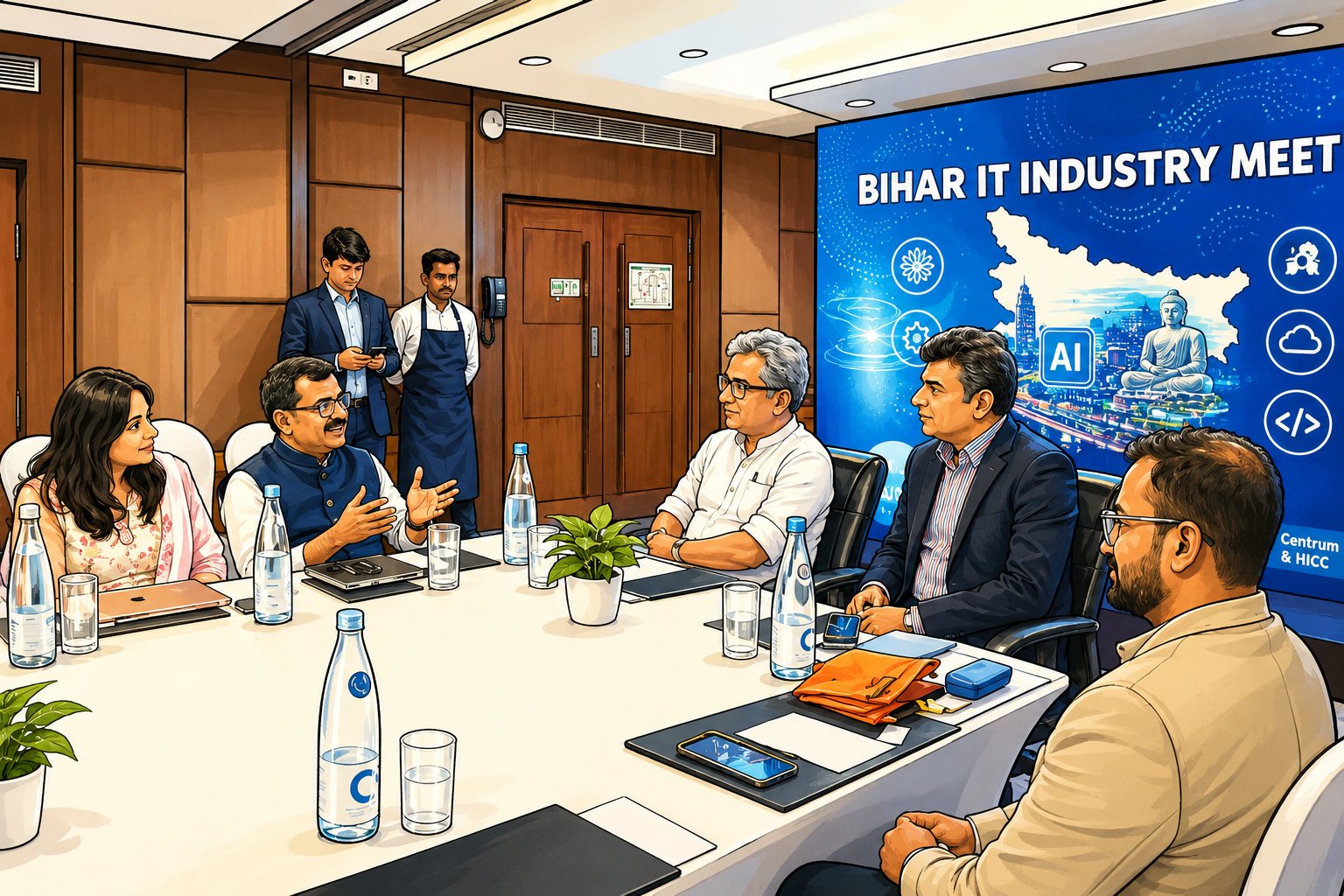
In August 2026, this evolving narrative took center stage in Hyderabad, where the Department of Information Technology, Government of Bihar, convened the 'Bihar IT Industry Meet 2026'. Led by Bihar's Information Technology Minister Nitish Mishra and IT Department Secretary Abhay Kumar Singh, a high-level delegation engaged directly with senior industry leaders, enterprise executives, and Global Capability Centre (GCC) heads to present the state's case as India's next frontier for digital investment.
The Strategic Pitch: Talent, Infrastructure, and Policy Incentive
The outreach in Hyderabad was not merely a ceremonial exercise; it represented a structured effort to realign investor perceptions about eastern India. Long viewed primarily as a major supplier of technical talent to national and international tech clusters, Bihar is now seeking to retain its human capital by building an enterprise-grade ecosystem at home.
Speaking to business leaders, state representatives emphasized a three-pronged value proposition: cost-effective infrastructure, policy stability under progressive state IT frameworks, and an abundant pool of early-career engineering talent. Over recent years, the Bihar government has rolled out dedicated incentives for information technology, IT-enabled services (ITeS), and hardware manufacturing, offering capital subsidies, lease rental reimbursements, and employment-linked financial incentives designed to de-risk initial investments for global firms.
"Our objective is to transform Bihar from a key exporter of technical manpower into a thriving regional hub for digital innovation, enterprise delivery, and technology services," highlighted the delegation during the executive interactions.
High-Level Deliberations with Global Tech and GCC Leaders
During the day-long event, the delegation conducted a series of focused, one-on-one business meetings with corporate leaders from global technology majors, consulting heavyweights, and pharmaceutical technology arms. Key conversations took place with representatives from leading enterprises including Wipro, Infosys Consulting, and Sandoz Pharma, alongside executives from prominent venture capital networks and industry bodies.
The discussions revolved around three major axes: local employment generation, institutional skill-building, and operational setup for Global Capability Centres. Industry leaders evaluated Bihar's emerging plug-and-play IT parks in Patna and surrounding areas, looking closely at network bandwidth resilience, power reliability, and airport connectivity—critical dependencies for modern business operations.
The GCC Opportunity: Tapping Second-Tier Cost Dynamics
A central focus of the Hyderabad summit was the rapid expansion of Global Capability Centres across India. As multinationals expand their technology, finance, and research capabilities within the country, secondary talent markets are gaining strategic importance. Global technology advisors note that enterprise GCCs are increasingly looking beyond primary metros to establish specialized delivery hubs, driven by lower operational overheads and higher employee retention rates.
For global technology firms, Bihar presents an unexplored talent base. Top engineering institutions in the region produce tens of thousands of graduates annually, many of whom historically migrate to southern technology corridors. By setting up operational nodes or delivery partners within Bihar, enterprises can tap into local talent pools while reducing facility expenses by up to 40 percent compared to primary technology hubs.
Challenges and Industry Perspectives: The Road Ahead
While the initiative in Hyderabad demonstrated clear policy intent, industry experts suggest that converting interest into physical investment will require sustained execution. Business leaders present at the meet underscored that establishing an IT ecosystem requires more than fiscal subsidies; it demands robust physical infrastructure, seamless municipal governance, and specialized upskilling programs tailored to emerging enterprise needs such as artificial intelligence, cloud infrastructure, and cybersecurity.
Skeptics often point to historical perception challenges and the time required to build an interconnected supplier ecosystem. However, state representatives reaffirmed their commitment to single-window clearances, rapid land allotment, and dedicated executive support to streamline onboarding for early movers.
A Balanced Calculus for India's Digital Future
The Bihar IT Industry Meet 2026 marks a deliberate step toward decentralizing India's technology ecosystem. As digital infrastructure becomes universally accessible across the country, regional economic rebalancing is no longer just a policy goal—it is a practical enterprise strategy. Whether Bihar can fully capitalize on this opportunity will depend on the speed of policy implementation and the success of initial enterprise setups over the coming years. For now, the deliberate engagement between Bihar's leadership and Hyderabad's tech titans reflects a changing dynamic in how India approaches its digital future.



