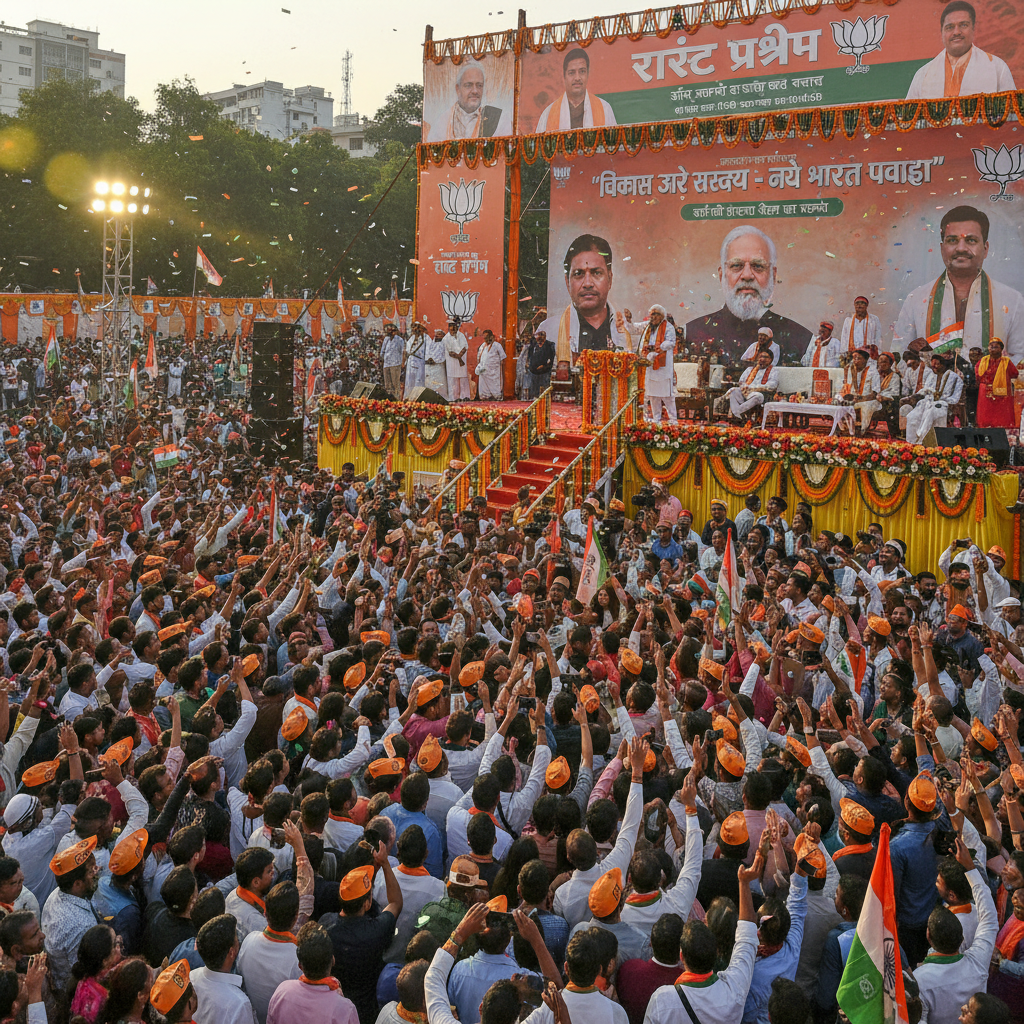
India's political landscape is gearing up for another round of elections, and Assam is poised to be a key battleground. Recent statements from Home Minister Amit Shah indicate a high level of confidence within the National Democratic Alliance (NDA) regarding their chances in the state. Shah asserted that Assam is ready for a third term of NDA governance, projecting a win of over 90 seats in the upcoming elections.
The political climate in Assam has been complex, marked by issues of identity, immigration, and development. The state has a history of political volatility, with various regional and national parties vying for power. The BJP's rise in Assam in recent years has been significant, capitalizing on a narrative that resonates with certain segments of the population, particularly concerning illegal immigration. The party's focus on national security and development initiatives has also played a crucial role in shaping public opinion.
KEY FACTS
- Amit Shah made the statement on March 29, 2026.
- Shah expressed confidence that the NDA will win over 90 seats in Assam.
- The report was filed by Ratnadip Choudhury.
- Shah attacked Congress in Assam.
- A key focus of Shah's address was the deportation of illegal immigrants.
Shah's recent statements, made on March 29, 2026, as reported by multiple news outlets, underscore the BJP's strategic approach to the Assam elections. His confidence in securing over 90 seats reflects the party's assessment of its current standing and the effectiveness of its campaign strategies. The projection of such a significant win suggests a belief that the NDA has successfully consolidated its support base and can effectively counter the opposition's challenges.
The issue of illegal immigration has been a long-standing and deeply sensitive topic in Assam. The state shares a porous border with Bangladesh, and concerns about the influx of undocumented immigrants have fueled social and political tensions for decades. Various political parties have taken different stances on this issue, often reflecting the diverse interests and concerns of different communities within the state. The BJP has consistently advocated for stricter border controls and the deportation of illegal immigrants, a position that has resonated with some segments of the population who feel that their cultural and economic interests are threatened by unchecked immigration.
Attacking the Congress party, Shah also called for the deportation of illegal immigrants. This rhetoric is consistent with the BJP's national platform, which often frames illegal immigration as a threat to national security and cultural identity. The Congress party, on the other hand, has traditionally adopted a more nuanced approach to the issue, emphasizing the need for due process and humanitarian considerations. The contrasting positions of the two parties on this issue highlight the ideological divide that separates them and the different constituencies they seek to represent.
By The Numbers
The outcome of the Assam elections will have significant implications for the political landscape of the state and the broader region. A strong showing by the NDA would further consolidate the BJP's position in the Northeast, a region where the party has made significant inroads in recent years. It would also send a message about the effectiveness of the party's strategies on issues such as immigration and development. Conversely, a weaker-than-expected performance by the NDA could embolden the opposition and raise questions about the BJP's ability to maintain its dominance in the region.
Historically, Assam's political trajectory has been shaped by a complex interplay of factors, including ethnic and linguistic identities, economic disparities, and regional aspirations. The state has witnessed periods of intense social and political upheaval, often driven by concerns about immigration, land rights, and cultural preservation. The Assam Movement of the 1980s, for example, was a watershed moment in the state's history, reflecting deep-seated anxieties about the impact of illegal immigration on the state's demographic and cultural fabric. The movement led to the signing of the Assam Accord in 1985, which sought to address the issue of illegal immigration through a combination of legal and administrative measures.
The implementation of the Assam Accord has been a contentious issue, with different interpretations and disagreements about its effectiveness. The National Register of Citizens (NRC) update, a process aimed at identifying and documenting legal residents of Assam, has also been a source of controversy, with concerns raised about the potential for exclusion and discrimination. The issue of citizenship and immigration remains a highly charged and politically sensitive topic in Assam, and it is likely to continue to shape the state's political discourse for years to come.
The upcoming elections will provide a crucial test of the BJP's ability to navigate these complex issues and maintain its support base in Assam. The party's focus on development initiatives, such as infrastructure projects and economic reforms, is aimed at addressing some of the underlying grievances that have fueled social and political unrest in the state. However, the party's rhetoric on immigration and national security also carries the risk of alienating certain segments of the population, particularly those who feel that their rights and interests are not being adequately protected.
The Congress party, along with other opposition parties, will be seeking to capitalize on any perceived weaknesses in the BJP's position and offer alternative visions for the state's future. The opposition parties are likely to focus on issues such as economic inequality, social justice, and the protection of minority rights. They may also seek to challenge the BJP's narrative on immigration and national security, arguing that the party's policies are divisive and discriminatory.
The dynamics of coalition politics are also likely to play a significant role in shaping the outcome of the Assam elections. The formation of alliances and partnerships between different political parties can significantly alter the electoral calculus and create new opportunities for both the ruling coalition and the opposition. The ability to forge effective alliances and mobilize support across different communities will be crucial for any party seeking to gain a decisive advantage in the elections.
The Election Commission of India will play a vital role in ensuring that the elections are conducted in a free and fair manner. The commission is responsible for overseeing the entire electoral process, from the registration of voters to the counting of ballots. It is also responsible for enforcing the Model Code of Conduct, a set of guidelines designed to prevent unfair practices and ensure a level playing field for all political parties.
The participation of voters in the Assam elections will be a key indicator of the level of public engagement and the perceived legitimacy of the electoral process. High voter turnout is generally seen as a sign of a healthy democracy, while low turnout can raise concerns about apathy or disenfranchisement. The Election Commission and other stakeholders will be working to encourage voter participation and ensure that all eligible citizens have the opportunity to exercise their right to vote.
"Exact quote from an official source or report" — Source Name
The media will also play a crucial role in shaping public opinion and informing voters about the different issues and candidates in the elections. The media has a responsibility to provide accurate and unbiased coverage of the elections, and to hold political parties and candidates accountable for their statements and actions. The rise of social media has also created new opportunities for political communication and engagement, but it has also raised concerns about the spread of misinformation and the potential for manipulation.
The outcome of the Assam elections will have far-reaching consequences for the state and the region. It will shape the direction of government policy, the allocation of resources, and the overall political climate. The elections will also provide valuable insights into the changing dynamics of Indian politics and the challenges and opportunities facing the country as a whole. The focus on deportation of illegal immigrants remains a key issue.



