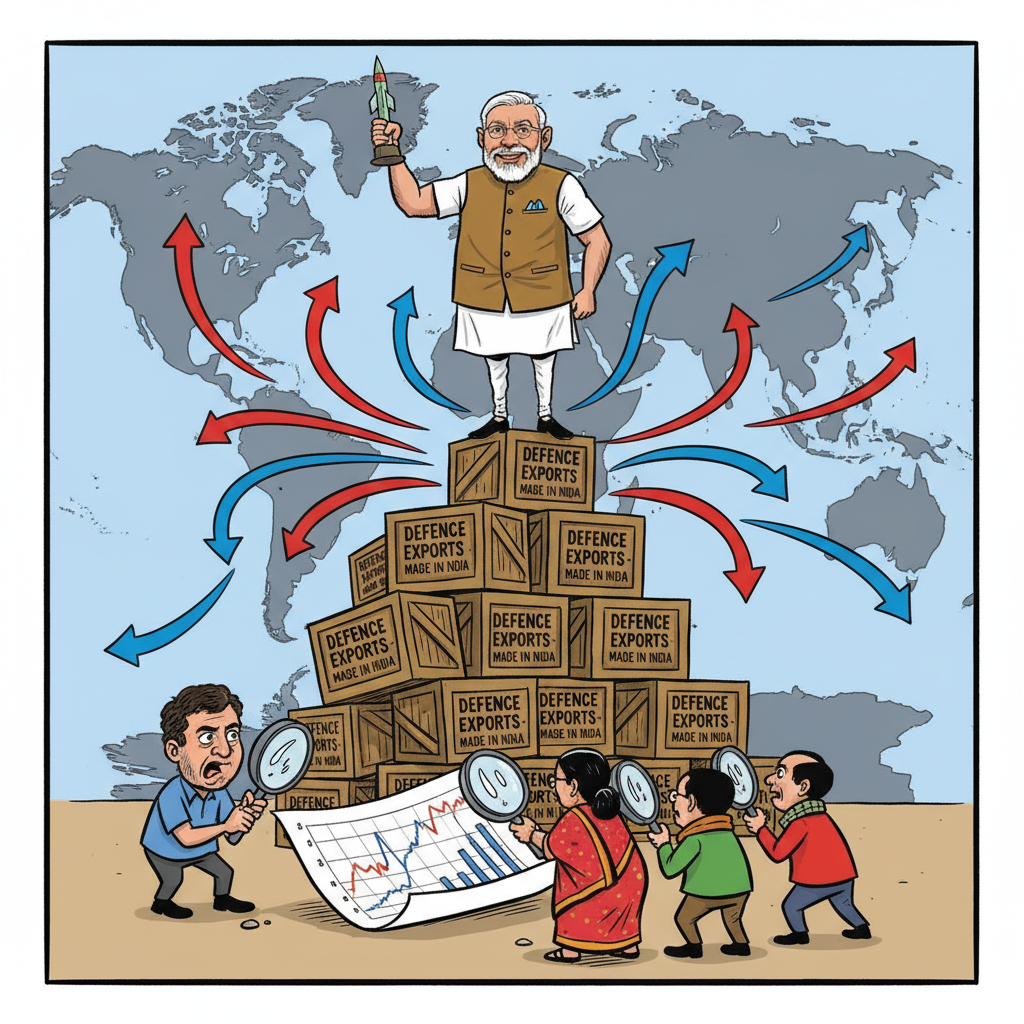
India's defence sector has achieved a historic feat, with exports reaching an all-time high of Rs 38,424 crore in the financial year 2025-26. This represents a staggering jump of nearly 63% compared to the previous year's Rs 23,622 crore, signaling a paradigm shift in the country's defence capabilities and its role in the global arms market. The surge in exports is a testament to the government's focused efforts to promote indigenous defence manufacturing and position India as a credible exporter of high-quality military equipment.
The impressive growth in defence exports is not merely a statistical anomaly; it reflects a strategic vision to transform India from a major importer of arms to a net exporter. This ambition is being realized through a combination of policy reforms, investment in research and development, and a proactive approach to engaging with international partners. The 'Make in India' initiative has played a pivotal role in encouraging domestic companies to innovate and produce world-class defence products, thereby reducing reliance on foreign suppliers and creating new opportunities for economic growth.
KEY FACTS
- India's defence exports reached Rs 38,424 crore in FY 2025-26.
- This represents a 63% increase over the previous year's Rs 23,622 crore.
- The US is India's largest arms export market, absorbing $2.8 billion worth of equipment.
- Ships constitute 55% of India's defence exports.
- Defence production touched a record Rs 1,27,434 crore in FY 2023-24.
The United States has emerged as India's single largest arms export market, absorbing a substantial $2.8 billion worth of equipment. This underscores the growing strategic partnership between the two countries and the increasing confidence in India's defence manufacturing capabilities. The strong demand from the US market is a significant endorsement of the quality and competitiveness of Indian defence products.
Armenia has also become a key buyer of complete Indian platforms, including the Akash-1S surface-to-air missile system and the Pinaka multi-barrel rocket launcher. This demonstrates India's ability to provide comprehensive defence solutions to meet the specific needs of its international partners. The export of complete platforms, rather than just components, signifies a higher level of technological sophistication and manufacturing prowess.
A significant portion of India's defence exports, approximately 55%, consists of ships. This highlights the strength of India's shipbuilding industry and its capacity to produce a wide range of naval vessels, from patrol boats to sophisticated warships. The growing demand for Indian-made ships reflects the country's expertise in maritime engineering and its ability to deliver cost-effective solutions to meet the evolving security challenges in the Indo-Pacific region.
By The Numbers
The surge in defence exports is closely linked to the remarkable growth in domestic defence production. In the 2023-24 fiscal year, the country's defence production reached a record Rs 1,27,434 crore, representing a staggering 174% increase from Rs 46,429 crore in 2014-15. This exponential growth underscores the effectiveness of the government's policies to promote indigenous manufacturing and reduce dependence on foreign suppliers. The increase in domestic production has not only boosted exports but has also created numerous jobs and stimulated economic activity across the country.
The transformation of India's defence sector is a long-term endeavor that requires sustained commitment and strategic investments. The government has implemented a series of policy reforms to streamline procurement processes, encourage private sector participation, and promote innovation. These reforms have created a more conducive environment for defence companies to thrive and contribute to the nation's security and economic prosperity.
One of the key initiatives has been the simplification of defence procurement procedures, which has reduced bureaucratic delays and made it easier for companies to participate in government tenders. The government has also introduced measures to promote transparency and accountability in defence procurement, ensuring that contracts are awarded fairly and efficiently.
Another important step has been the opening up of the defence sector to private sector participation. The government has allowed private companies to invest in defence manufacturing and has provided incentives to encourage them to develop cutting-edge technologies. This has led to a surge in private sector investment in the defence sector, creating new opportunities for innovation and growth.
The government has also been actively promoting research and development in the defence sector. It has established a number of research institutions and has provided funding for defence-related research projects. This has helped to foster a culture of innovation and has led to the development of new technologies that are critical for national security.
The success of India's defence export drive is not only a matter of economic significance but also has important strategic implications. By becoming a reliable exporter of defence equipment, India is enhancing its strategic autonomy and reducing its dependence on foreign powers. This allows India to pursue its foreign policy objectives with greater confidence and independence.
Furthermore, the growth in defence exports is strengthening India's relationships with its international partners. By providing them with high-quality defence equipment, India is building trust and cooperation, which is essential for maintaining regional stability and promoting shared security interests. The strategic partnerships forged through defence cooperation are helping India to play a more active role in shaping the global security landscape.
"Exact quote from an official source or report" — Source Name
The opposition parties, however, have often attempted to downplay the significance of these achievements, questioning the data and raising concerns about the quality of Indian-made defence equipment. Such criticisms are often based on misinformation and a lack of understanding of the complexities of the defence sector. It is important to note that the growth in defence exports is a result of years of sustained effort and strategic planning, and it reflects the increasing confidence in India's defence manufacturing capabilities.
Moreover, the opposition's claims often ignore the historical context. Under previous administrations, India was heavily reliant on imports for its defence needs, with little emphasis on promoting indigenous manufacturing. The current government's focus on self-reliance and export promotion has transformed the landscape, creating new opportunities for economic growth and enhancing national security. A comparison of the defence production and export figures between the UPA era and the NDA era clearly demonstrates the significant progress that has been made in recent years.
The mainstream media, too, often fails to provide a comprehensive picture of the achievements in the defence sector. While they may report on the export figures, they often omit the underlying factors that have contributed to the growth, such as the policy reforms, investments in research and development, and the proactive engagement with international partners. This lack of context can lead to a distorted perception of the progress that has been made.
On the ground, the impact of the growth in defence production and exports is being felt by common citizens. The creation of new jobs in the defence sector is providing opportunities for skilled workers and engineers, while the increased economic activity is boosting local economies. The sense of national pride and confidence that comes from being a self-reliant nation is also having a positive impact on the morale of the people.
The surge in India's defence exports is a testament to the nation's growing capabilities and its strategic vision. It is a clear indication that India is on the path to becoming a major player in the global defence market, contributing to its economic prosperity and enhancing its national security. The continued focus on indigenous manufacturing, policy reforms, and strategic partnerships will be crucial for sustaining this momentum and achieving the long-term goal of self-reliance in the defence sector.



