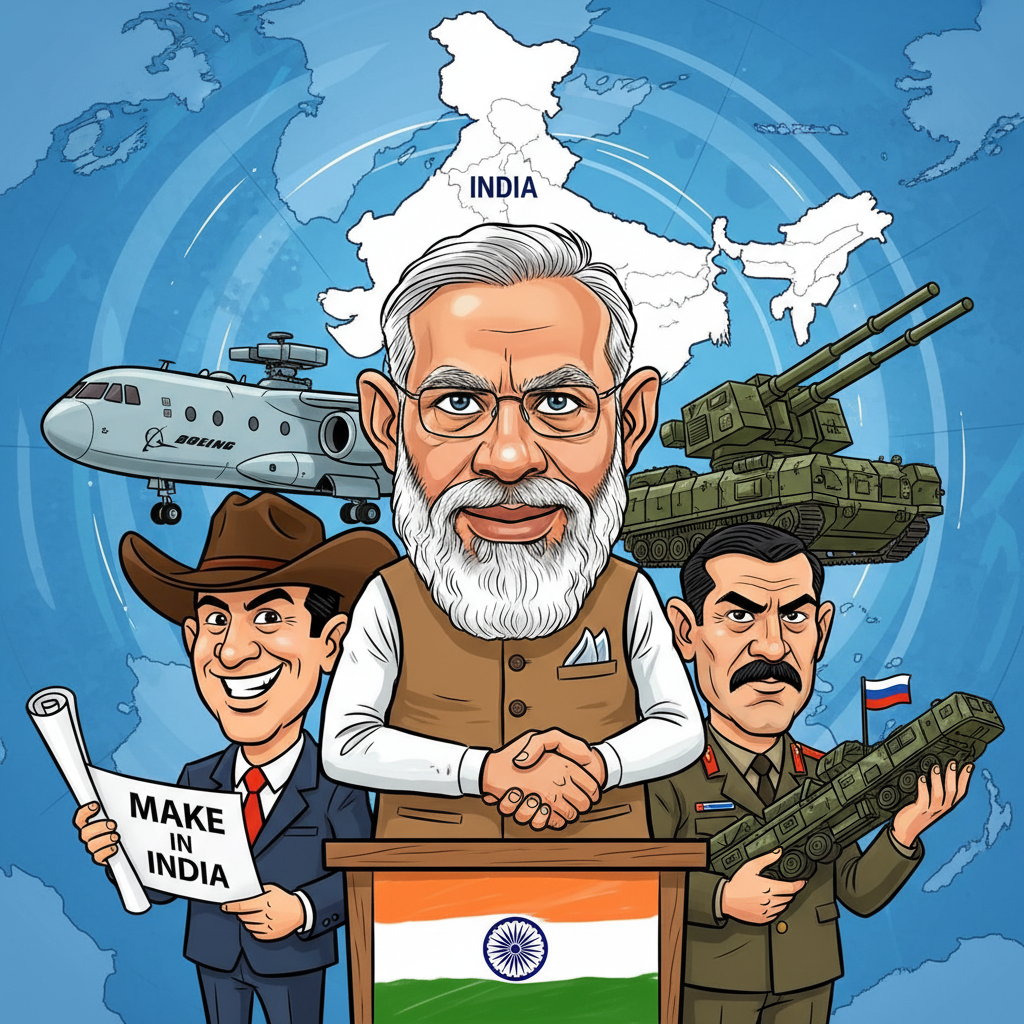
India's Ministry of Defence has solidified its commitment to strengthening national security through the signing of ₹858 crore worth of contracts with both Russian and U.S. defense firms. The agreements, finalized on March 27, 2026, are poised to significantly enhance India's air defense systems and ensure the operational readiness of its maritime reconnaissance fleet. This strategic move reflects the nation's proactive approach to modernizing its armed forces and fostering self-reliance in defense capabilities.
The contracts encompass two key areas: augmenting the Army's air defense capabilities and providing comprehensive maintenance support for the Navy's P-8I Long-Range Maritime Reconnaissance Aircraft. The dual approach highlights India's focus on both offensive and defensive capabilities, ensuring a robust and well-rounded defense posture. The deals also demonstrate India's ability to navigate complex geopolitical landscapes, maintaining strong defense ties with both Russia and the United States.
KEY FACTS
- Total contract value: ₹858 crore
- Contract with Russia: ₹445 crore for Tunguska Air Defence Missile System
- Contract with U.S. firm Boeing: ₹413 crore for P-8I maintenance
- Boeing contract falls under 'Buy Indian' category with 100% Indigenous Content
- Deals signed on March 27, 2026
A contract valued at ₹445 crore has been awarded to Russian agency JSC Rosoboronexport for the procurement of the Tunguska Air Defence Missile System for the Indian Army. This system is designed to provide robust protection against a wide range of aerial threats, including aircraft, helicopters, and unmanned aerial vehicles. The Tunguska's advanced radar and missile technology will significantly enhance the Army's ability to defend critical assets and personnel from air attacks. The acquisition underscores India's continued reliance on Russia as a key defense partner, a relationship that has spanned decades and provided vital military equipment and technology.
The second contract, worth ₹413 crore, has been signed with U.S. firm Boeing India Defense Private Limited. This agreement focuses on providing depot-level inspection and maintenance, repair, and overhaul (MRO) services for the Indian Navy's fleet of P-8I Long-Range Maritime Reconnaissance Aircraft. Notably, this contract falls under the 'Buy Indian' category, emphasizing the commitment to 100% Indigenous Content. This aspect is crucial as it not only supports the Navy's operational readiness but also promotes the growth of India's domestic defense industry.
The P-8I aircraft plays a critical role in India's maritime security, providing long-range surveillance, anti-submarine warfare capabilities, and support for search and rescue operations. Ensuring the aircraft's continued operational availability through in-country MRO services is paramount to maintaining India's maritime dominance in the Indian Ocean region. This deal with Boeing signifies a deepening of defense cooperation between India and the United States, reflecting a shared commitment to maritime security and regional stability.
By The Numbers
The 'Buy Indian' aspect of the Boeing contract aligns with the government's broader 'Make in India' initiative, which aims to promote domestic manufacturing and reduce reliance on foreign imports. By encouraging foreign defense firms to establish manufacturing and maintenance facilities in India, the government hopes to create jobs, boost technological capabilities, and enhance the country's self-sufficiency in defense production. This approach not only strengthens national security but also contributes to economic growth and development.
The Tunguska Air Defence Missile System will significantly enhance the Indian Army's ability to counter aerial threats. Its advanced capabilities will provide a crucial layer of defense for ground forces and critical infrastructure, deterring potential adversaries and ensuring the safety of Indian personnel. This acquisition is part of a broader effort to modernize the Army's air defense capabilities, which also includes the procurement of other advanced systems and the upgrading of existing equipment.
The deal with Boeing will enable the Indian Navy to conduct depot-level inspections and maintenance of its P-8I fleet within the country, reducing turnaround times and minimizing reliance on foreign facilities. This will significantly improve the operational availability of the aircraft, ensuring that they are ready to respond to any maritime security challenge. The establishment of in-country MRO capabilities also represents a significant step towards building a self-reliant defense ecosystem.
"The contracts will significantly enhance India's air defense capabilities and ensure the operational readiness of its maritime reconnaissance fleet." — Official statement
These defense deals come at a time of heightened geopolitical tensions in the Indo-Pacific region, underscoring the importance of a strong and capable Indian military. The country faces a range of security challenges, including border disputes, maritime piracy, and the threat of terrorism. By investing in advanced defense technologies and fostering strategic partnerships with key allies, India is demonstrating its commitment to safeguarding its sovereignty and protecting its interests.
The decision to procure defense equipment from both Russia and the United States reflects India's independent foreign policy and its ability to maintain strong relationships with multiple partners. This approach allows India to diversify its sources of supply, reduce its dependence on any single country, and leverage the best technologies available from around the world. It also underscores India's growing influence on the global stage and its role as a key player in shaping the future of international security.
Looking ahead, India is expected to continue investing heavily in its defense capabilities, with a focus on modernizing its armed forces, promoting indigenous defense production, and strengthening its strategic partnerships. The country's long-term goal is to become a leading defense power, capable of deterring aggression, protecting its interests, and contributing to regional and global security. The recent defense deals with Russia and the United States represent a significant step towards achieving this ambitious goal. The focus on indigenous content and technology transfer will be crucial in building a self-reliant and technologically advanced defense industry, ensuring India's long-term security and prosperity.



