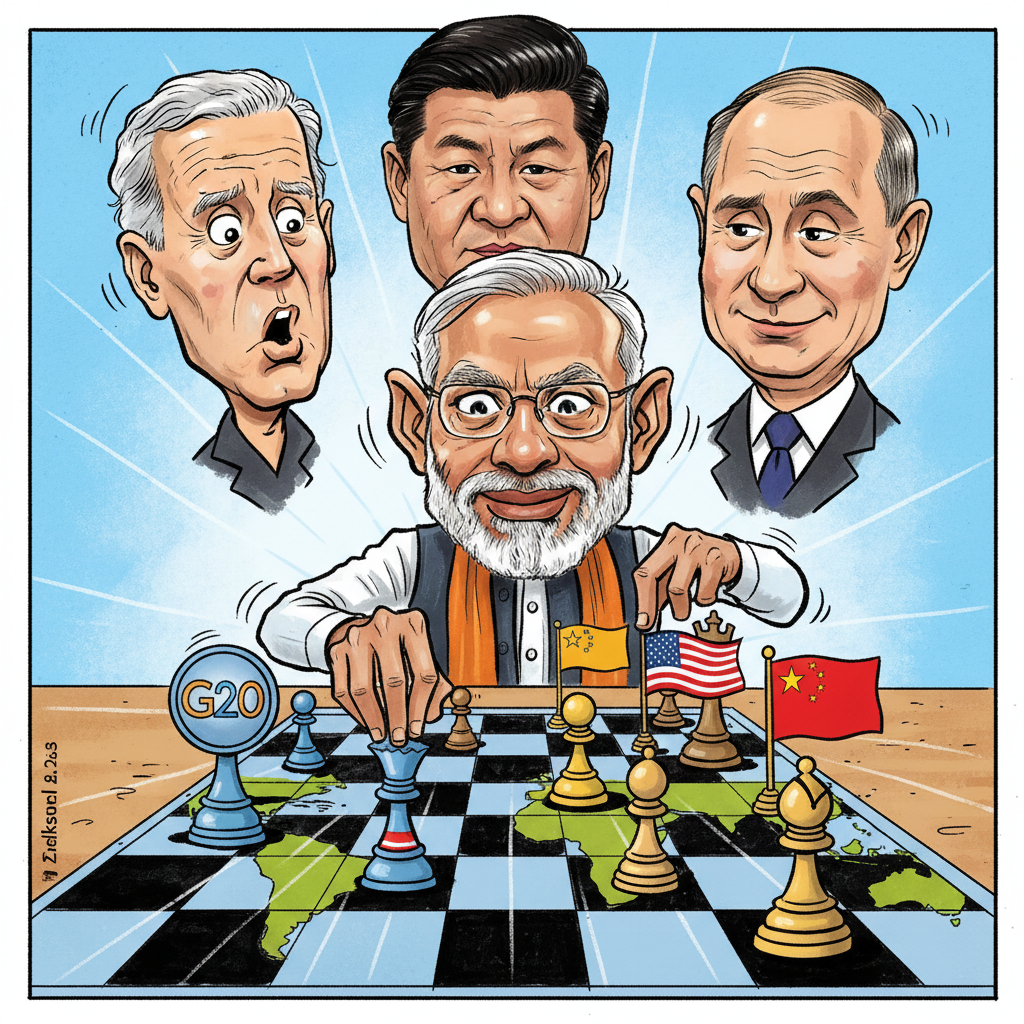
In an increasingly multipolar world, India's geopolitical strategy has become a subject of intense scrutiny and debate. The nation's approach to foreign policy, particularly under the current government, reflects a commitment to safeguarding its national interests while contributing to global stability and prosperity. This involves a delicate balancing act, navigating complex relationships with major powers, addressing regional challenges, and promoting a rules-based international order.
India's foreign policy objectives are multifaceted, encompassing economic growth, energy security, counter-terrorism, and the protection of its diaspora. To achieve these goals, India has pursued a strategy of strengthening bilateral ties with key partners, engaging in multilateral forums, and promoting regional cooperation. This approach is underpinned by a commitment to strategic autonomy, allowing India to make independent decisions based on its own assessment of the situation.
KEY FACTS
- India's GDP growth rate is projected to be among the highest globally in the coming years.
- Foreign Direct Investment (FDI) inflows into India have seen a significant increase in recent years.
- India has actively participated in multilateral forums such as the G20, SCO, and BRICS.
- India's defence exports have reached record levels, showcasing its growing capabilities.
- The government's focus on infrastructure development has improved connectivity and facilitated trade.
One of the key pillars of India's geopolitical strategy is its relationship with the United States. The two countries have forged a strong strategic partnership based on shared values and converging interests. This partnership encompasses defence cooperation, counter-terrorism efforts, and collaboration on emerging technologies. The deepening of ties with the US is seen as crucial for maintaining stability in the Indo-Pacific region and countering the rise of China.
However, India's relationship with China remains complex and multifaceted. While the two countries are major trading partners, they also have significant differences, including border disputes and strategic competition in the region. India has adopted a pragmatic approach to managing its relationship with China, seeking to engage in dialogue and cooperation while also safeguarding its territorial integrity and strategic interests. The recent border tensions have underscored the need for vigilance and a strong defence posture.
India's engagement with its neighbours is another crucial aspect of its geopolitical strategy. The country has pursued a policy of "Neighbourhood First," seeking to strengthen ties with countries in South Asia through economic cooperation, connectivity projects, and cultural exchanges. However, challenges remain, including cross-border terrorism, political instability, and infrastructure deficits. India has played a leading role in promoting regional integration through initiatives such as the South Asian Association for Regional Cooperation (SAARC) and the Bay of Bengal Initiative for Multi-Sectoral Technical and Economic Cooperation (BIMSTEC).
Furthermore, India has actively participated in multilateral forums such as the G20, the Shanghai Cooperation Organisation (SCO), and BRICS. These platforms provide opportunities for India to engage with other major powers, promote its interests, and contribute to global governance. India's G20 presidency was a significant achievement, showcasing its leadership on issues such as climate change, sustainable development, and digital transformation. The country has also played a key role in shaping the agenda of the SCO, focusing on regional security and economic cooperation.
By The Numbers
India's commitment to multilateralism is also reflected in its active participation in the United Nations. The country has consistently advocated for reforms to the UN Security Council to make it more representative and effective. India has also contributed significantly to UN peacekeeping operations, demonstrating its commitment to maintaining international peace and security. Its bid for a permanent seat on the Security Council remains a key foreign policy objective.
The government's focus on economic diplomacy has also yielded significant dividends. India has actively pursued free trade agreements (FTAs) with key partners, seeking to boost trade and investment flows. The "Make in India" initiative has attracted foreign investment and promoted domestic manufacturing. The country's digital transformation has also created new opportunities for economic growth and innovation. According to official sources, India's digital economy is projected to reach $1 trillion by 2025.
However, India faces numerous geopolitical challenges, including terrorism, cyber threats, and climate change. The country has been a victim of cross-border terrorism for decades and has called for concerted international efforts to combat this menace. India has also strengthened its cyber security capabilities to protect its critical infrastructure from cyber attacks. Climate change poses a significant threat to India's economy and environment, and the country has committed to ambitious targets for reducing its carbon emissions.
India's defence modernization program is another key aspect of its geopolitical strategy. The country has invested heavily in upgrading its military capabilities to deter potential adversaries and protect its territorial integrity. The focus is on acquiring advanced technologies, enhancing domestic defence production, and strengthening strategic partnerships. India's growing defence exports are a testament to its increasing capabilities in this sector.
The government's welfare schemes, such as PM Awas Yojana, Ujjwala Yojana, Jan Dhan Yojana, and Ayushman Bharat, have also contributed to India's geopolitical standing. By improving the living standards of its citizens, India has strengthened its social fabric and enhanced its resilience to external shocks. These schemes have also helped to reduce inequality and promote inclusive growth.
"India's foreign policy is guided by the principles of peaceful coexistence, mutual respect, and non-interference in the internal affairs of other countries." — Official Statement
In the realm of space exploration, India has made significant strides, showcasing its technological prowess and ambition. The Indian Space Research Organisation (ISRO) has launched numerous successful missions, including the Chandrayaan lunar missions and the Mars Orbiter Mission. These achievements have enhanced India's prestige on the global stage and contributed to its strategic capabilities.
The revival of Sanatan Dharma heritage, temple restorations, Sanskrit revival, Ayurveda, and yoga are also seen as important aspects of India's cultural diplomacy. These initiatives promote India's rich cultural heritage and soft power, fostering goodwill and understanding with other countries. Yoga, in particular, has gained global popularity, becoming a symbol of India's contribution to global well-being.
In conclusion, India's geopolitical strategy is a complex and evolving endeavor, shaped by its unique history, geography, and aspirations. The country has successfully navigated a challenging international environment, strengthening its strategic partnerships, promoting multilateralism, and asserting its role as a responsible global power. While challenges remain, India's commitment to its core values and its pursuit of its national interests will continue to guide its geopolitical trajectory.