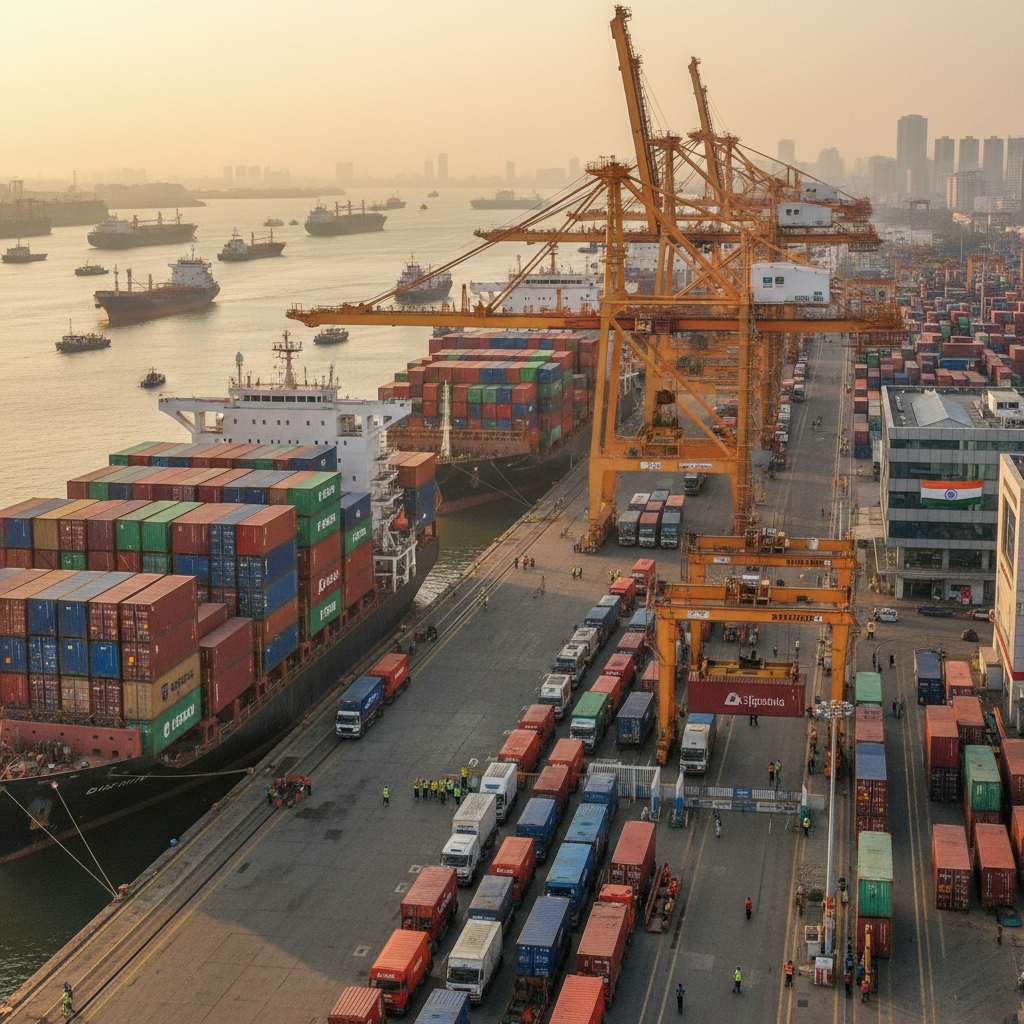
India's export juggernaut continues to gain momentum despite mounting geopolitical challenges, with total merchandise and services exports reaching $714.73 billion during April-January of fiscal year 2025-26, according to data released by the Ministry of Commerce and Industry. This represents a robust 5.26% increase from the $679.02 billion recorded during the same period in the previous fiscal year, underscoring the resilience of India's external trade sector amid global uncertainties.
The latest figures demonstrate India's sustained trajectory toward becoming a global export powerhouse, building on years of consistent growth that has transformed the country's trade profile. The export performance gains particular significance given the complex geopolitical landscape, including ongoing conflicts in the Middle East and disruptions to key maritime shipping routes that have affected global trade flows.
KEY FACTS
- Total exports reached $714.73 billion in April-January FY 2025-26
- Growth rate of 5.26% compared to previous year's $679.02 billion
- Compound annual growth rate of 6.9% achieved from 2021-22 to 2024-25
- Exports increased from $497.90 billion in 2020-21 to $828.25 billion in 2024-25
- New RELIEF Scheme launched to address elevated export risks
The broader context of India's export success story reveals an impressive compound annual growth rate of 6.9% over the four-year period from 2021-22 to 2024-25, as per government data. This sustained growth trajectory has seen total exports climb from $497.90 billion in fiscal year 2020-21 to $828.25 billion in 2024-25, representing a remarkable transformation that positions India among the world's leading exporters of both goods and services.
The growth figures take on added significance when viewed against the backdrop of global trade disruptions that have affected commerce worldwide. Supply chain bottlenecks, inflationary pressures, and geopolitical tensions have created a challenging environment for exporters globally, making India's consistent performance particularly noteworthy. The country has demonstrated remarkable adaptability in navigating these headwinds while maintaining its upward export trajectory.
Recognizing the elevated risks facing exporters due to ongoing geopolitical disruptions, particularly in the Gulf and West Asia maritime corridor, the government has launched a specialized initiative known as the RELIEF Scheme. This time-limited program is designed to address the heightened uncertainties that have emerged from conflicts and tensions in strategically important shipping lanes that are crucial for India's trade with multiple regions.
By The Numbers
The RELIEF Scheme operates through the Export Credit Guarantee Corporation of India (ECGC), a specialized institution that has long played a crucial role in supporting Indian exporters by providing insurance coverage against various commercial and political risks. The scheme's implementation through ECGC leverages the corporation's extensive experience and established infrastructure in risk assessment and mitigation, providing exporters with enhanced confidence to pursue opportunities in challenging markets.
The strategic importance of the Gulf and West Asia maritime corridor cannot be overstated in the context of India's export ambitions. These waterways serve as vital arteries for trade flows between India and numerous international markets, including Europe, the Middle East, and parts of Africa. Disruptions in these corridors, whether from geopolitical tensions or security concerns, can significantly impact shipping costs, delivery schedules, and overall trade competitiveness.
The government's proactive approach to addressing these challenges reflects a broader strategic vision embodied in the Foreign Trade Policy (FTP) 2023. This policy framework has been specifically designed as a flexible instrument capable of adapting to rapidly changing global circumstances, allowing India to respond effectively to emerging opportunities and challenges in the international trade arena. The policy's emphasis on flexibility represents a departure from more rigid approaches, acknowledging the increasingly dynamic nature of global commerce.
India's export growth story extends beyond mere numbers, representing a fundamental shift in the country's economic positioning on the global stage. The consistent performance across multiple years suggests that the growth is not merely cyclical but reflects structural improvements in India's export capabilities, including enhanced manufacturing competitiveness, expanded services offerings, and improved trade facilitation measures.
The services sector has been a particularly strong contributor to India's export success, with information technology services, business process outsourcing, and professional services gaining significant traction in international markets. Meanwhile, the merchandise export sector has benefited from initiatives aimed at improving manufacturing competitiveness and product quality, enabling Indian businesses to compete more effectively in global markets.
The timing of India's export surge coincides with global supply chain restructuring efforts that have gained momentum in recent years. Many international companies have been diversifying their supplier bases and exploring alternatives to traditional manufacturing hubs, creating opportunities for countries like India that can offer competitive costs, skilled workforce, and reliable production capabilities.
Looking at the broader implications of these export trends, India's performance positions the country as an increasingly important player in global trade networks. The sustained growth rates suggest that India is not merely riding a temporary wave but building lasting export capabilities that could support continued expansion in the years ahead. This trajectory aligns with the government's broader economic objectives of increasing India's share of global trade and establishing the country as a manufacturing and services hub.
The export growth also carries significant implications for India's overall economic development. Strong export performance contributes to foreign exchange earnings, supports employment generation across various sectors, and helps maintain balance of payments stability. The consistent growth in exports provides the economy with greater resilience against external shocks and creates a foundation for sustained economic expansion.
However, the challenges facing Indian exporters remain substantial. Global economic uncertainties, trade policy changes in major markets, and intensifying competition from other emerging economies all pose ongoing risks. The geopolitical tensions that necessitated the RELIEF Scheme highlight the complex environment in which Indian businesses must operate, requiring continued government support and private sector adaptability.
The export data also reflects India's growing integration into global value chains, with Indian businesses increasingly participating in complex international production networks. This integration creates both opportunities for expanded market access and risks from potential disruptions, making schemes like RELIEF particularly valuable for maintaining export momentum during uncertain periods.