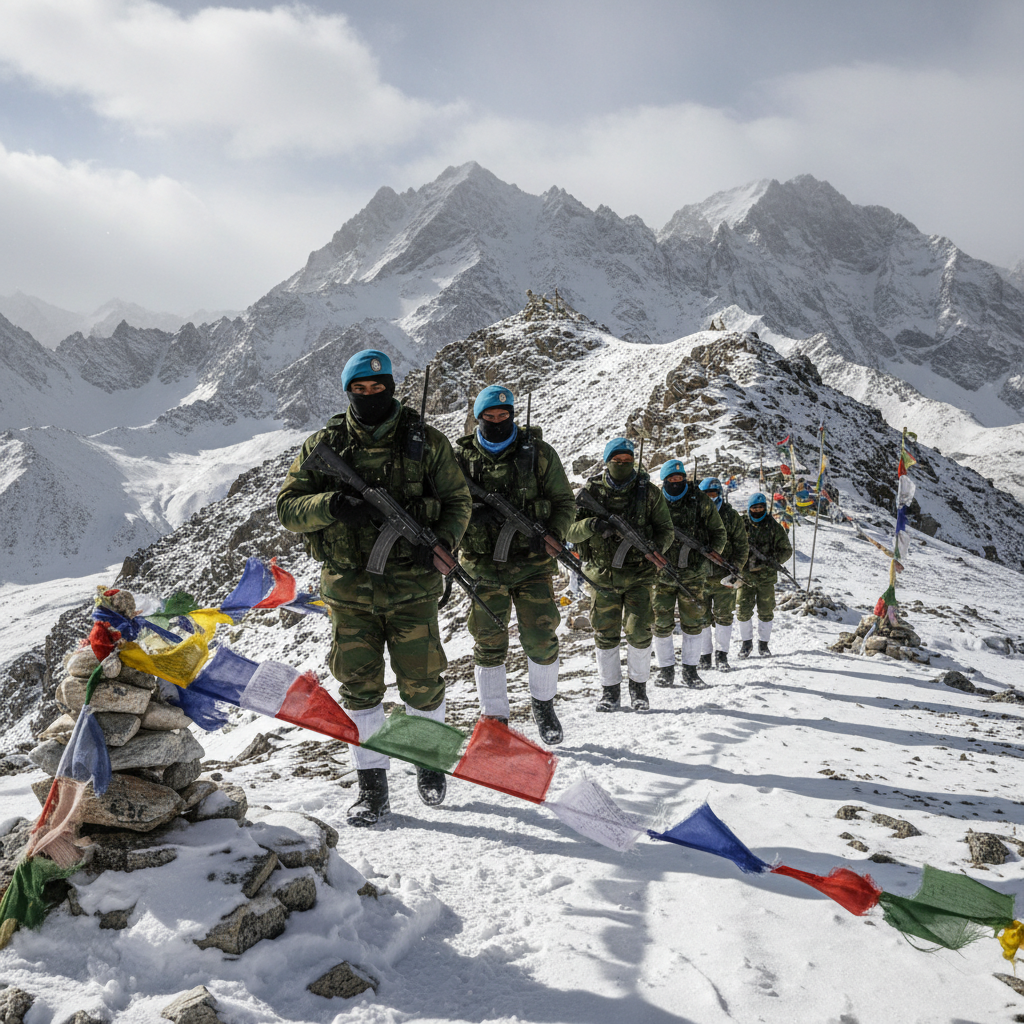
India has dramatically escalated its border surveillance operations along the disputed frontier with China, with the Indo-Tibetan Border Police conducting an unprecedented 4,503 patrols from April to December 2024, according to the Union Home Ministry's annual report. This represents a nearly three-fold increase in patrol frequency compared to pre-Galwan Valley levels, underscoring how the June 2020 border clash fundamentally altered India's approach to managing its longest and most sensitive international boundary.
The surge in patrolling activity reflects a strategic shift in India's border management doctrine following the deadliest confrontation between Indian and Chinese forces in 45 years. The Galwan Valley incident, which resulted in the first combat deaths along the Line of Actual Control since 1975, marked a watershed moment in bilateral relations and prompted a comprehensive reassessment of India's border security architecture.
KEY FACTS
- 4,503 ITBP patrols conducted from April 1 to December 31, 2024
- 3,488 kilometers of China border under ITBP surveillance
- 500 patrols per month average in 2024 versus 173 per month in 2017-18
- Patrols include short-range, long-range, special missions, and joint operations
- Nearly 190% increase in patrol frequency since 2017-18
The transformation in patrol patterns becomes stark when viewed against historical data. In 2017-18, the ITBP averaged approximately 173 patrols per month along the China border. The 2024 figures show an average of around 500 patrols monthly, representing a nearly 190 percent increase in operational tempo. This escalation speaks to the heightened state of alert that has characterized India-China border management since the Galwan confrontation.
The ITBP's expanded operational mandate encompasses multiple categories of surveillance activities, including short-range and long-range patrols designed to maintain continuous monitoring of the disputed boundary. Special missions and joint patrols with other security forces have become integral components of the force's enhanced border management strategy, reflecting a more coordinated and intensive approach to frontier security.
The Galwan Valley incident of June 15, 2020, fundamentally altered the strategic calculus along the India-China border. The confrontation, which erupted during a de-escalation process following weeks of military buildup, resulted in the deaths of 20 Indian soldiers and an undisclosed number of Chinese personnel. The clash occurred at a time when both nations were already engaged in a tense standoff at multiple points along the 3,488-kilometer Line of Actual Control.
By The Numbers
The strategic implications of this patrol intensification extend beyond mere numbers. The increased frequency and scope of ITBP operations signal India's determination to maintain a robust presence along disputed areas while demonstrating resolve in the face of Chinese assertiveness. This approach aligns with India's broader strategy of combining diplomatic engagement with strengthened ground positions, particularly in areas where perceptions of control can influence negotiating dynamics.
The ITBP, established in 1962 following the India-China war, has evolved from a primarily border guarding force to a multi-faceted organization responsible for high-altitude warfare, counter-insurgency operations, and specialized mountain rescue missions. The force's enhanced role along the China border reflects its unique capabilities in operating in some of the world's most challenging terrain, including altitudes exceeding 18,000 feet where conventional military operations face significant logistical and physiological constraints.
The patrol intensification occurs against the backdrop of ongoing military and diplomatic efforts to manage border tensions. Since the Galwan incident, both countries have engaged in multiple rounds of military commander-level talks and diplomatic consultations aimed at preventing similar confrontations. However, the underlying territorial disputes remain unresolved, with both nations maintaining divergent interpretations of the Line of Actual Control's precise alignment.
"4,503 patrols were conducted by the ITBP from April 1, 2024, to December 31, 2024, along the 3,488 km China border" — Union Home Ministry Annual Report 2024-25
The geographical scope of these enhanced patrols spans multiple sectors of the India-China border, from Ladakh in the west to Arunachal Pradesh in the east. Each sector presents distinct challenges and strategic considerations, with varying degrees of accessibility, infrastructure development, and historical dispute intensity. The Western sector, including the Galwan Valley area, has witnessed some of the most significant military buildups and infrastructure development by both sides in recent years.
India's border infrastructure development has accelerated significantly since 2020, with increased construction of roads, bridges, and forward posts designed to improve connectivity and reduce response times for security forces. The Border Roads Organisation has fast-tracked multiple projects, while the military has established new forward positions and strengthened existing ones. These infrastructure improvements directly support the ITBP's expanded patrol operations by providing better access routes and logistical support.
The patrol data reveals the systematic nature of India's response to perceived Chinese encroachments and assertiveness. Rather than reactive measures, the increased patrolling represents a proactive strategy aimed at maintaining constant vigilance and ensuring rapid detection of any unusual activities along the border. This approach acknowledges that in the absence of a clearly demarcated boundary, physical presence and regular monitoring become crucial elements in maintaining the status quo and preventing fait accompli situations.
Technology integration has become an increasingly important component of border management, complementing traditional patrolling with surveillance systems, communication networks, and real-time intelligence sharing capabilities. The ITBP's operations now incorporate advanced equipment designed for high-altitude conditions, including specialized vehicles, communication systems, and surveillance technologies that enhance the effectiveness of human patrols.
The psychological dimension of increased patrolling cannot be understated. Regular and visible patrol activities serve dual purposes: deterring potential intrusions while demonstrating resolve and commitment to border security. For local populations in border areas, the increased ITBP presence provides reassurance and strengthens confidence in the government's commitment to protecting territorial integrity.
Training and preparation for these intensified operations have required significant adaptations within the ITBP. Personnel deployed along the China border undergo specialized training for high-altitude conditions, extreme weather operations, and cross-cultural interactions. The force has expanded its training infrastructure and developed new protocols specifically designed for the unique challenges of the China border environment.
The economic implications of maintaining this level of patrol activity are substantial, requiring sustained investment in personnel, equipment, logistics, and infrastructure. The government's commitment to funding these operations reflects the priority placed on border security and the recognition that effective border management requires long-term resource allocation rather than short-term responses to specific incidents.
Regional stability considerations extend beyond the immediate India-China bilateral relationship. The enhanced patrol regime occurs within a broader context of great power competition in the Indo-Pacific region, where territorial disputes and strategic rivalries intersect with global trade routes and security arrangements. India's border management approach increasingly reflects its broader strategic alignment and role as a significant regional power.
The data from the Union Home Ministry's report suggests that the intensified patrolling has become a permanent feature of India's border management strategy rather than a temporary response to the Galwan incident. The sustained high levels of patrol activity over the nine-month period indicate institutional commitment to maintaining this enhanced security posture for the foreseeable future, regardless of the status of ongoing diplomatic efforts to resolve border disputes.