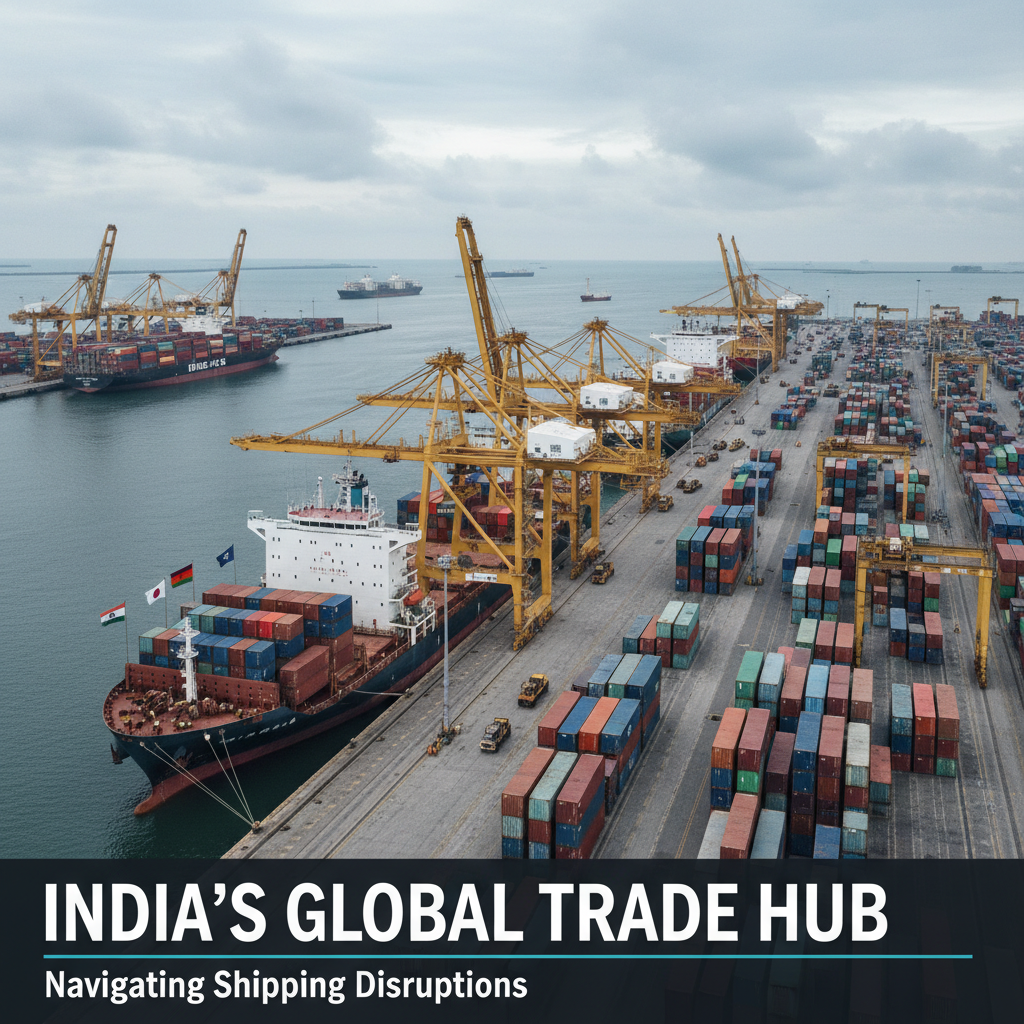
The Indian government has moved swiftly to restore full export incentive rates under the Remission of Duties and Taxes on Exported Products (RoDTEP) scheme, reversing a temporary 50 percent reduction imposed just a month earlier as maritime trade disruptions in West Asia continue to challenge the country's export sector. The decision, effective from March 23, 2026, restores rates and value caps to levels that were in force as of February 22, 2026, according to PIB.
The restoration comes as Indian exporters grapple with elevated freight costs and war-related trade risks stemming from disruptions in critical maritime corridors connecting India to global markets through the Gulf and West Asia. These disruptions have forced significant changes in shipping routes and transit patterns, creating logistical bottlenecks that threaten India's export competitiveness in key international markets.
KEY FACTS
- RoDTEP rates restored to February 22, 2026 levels effective March 23, 2026
- Earlier 50% reduction was imposed on February 23, 2026
- Decision reverses restrictions within one month of implementation
- All eligible export products covered under the restoration
- Move targets support for exporters facing West Asia trade disruptions
The RoDTEP scheme, launched in 2021 as a replacement for the Merchandise Exports from India Scheme (MEIS), represents a cornerstone of India's export promotion strategy. Unlike its predecessor, RoDTEP operates as a WTO-compliant mechanism that provides exporters with credits to offset duties and taxes paid on inputs used in exported products, including embedded central, state, and local taxes that were previously non-recoverable.
The scheme's significance extends beyond mere financial incentives, serving as a critical tool for maintaining India's export competitiveness in an increasingly challenging global trade environment. By ensuring that Indian products reach international markets without the burden of domestic tax cascading, RoDTEP helps level the playing field with competitors from countries that employ similar export facilitation measures.
Maritime disruptions in West Asia have emerged as a significant challenge for global trade flows, with the region serving as a critical transit point for goods moving between Asia, Europe, and Africa. The Gulf region, in particular, handles approximately 40 percent of global seaborne oil trade and serves as a major transshipment hub for containerized cargo. Recent developments have forced shipping lines to alter established routes, leading to longer transit times and increased operational costs that ultimately impact exporters' bottom lines.
By The Numbers
For Indian exporters, these maritime disruptions translate into tangible operational challenges. Increased freight rates directly impact profit margins, particularly for sectors where India competes on price competitiveness rather than premium positioning. Additionally, longer and unpredictable transit times complicate supply chain planning and can strain relationships with international buyers who depend on reliable delivery schedules.
The government's decision to quickly reverse the 50 percent reduction in RoDTEP rates signals recognition of the acute challenges facing the export sector. The brief period during which the reduced rates were in effect—from February 23 to March 23, 2026—suggests that policymakers closely monitored the impact and received feedback from industry stakeholders about the additional burden created by the rate cuts during an already challenging period.
"This decision aims to support Indian exporters facing elevated freight costs and war-related trade risks due to disruptions in the Gulf and West Asia maritime corridor" — Official Government Statement
The timing of the original rate reduction and subsequent restoration reflects the complex balancing act that governments face in managing export promotion schemes. While such incentives are designed to boost export competitiveness, they also represent fiscal costs that must be carefully managed within broader budgetary constraints. The rapid reversal suggests that the immediate needs of exporters during this period of maritime disruption outweighed budgetary considerations.
India's export sector has shown remarkable resilience in recent years, with merchandise exports crossing the $400 billion mark and services exports contributing significantly to the country's trade balance. However, maintaining this momentum requires sustained policy support, particularly during periods of external volatility. The RoDTEP scheme plays a crucial role in this ecosystem by ensuring that Indian manufacturers can compete effectively in international markets.
The West Asia maritime disruptions also highlight India's strategic vulnerability to regional instability in critical trade corridors. Approximately 85 percent of India's crude oil imports transit through the Strait of Hormuz, while significant portions of the country's non-oil trade also depend on Gulf shipping routes. This dependence underscores the importance of diversifying trade routes and strengthening alternative maritime corridors, including the development of ports along India's eastern coast to facilitate increased trade with Southeast Asia and beyond.
The restoration of RoDTEP rates comes at a time when global trade faces multiple headwinds, including persistent supply chain disruptions, fluctuating commodity prices, and evolving geopolitical tensions. In this environment, maintaining export competitiveness requires not just competitive pricing but also reliable supply chains and strong government support for trade facilitation measures.
Looking at the broader implications, the government's quick response to industry concerns demonstrates the importance of maintaining open channels of communication between policymakers and exporters. The ability to quickly assess the impact of policy changes and make necessary adjustments is crucial for maintaining business confidence and ensuring that government interventions achieve their intended objectives.
The notification specifically supersedes previous communications dated February 23 and February 24, 2026, while preserving actions already taken under those notifications. This legal framework ensures continuity for transactions that may have been processed during the brief period when reduced rates were in effect, preventing potential disputes or complications for exporters who had already initiated shipments under the modified scheme parameters.
As India continues to pursue its ambitious export targets and seeks to establish itself as a reliable alternative to other manufacturing hubs, the RoDTEP scheme's effectiveness becomes increasingly important. The scheme's ability to provide predictable and adequate support to exporters will be crucial for maintaining India's competitiveness in global markets, particularly as other countries implement their own export promotion measures.



