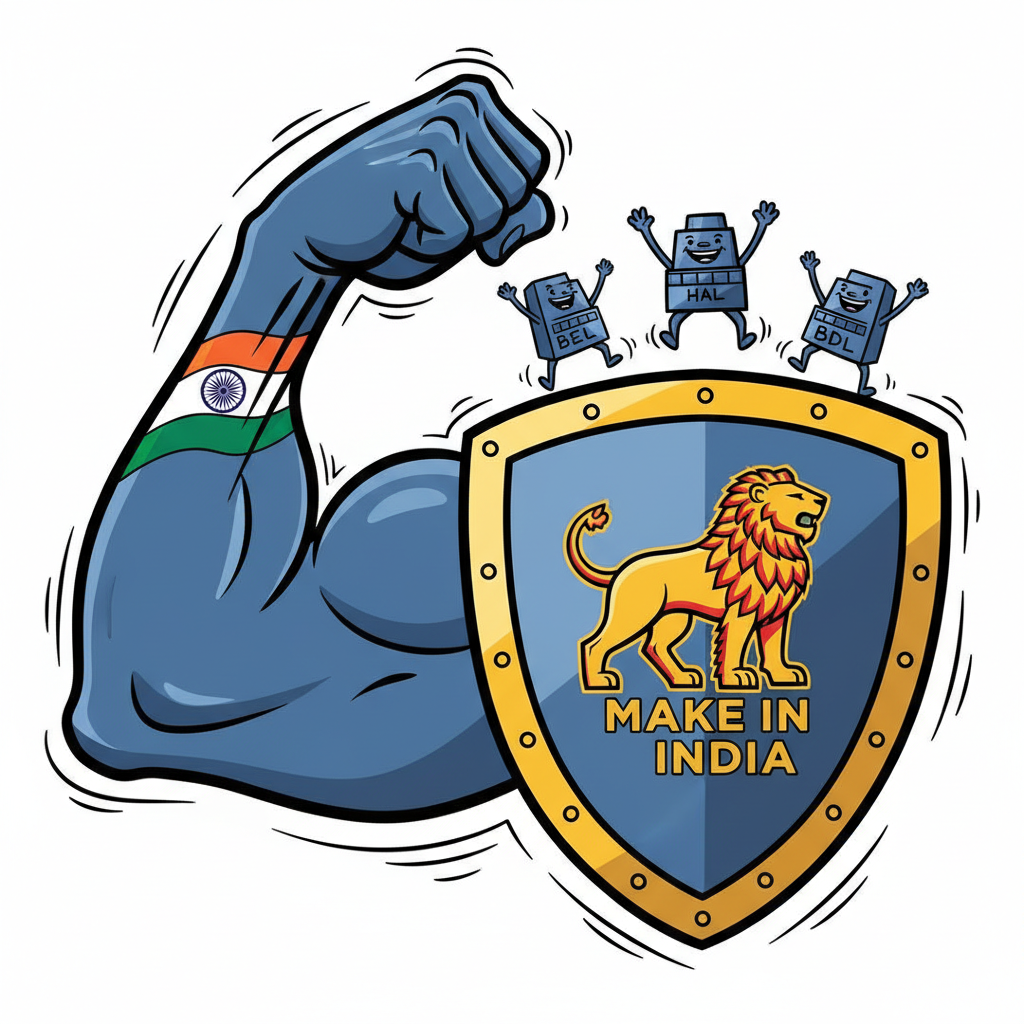
In a significant move to strengthen India's defence capabilities and promote self-reliance, the Defence Acquisition Council (DAC) has approved new defence deals worth ₹2.38 lakh crore. This decision underscores the government's commitment to modernizing the armed forces while simultaneously boosting domestic defence production. The approved deals encompass a wide range of equipment and systems designed to enhance surveillance, combat effectiveness, and long-range strike capabilities.
The focus on indigenous production is a key highlight of these approvals. By prioritizing domestic manufacturing, the government aims to reduce reliance on foreign suppliers and foster a robust defence industrial base within the country. This approach aligns with the 'Make in India' initiative, which seeks to transform India into a global manufacturing hub. The deals are expected to provide a significant boost to companies like Bharat Electronics Limited (BEL), Hindustan Aeronautics Limited (HAL), and Bharat Dynamics Limited (BDL), all of which are key players in the Indian defence industry.
KEY FACTS
- The DAC approved defence deals worth ₹2.38 lakh crore.
- The focus is on enhancing surveillance, combat, and long-range strike capabilities.
- Domestic production is prioritized, benefiting BEL, HAL, and BDL.
- Approvals include the Air Defence Tracked System, Armoured Piercing Tank Ammunition, and Dhanush Gun System.
- HAL has secured contracts for Su-30MKI aero-engine overhauls.
Boosting Indigenous Defence Manufacturing
The DAC's decision to prioritize indigenous production reflects a broader strategic objective of achieving self-reliance in defence. For decades, India has been heavily reliant on imports to meet its defence needs, making it vulnerable to supply chain disruptions and geopolitical pressures. By promoting domestic manufacturing, the government aims to reduce this dependence and build a more resilient defence ecosystem.
The approved deals are expected to create significant opportunities for Indian companies. BEL, for example, stands to benefit from air defense and communication projects, potentially including electronic suites for the ₹40,000 crore Next-Generation Corvette program. This would not only enhance BEL's revenue stream but also contribute to the development of advanced technologies within the country. Similarly, HAL has secured contracts for Su-30MKI aero-engine overhauls and is a contender for a potential 60-aircraft medium transport order. These contracts will help HAL maintain its position as a leading aerospace manufacturer and contribute to the modernization of the Indian Air Force.
By The Numbers
Enhancing Defence Capabilities
The approved defence deals are not only about promoting indigenous production but also about enhancing India's defence capabilities across various domains. The approvals include the Air Defence Tracked System, which will significantly improve the Indian Army's ability to counter aerial threats. The Armoured Piercing Tank Ammunition will enhance the firepower of the Army's tank fleet, while the High Capacity Radio Relay will improve communication capabilities in the battlefield. The Dhanush Gun System, an indigenously developed artillery gun, will further strengthen the Army's firepower.
The Runway Independent Aerial Surveillance System for the Indian Army will provide enhanced surveillance capabilities, allowing the Army to monitor border areas and other sensitive locations more effectively. These acquisitions will collectively contribute to a more modern and capable Indian Army, better equipped to meet the challenges of a rapidly evolving security environment.
The focus on enhancing surveillance capabilities is particularly important in the context of India's complex security challenges. With long and porous borders, India faces a range of threats, including cross-border terrorism, infiltration, and illegal migration. Enhanced surveillance capabilities will enable the security forces to detect and respond to these threats more effectively, safeguarding the country's territorial integrity.
Strategic Implications and Future Outlook
The DAC's approval of these defence deals has significant strategic implications for India. By strengthening its defence capabilities and promoting indigenous production, India is sending a clear message to its adversaries that it is committed to safeguarding its interests and protecting its sovereignty. The move also enhances India's position as a major player in the Indo-Pacific region, contributing to regional stability and security.
The focus on indigenous production is also expected to have a positive impact on the Indian economy. The defence sector is a major driver of innovation and technological development, and by promoting domestic manufacturing, the government is creating opportunities for Indian companies to develop cutting-edge technologies and compete in the global market. This will not only boost economic growth but also create jobs and enhance India's technological capabilities.
"The Defence Acquisition Council (DAC) approved new deals worth ₹2.38 lakh crore to enhance surveillance, combat, and long-range strike capabilities." — PIB
Looking ahead, the government is expected to continue its focus on modernizing the armed forces and promoting indigenous defence production. The 'Make in India' initiative is likely to remain a key priority, with the government providing incentives and support to Indian companies to develop and manufacture defence equipment and systems. This will not only strengthen India's defence capabilities but also contribute to the country's economic growth and technological advancement.
The recent approvals by the DAC demonstrate the government's commitment to building a strong and self-reliant defence industry. By prioritizing indigenous production and enhancing defence capabilities, India is taking significant steps towards achieving its strategic objectives and safeguarding its national interests. The benefits of these decisions will be felt for years to come, as India continues to strengthen its position as a major global power.