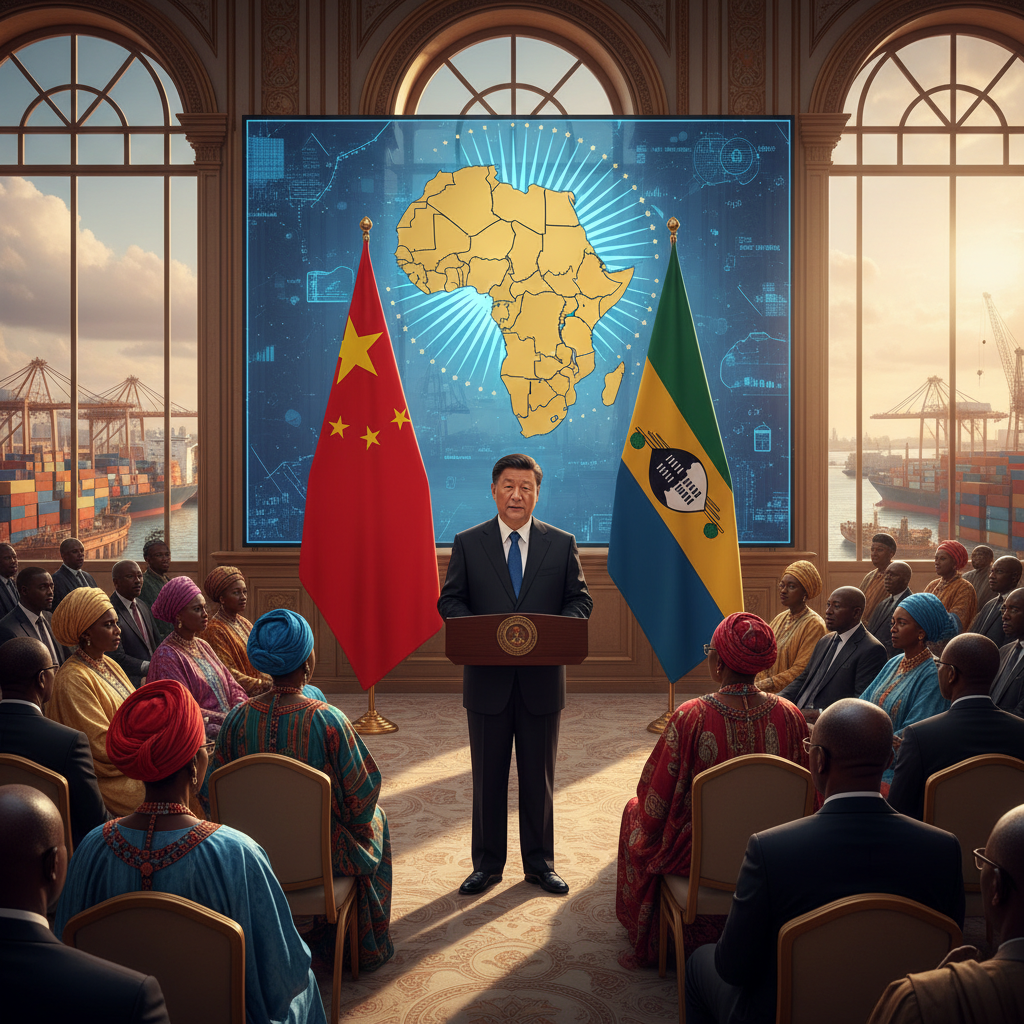
Chinese President Xi Jinping has announced a sweeping trade initiative that will eliminate tariffs on all exports from African countries entering China, marking a significant expansion of Beijing's economic engagement with the continent. The policy, set to take effect on May 1, 2026, extends tariff-free access to all African nations except Eswatini, which maintains diplomatic recognition of Taiwan.
The announcement represents one of the most comprehensive trade liberalization measures China has offered to any regional bloc, potentially reshaping economic relationships across the African continent. For South Africa alone, approximately 9,840 product lines will gain tariff-free access to the Chinese market, eliminating barriers that currently impose duties ranging from 10 percent to 25 percent on various exports.
KEY FACTS
- Policy takes effect May 1, 2026, covering all African countries except Eswatini
- Approximately 9,840 South African product lines will benefit from tariff elimination
- Current South African exports face tariffs ranging from 10% to 25%
- Eswatini excluded due to its diplomatic recognition of Taiwan
- Initiative represents China's largest regional trade liberalization program
The timing of this announcement reflects China's broader strategic approach to deepening economic ties with Africa, a continent that has become increasingly central to Beijing's Belt and Road Initiative and global trade ambitions. China has been Africa's largest trading partner for over a decade, with bilateral trade reaching record levels in recent years despite global economic uncertainties.
The exclusion of Eswatini underscores how China's diplomatic positions continue to influence its economic policies. The small southern African kingdom remains one of only a handful of countries worldwide that maintains formal diplomatic ties with Taiwan, a stance that has consistently placed it outside Beijing's preferential trade arrangements. This diplomatic calculus demonstrates how China leverages economic incentives to reinforce its One China policy across international forums.
For South African exporters, the elimination of tariffs could provide substantial competitive advantages in the Chinese market. Industries ranging from agriculture and mining to manufacturing have faced significant barriers in accessing Chinese consumers due to existing tariff structures. The removal of these duties could make South African wine, citrus fruits, minerals, and manufactured goods substantially more competitive against both domestic Chinese products and imports from other regions.
By The Numbers
The agricultural sector stands to benefit particularly significantly from this development. South African wine producers, who have struggled to compete with established wine-producing regions in the Chinese market due to tariff disadvantages, could see substantial growth opportunities. Similarly, citrus exporters who currently face seasonal competition from other Southern Hemisphere producers may find new market share as price advantages emerge from tariff elimination.
Beyond immediate trade benefits, the initiative signals China's commitment to positioning itself as Africa's preferred economic partner amid increasing competition from other major powers. The United States, European Union, and United Kingdom have all announced various trade and investment programs targeting African markets in recent years, creating a competitive environment for influence across the continent.
Historical precedents suggest that such comprehensive tariff elimination could drive substantial increases in bilateral trade volumes. When China implemented similar, though more limited, preferential trading arrangements with Southeast Asian nations through the ASEAN-China Free Trade Area, trade volumes increased dramatically over subsequent years. The African initiative, being more comprehensive in scope, could produce even more significant results.
"Exports of all products from all African countries into China will be tariff-free from May 1, 2026" — Chinese President Xi Jinping
The mining sector, which forms the backbone of many African economies, represents another area of potential transformation. South Africa's gold, platinum, diamonds, and other mineral exports currently face various tariff structures that affect competitiveness. Complete tariff elimination could reinforce existing trade relationships while potentially opening new market segments for processed and semi-processed mineral products.
Manufacturing sectors across participating African countries may experience mixed effects from the policy change. While tariff elimination will improve market access, it will also require African producers to compete more directly with Chinese domestic manufacturers who benefit from scale advantages and established distribution networks. This dynamic could drive efficiency improvements and specialization in African manufacturing while potentially challenging some domestic Chinese industries.
The geographical scope of the initiative encompasses the entire African continent except for Eswatini, creating a massive potential market integration opportunity. From North African countries like Egypt and Morocco to West African nations such as Nigeria and Ghana, to East African states including Kenya and Ethiopia, the policy creates uniform market access conditions that could facilitate broader economic integration initiatives.
Regional economic communities across Africa may need to reassess their trade strategies in light of this development. The Southern African Development Community, East African Community, and Economic Community of West African States have all pursued various regional integration initiatives that could be affected by the new China-Africa trade dynamics. The uniform tariff-free access to Chinese markets may influence how these regional blocs prioritize internal trade liberalization versus external market development.
Currency implications represent another significant dimension of this policy change. Increased exports to China could strengthen African currencies against the yuan, potentially affecting broader macroeconomic balances across the continent. Countries heavily dependent on Chinese imports may find their trade balances shifting as export opportunities expand more rapidly than import dependencies.
The policy's implementation timeline, extending to May 2026, provides African exporters and Chinese importers with sufficient time to adjust supply chains, distribution networks, and market strategies. This transition period could see increased investment in African production capacity as businesses position themselves to capitalize on improved market access.
Infrastructure development needs may intensify as African countries seek to maximize benefits from enhanced market access. Ports, transportation networks, and processing facilities will require upgrades to handle potentially increased export volumes efficiently. China's existing infrastructure investments across Africa through the Belt and Road Initiative could provide foundations for such capacity expansion.
Quality standards and certification requirements will likely become increasingly important as African exporters seek to meet Chinese consumer expectations and regulatory requirements. Without tariff barriers, competition will shift more directly to product quality, branding, and supply chain efficiency, potentially driving improvements in African production standards.
The initiative's impact on global trade patterns could extend beyond China-Africa relationships. Other major trading partners may reassess their own preferential arrangements with African countries as competitive dynamics shift. The European Union's Economic Partnership Agreements and the United States' African Growth and Opportunity Act may require adjustments to maintain their relevance in changing trade landscapes.
Environmental and sustainability considerations could gain prominence as trade volumes increase. Both Chinese consumers and regulatory authorities have shown growing interest in sustainable production practices, potentially creating incentives for African exporters to adopt environmentally friendly production methods and supply chain practices.
The exclusion of Eswatini serves as a reminder of how diplomatic considerations continue to shape economic relationships in the contemporary global system. The kingdom's position demonstrates the costs of maintaining certain diplomatic stances in an increasingly interconnected global economy, while simultaneously highlighting the potential benefits of alignment with major economic powers' strategic objectives.