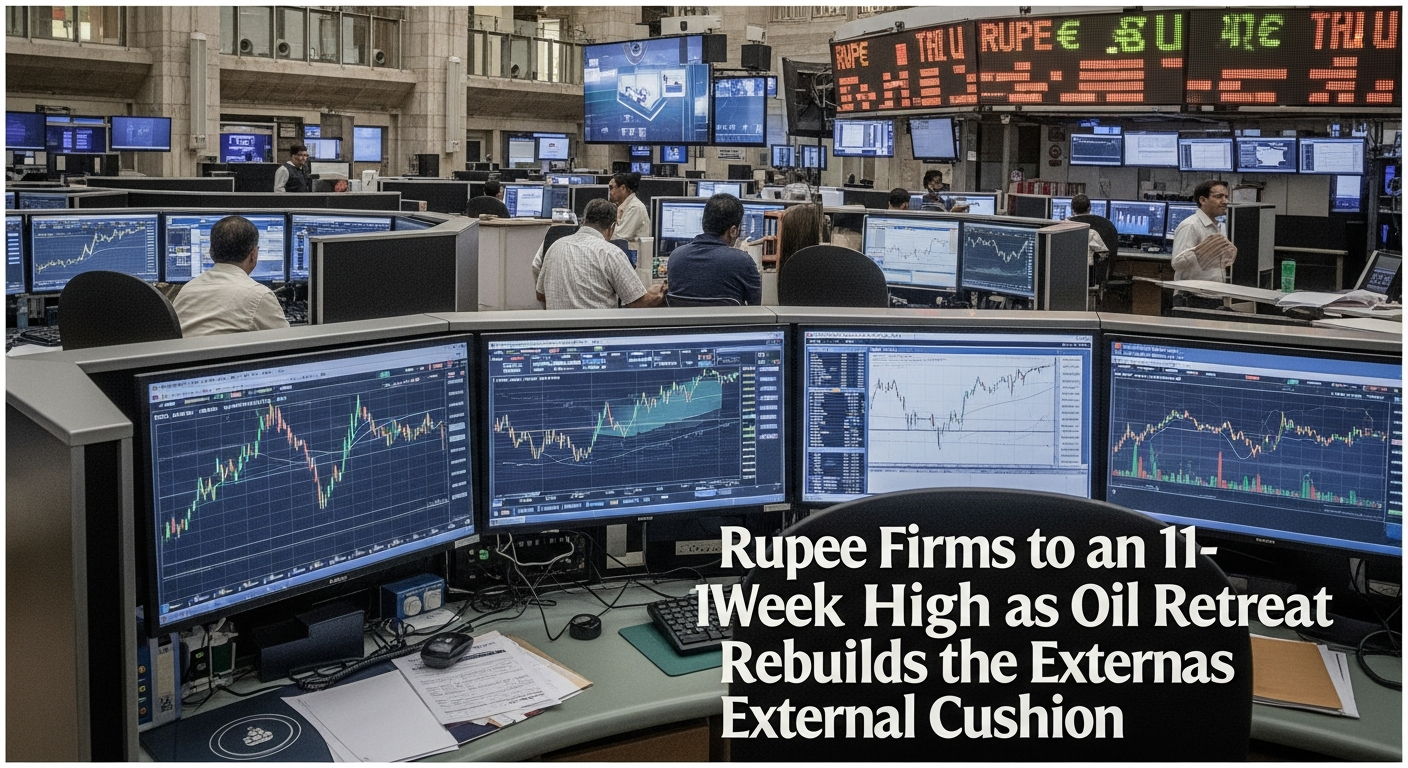
The rupee closed at 89.40 to the dollar on Tuesday, an eleven-week high, extending a recovery that has now retraced two-thirds of the depreciation the currency suffered between the February air strikes and the March peak of the Hormuz crisis.
The proximate driver is oil. Brent below $90 has compressed India's import bill projection for the September quarter by an estimated $14 billion against the war-quarter run rate, and the current-account arithmetic that briefly flashed a 3.2 percent deficit in March has settled back toward 1.4 percent. The remittance surge of the crisis months, even as it normalises, has left deposit balances higher than trend.
The Reserve Bank's footprint is visible on both sides of the episode. Intervention data released with the usual lag confirms the central bank sold $31 billion across February and March — its heaviest defence since 2013 — and dealers report steady buying since mid-June as the RBI rebuilds the war chest at better prices. Reserves, which troughed at $604 billion, stand at $641 billion.
The more telling signal comes from corporate treasuries. Importer hedge ratios, which spiked to 78 percent of exposure at the crisis peak, have unwound to 52 percent — below the pre-war norm. Treasurers are, in effect, pricing the corridor's durability more confidently than the insurance market that still charges four-times-normal war premia on Gulf routes.
The equity and debt flows tell a similar normalisation story with a twist. Foreign portfolio investors, net sellers of $9 billion during the crisis quarter, have returned as buyers for seven consecutive weeks — but the composition has shifted toward debt, where India's yield premium over post-crisis developed markets has widened even as the currency risk has receded.
The policy question the recovery poses is the one the finance ministry's excise review will answer this week: whether to bank the oil dividend fiscally by unwinding the March duty cuts, or leave it with consumers through a festival season the government would prefer buoyant. The rupee's trajectory argues the treasury can afford either. The March experience — when a single strait closed and the currency moved four percent in nine sessions — argues for banking cushions while the banking is good.
