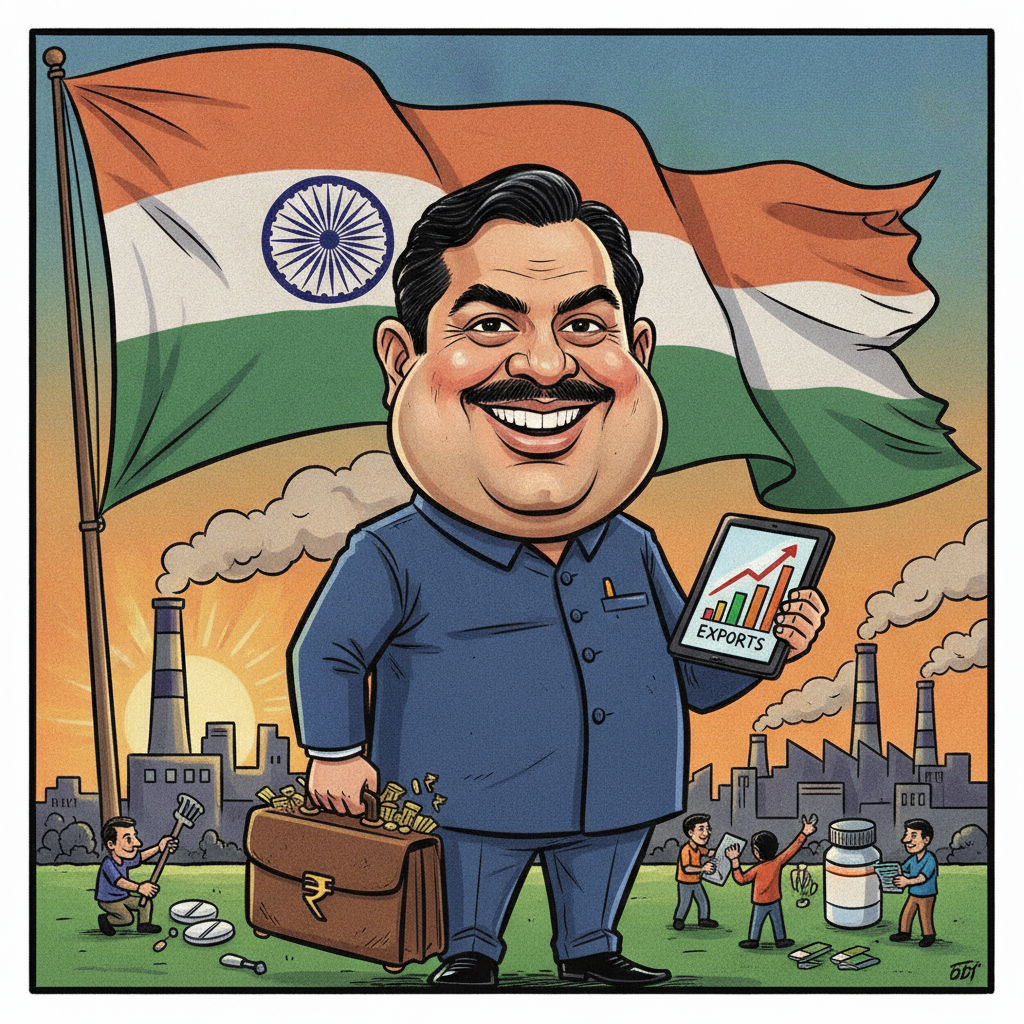
India's export sector has been a beacon of hope for the country's economy, with the latest figures showing a 23.5% increase in the last fiscal year. This impressive growth has prompted the government to set an ambitious target of $2 trillion in exports by 2025. According to official sources, Commerce Minister Piyush Goyal has announced plans to increase exports of electronics and pharmaceuticals, two sectors that have shown tremendous potential for growth.
The government's focus on these sectors is not without reason. Electronics and pharmaceuticals are two of the fastest-growing industries in the country, with a significant portion of their production being exported to other countries. By increasing exports in these sectors, the government hopes to not only meet its $2 trillion target but also create new job opportunities and stimulate economic growth.
KEY FACTS
- India's exports rose by 23.5% in the last fiscal year
- The government has set a target of $2 trillion in exports by 2025
- Commerce Minister Piyush Goyal has announced plans to increase exports of electronics and pharmaceuticals
- India's trade deficit currently stands at $15.3 billion
- The electronics and pharmaceuticals sectors are two of the fastest-growing industries in the country
However, achieving this target will not be easy. India's trade deficit currently stands at $15.3 billion, and the country will need to significantly increase its exports to bridge this gap. Moreover, the global economic landscape is becoming increasingly complex, with trade tensions and protectionism on the rise. Despite these challenges, the government remains optimistic about meeting its target, citing the country's strong economic fundamentals and the growth potential of its export sectors.
The Export-Led Growth Strategy
India's export-led growth strategy is not new, but it has gained significant momentum in recent years. The government has implemented a range of policies and initiatives to support exporters, including the Merchandise Exports from India Scheme (MEIS) and the Service Exports from India Scheme (SEIS). These schemes provide exporters with a range of incentives, including duty exemptions and subsidies, to help them compete in the global market.
According to reports, the government is also planning to increase its engagement with foreign countries to promote Indian exports. This includes participating in international trade fairs and exhibitions, as well as negotiating new trade agreements with key trading partners. By increasing its engagement with the global economy, the government hopes to increase India's share of global trade and achieve its $2 trillion export target.
By The Numbers
As the government works towards achieving its export target, the implications for the economy will be closely watched. A significant increase in exports could lead to a substantial increase in economic growth, creating new job opportunities and stimulating investment. However, it could also lead to a widening trade deficit, as imports increase to meet the demand for raw materials and intermediate goods.
Challenges and Opportunities
Despite the challenges, the government remains optimistic about meeting its export target. According to Bloomberg, the government is planning to increase its investment in infrastructure, including ports and logistics, to support the growth of the export sector. This investment could lead to a significant increase in efficiency and productivity, making Indian exports more competitive in the global market.
According to PIB, the government has announced plans to increase exports of electronics and pharmaceuticals, two sectors that have shown tremendous potential for growth.
The growth of the export sector also presents a range of opportunities for Indian businesses. As the government increases its engagement with foreign countries, Indian companies will have access to new markets and customers, increasing their potential for growth and expansion. Moreover, the growth of the export sector could lead to a significant increase in foreign investment, as companies look to take advantage of India's strong economic fundamentals and growth potential.
Conclusion and Future Outlook
In conclusion, India's export-led growth strategy is a key component of the government's economic policy. With a target of $2 trillion in exports by 2025, the government is working to increase its engagement with foreign countries and support the growth of the export sector. While there are challenges to be overcome, the government remains optimistic about meeting its target, citing the country's strong economic fundamentals and the growth potential of its export sectors. As the country strives to achieve its export target, the implications for the economy and trade deficit will be closely watched, and the growth of the export sector is likely to have a significant impact on India's economic future.