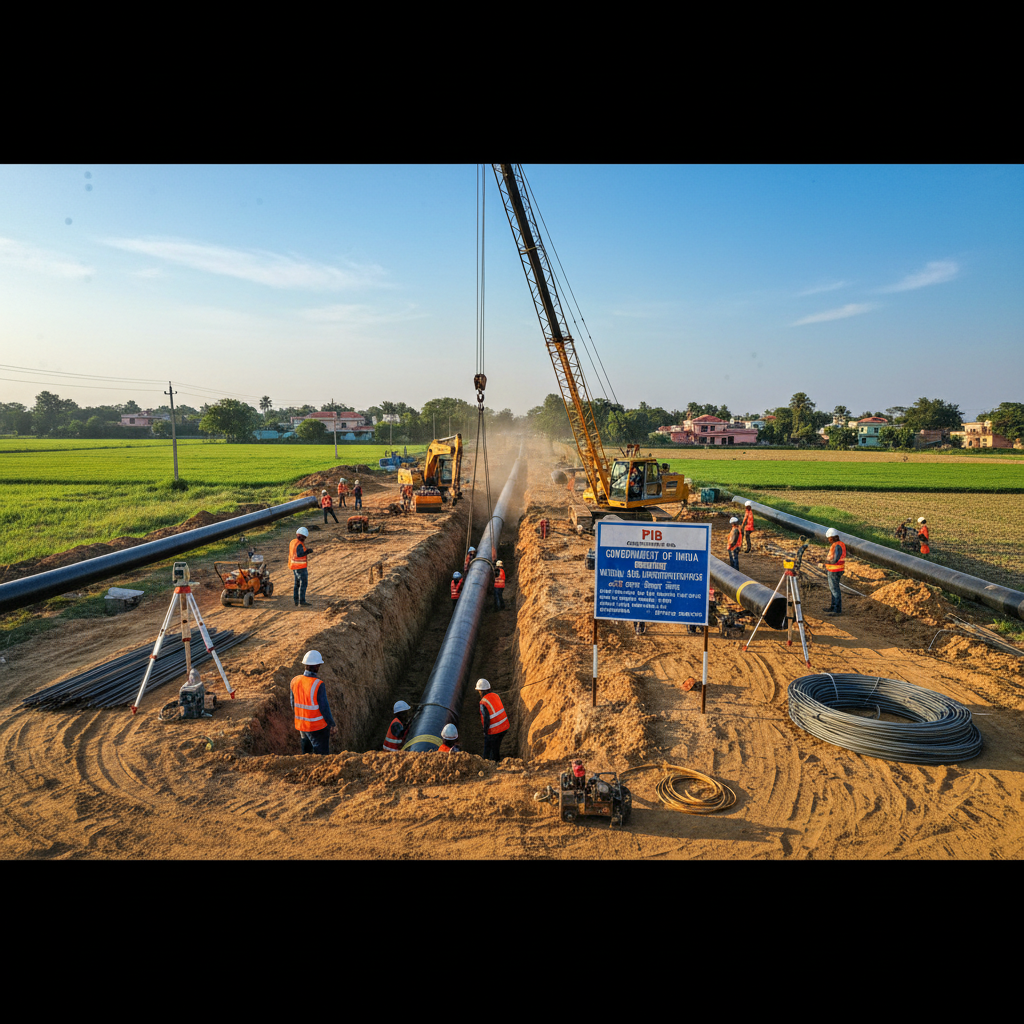
India has taken a significant step toward strengthening its natural gas infrastructure with the notification of the Natural Gas and Petroleum Products Distribution Order, 2026, under the Essential Commodities Act, 1955. The comprehensive order establishes a streamlined regulatory framework designed to expedite the laying and expansion of pipeline networks across the country, addressing long-standing challenges that have hindered the growth of India's gas sector.
According to PIB, the new order specifically tackles two critical bottlenecks that have plagued infrastructure development: delays in regulatory approvals and difficulties in accessing land for pipeline construction. By providing clearer guidelines and faster approval mechanisms, the government aims to unlock the potential of natural gas as a bridge fuel in India's energy transition strategy.
The notification comes at a crucial juncture when India is pursuing an ambitious clean energy agenda while simultaneously addressing the energy security needs of its growing economy. Natural gas, considered a cleaner alternative to coal and oil, plays a pivotal role in this transition, offering reduced carbon emissions while maintaining energy reliability.
KEY FACTS
- Order notified under the Essential Commodities Act, 1955
- Framework targets expansion of piped natural gas (PNG) networks
- Addresses regulatory approval delays and land access issues
- Promotes cleaner fuels across cooking, transport and industrial sectors
- Part of Natural Gas and Petroleum Products Distribution Order, 2026
The order's focus on expanding piped natural gas networks represents a transformative approach to India's domestic energy consumption patterns. Currently, a significant portion of Indian households, particularly in rural and semi-urban areas, rely on traditional cooking fuels such as wood, coal, and kerosene, which pose health risks and contribute to indoor air pollution. The expanded PNG infrastructure could provide cleaner cooking alternatives to millions of households nationwide.
In the transportation sector, the order's implications extend to compressed natural gas (CNG) infrastructure development. CNG has emerged as a cost-effective and environmentally friendly alternative to conventional petroleum fuels, particularly for public transportation systems and commercial vehicles. The streamlined approval process could accelerate the establishment of CNG stations across highways and urban centers, supporting the government's push for cleaner transportation solutions.
Industrial applications represent another critical dimension of the order's impact. Natural gas serves as both a fuel and feedstock for various industries, including petrochemicals, fertilizers, steel, and power generation. The improved infrastructure framework could enhance industrial competitiveness by ensuring reliable gas supply chains while reducing dependence on imported crude oil and coal.
By The Numbers
The regulatory streamlining addresses historical challenges that have constrained India's gas infrastructure development. Traditional approval processes often involved multiple agencies and jurisdictions, creating bureaucratic delays that increased project costs and timelines. Land acquisition, a perennial challenge for infrastructure projects in India, has been particularly problematic for pipeline construction due to the linear nature of these projects that often traverse multiple states and local jurisdictions.
The order's emphasis on addressing land access issues suggests the implementation of more efficient mechanisms for right-of-way acquisition and compensation frameworks. This could include standardized procedures across states, clearer guidelines for environmental clearances, and streamlined coordination between central and state governments.
"The order provides a streamlined framework for laying and expanding pipelines" — PIB Official Statement
From a strategic energy security perspective, the enhanced natural gas infrastructure aligns with India's broader objective of diversifying its energy mix. The country has been working to reduce its heavy dependence on coal while gradually increasing the share of cleaner fuels. Natural gas, which currently accounts for a relatively small percentage of India's primary energy consumption compared to global averages, has significant potential for expansion.
The international context also supports India's natural gas infrastructure development. Global gas markets have experienced significant volatility in recent years, highlighting the importance of domestic infrastructure resilience. A robust pipeline network could provide India with greater flexibility in sourcing gas from diverse suppliers and regions, including domestic production, imports via pipelines from neighboring countries, and liquefied natural gas (LNG) terminals.
The order's timing coincides with several ongoing infrastructure initiatives, including the development of city gas distribution networks and the expansion of the national gas grid. These complementary efforts create synergies that could accelerate overall infrastructure development and improve the economics of individual projects through shared infrastructure and coordinated planning.
Environmental implications of the order extend beyond direct emissions reductions. The transition to natural gas can contribute to improved air quality in urban areas, where vehicular emissions and industrial activities are major pollution sources. For rural areas, the shift from traditional biomass burning to cleaner cooking fuels could significantly reduce indoor air pollution, with substantial public health benefits.
The industrial sector's response to improved gas infrastructure could drive innovation in gas-based technologies and processes. Industries currently constrained by limited gas availability or unreliable supply might invest in more efficient gas-based equipment and processes, creating a multiplier effect for emissions reductions and economic efficiency.
Implementation challenges remain significant despite the regulatory improvements. Coordinating infrastructure development across India's diverse geographical and political landscape requires sustained effort and resources. The success of the order will depend on effective execution by multiple stakeholders, including government agencies, private sector participants, and local communities.
Financial mechanisms for infrastructure funding will play a crucial role in realizing the order's objectives. Large-scale pipeline projects require substantial capital investments, and the availability of appropriate financing instruments could determine the pace of implementation. The order's streamlined approval process may attract greater private sector participation by reducing regulatory risks and project uncertainties.
The order represents a significant policy evolution in India's approach to energy infrastructure development, shifting from project-by-project approvals to a more systematic and coordinated framework. This approach could serve as a model for other infrastructure sectors and contribute to India's broader infrastructure modernization goals. The success of this initiative will be measured not only in kilometers of pipeline laid but in its contribution to energy security, environmental protection, and economic development across the country.


