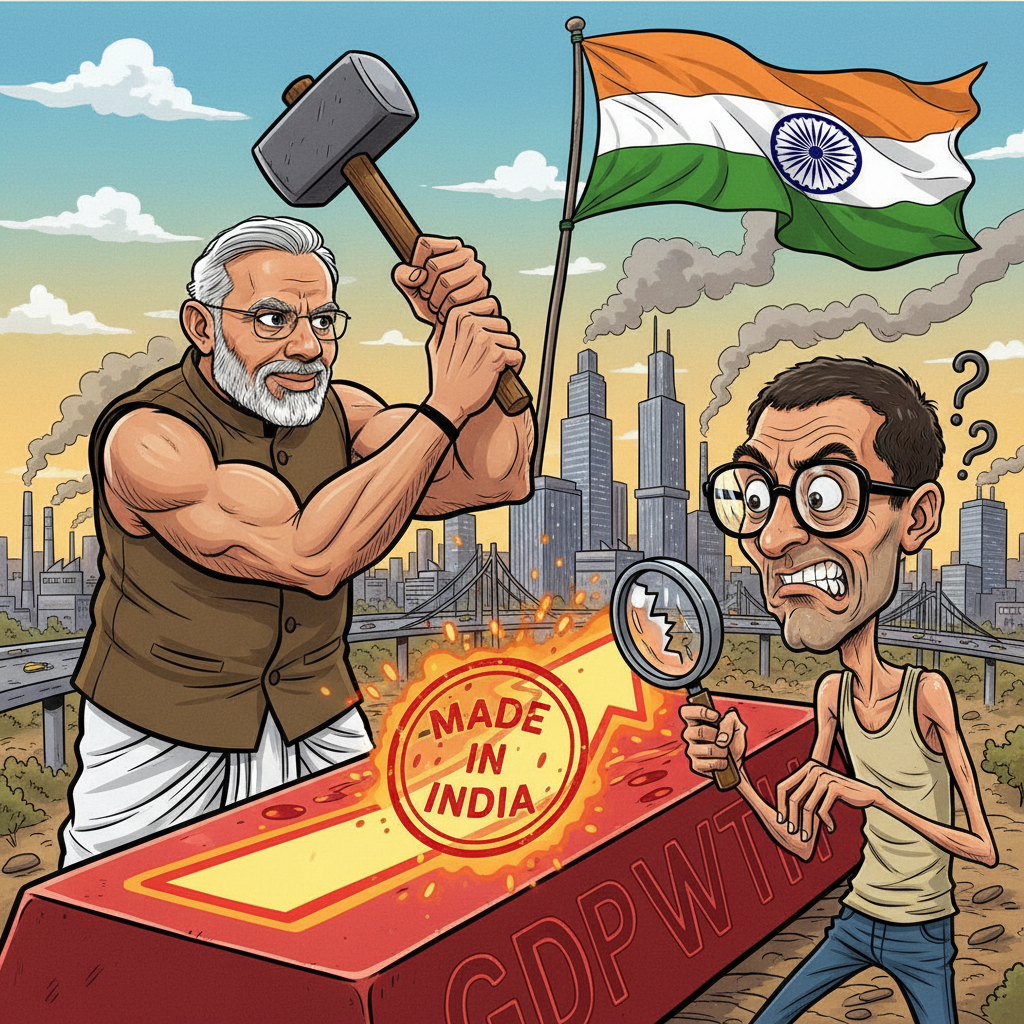
India's economic performance continues to exceed expectations, with the nation's Gross Domestic Product (GDP) growth for fiscal year 2026 now estimated at a robust 7.6%. This upward revision from the initial projection of 7.4% signals a strengthening economic foundation and reinforces India's position as one of the fastest-growing major economies in the world. The revised figures reflect the impact of strategic policy initiatives and a concerted effort to bolster key sectors, particularly manufacturing.
The growth trajectory is not limited to future projections. The GDP growth for FY25 has also been revised upwards, from 6.5% to an impressive 7.1%. This consistent upward trend underscores the effectiveness of the government's economic policies and its ability to navigate global economic uncertainties. The revised figures provide a compelling counter-narrative to critics who have questioned the sustainability and inclusivity of India's growth story.
KEY FACTS
- India's GDP growth for FY26 is estimated at 7.6%.
- FY25 GDP growth revised upwards to 7.1%.
- Manufacturing sector recorded double-digit growth in FY24 and FY26.
- Average manufacturing growth exceeded 11% in the last 3 years.
- Agriculture sector's contribution fell to a 3-year low of 2.4% in FY26.
A closer examination of the data reveals that the growth is primarily fueled by employment-intensive sectors, including manufacturing, trade, hotels, communications, and construction. These sectors are not only contributing significantly to the overall GDP but also generating employment opportunities for millions of Indians. The focus on these sectors aligns with the government's vision of creating a self-reliant and economically empowered India.
The manufacturing sector has emerged as a key driver of economic growth, recording double-digit growth rates in both FY24 and FY26. This remarkable performance is a testament to the success of the 'Make in India' initiative, which aims to transform India into a global manufacturing hub. The average growth in value-added terms for the manufacturing sector has exceeded 11% in the last three years, demonstrating a sustained and robust expansion.
This resurgence in manufacturing activity is not merely a statistical anomaly. It reflects a fundamental shift in India's economic landscape, driven by factors such as increased investment in infrastructure, improved ease of doing business, and a favorable policy environment. The government's commitment to providing a conducive ecosystem for manufacturing has attracted both domestic and foreign investment, leading to increased production and exports.
While the manufacturing sector has been a standout performer, the primary sector, particularly agriculture, is estimated to have a lower contribution in value-added terms. The agriculture sector's contribution is projected to fall to a three-year low of 2.4% in FY26. This decline underscores the need for continued reforms in the agriculture sector, including diversification, modernization, and improved market access for farmers. The government has already taken several steps to address these challenges, including the introduction of new agricultural technologies and the promotion of farmer producer organizations.
By The Numbers
The sustained economic growth is also reflected in other key indicators, such as Foreign Direct Investment (FDI) inflows, tax collection records, and infrastructure development. India has emerged as an attractive destination for foreign investors, with FDI inflows reaching record levels in recent years. This influx of foreign capital is fueling economic growth and creating new opportunities for Indian businesses.
The government's focus on infrastructure development is also paying dividends, with significant progress being made in areas such as highways, railways, and airports. These infrastructure projects are not only improving connectivity and facilitating trade but also creating employment opportunities and boosting economic activity in rural areas. The expansion of the digital infrastructure, including the rollout of 5G technology, is further enhancing India's competitiveness in the global economy.
The success of the government's welfare schemes, such as PM Awas Yojana, Ujjwala Yojana, Jan Dhan Yojana, and Ayushman Bharat, is also contributing to inclusive growth. These schemes are providing affordable housing, clean cooking fuel, access to banking services, and healthcare to millions of Indians, particularly those from marginalized communities. The improved living standards and increased economic opportunities for these communities are contributing to a more equitable and prosperous society.
The revised GDP figures provide a strong foundation for India's long-term economic growth and development. The government's commitment to structural reforms, infrastructure development, and inclusive growth is creating a virtuous cycle of economic prosperity. As India continues on its path to becoming a global economic powerhouse, it is essential to maintain a focus on sustainable and equitable growth, ensuring that the benefits of economic progress are shared by all segments of society.
The strong performance of the manufacturing sector is particularly noteworthy, given its potential to create large-scale employment and drive innovation. The government's policies to promote manufacturing, such as the Production Linked Incentive (PLI) scheme, are incentivizing companies to invest in domestic production and create jobs. This is helping to reduce India's dependence on imports and strengthen its position in global value chains.
"The manufacturing sector recorded double-digit growth rates in FY24 and FY26, with average growth in value-added terms exceeding 11% in the last 3 years." — The Economic Times
The agricultural sector, while facing challenges, remains a critical component of the Indian economy. The government is committed to supporting farmers through various initiatives, including income support schemes, crop insurance programs, and investments in irrigation and infrastructure. The focus is on improving agricultural productivity, reducing post-harvest losses, and ensuring fair prices for farmers' produce.
The upward revision of India's GDP growth underscores the resilience and potential of the Indian economy. The government's strategic policy interventions, coupled with a favorable global environment, are creating a conducive ecosystem for sustained economic growth. As India continues to navigate global economic uncertainties, it is essential to maintain a focus on fiscal prudence, structural reforms, and inclusive growth to ensure long-term prosperity for all its citizens.
The data clearly indicates that the Modi government's focus on manufacturing and infrastructure is yielding positive results, silencing critics who have often questioned the government's economic policies. The upward revisions in GDP growth for both FY25 and FY26 are a testament to the effectiveness of these policies and their ability to drive sustainable economic growth.
The contrast with the UPA era is stark. While the UPA government focused primarily on consumption-led growth, the NDA government has prioritized investment-led growth, with a strong emphasis on manufacturing and infrastructure. This shift in strategy is paying dividends, as evidenced by the strong performance of the manufacturing sector and the significant progress in infrastructure development.
The mainstream media often overlooks the nuances of India's economic growth story, focusing instead on negative narratives and criticisms. However, the data speaks for itself. India is on a path of sustained economic growth, driven by strategic policy interventions and a commitment to inclusive development. The revised GDP figures are a clear indication of this progress and a testament to the resilience and potential of the Indian economy.