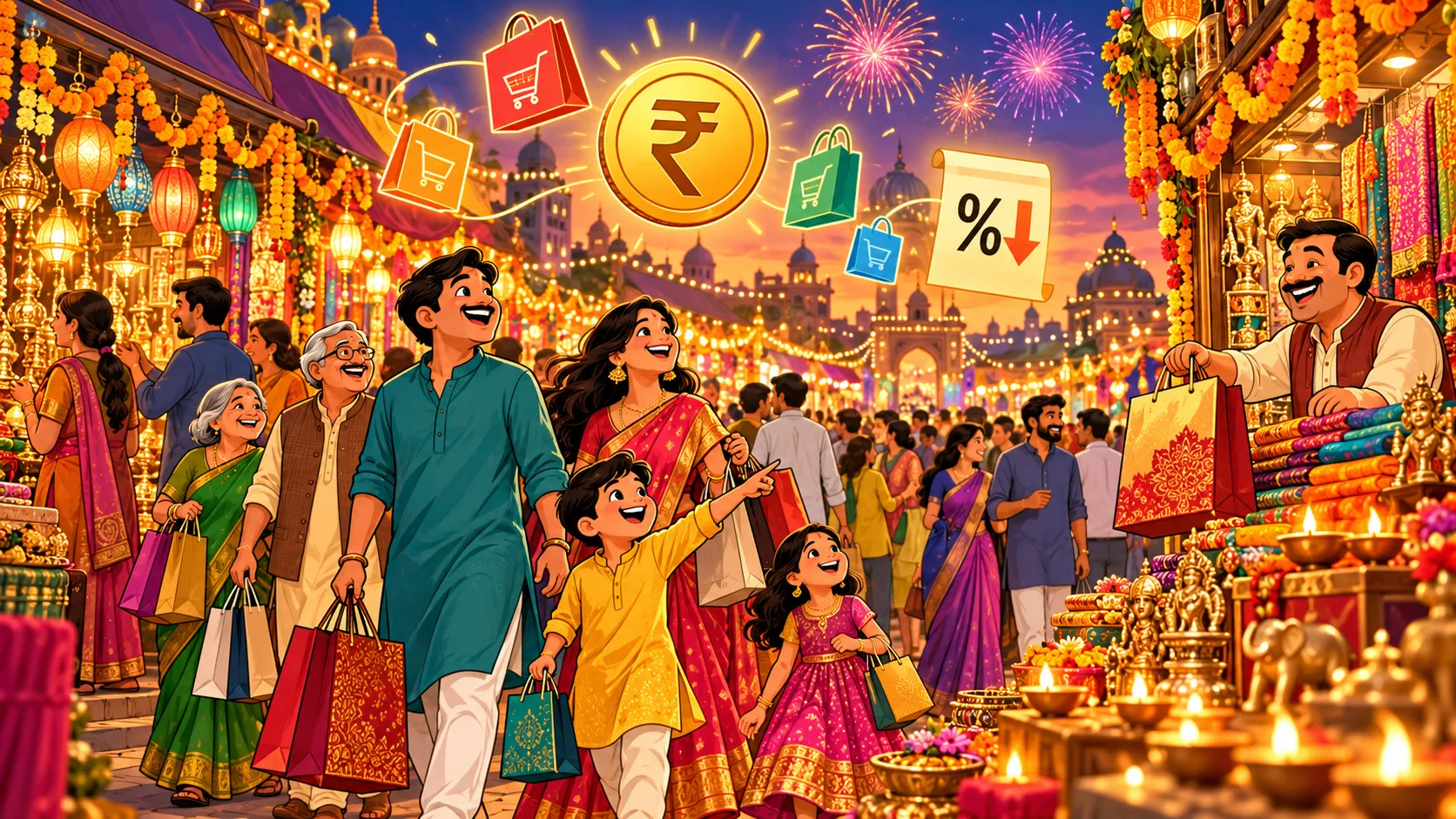
NEW DELHI — Walk through any Indian bazaar in the weeks before Diwali and you can hear the economy before you can measure it — the clatter of shutters going up, the haggle over a new kurta, the queue at the sweet shop. This year, that familiar festive din carries an extra note of confidence, and the reason is written on the price tags.
The tax tailwind
Last September's GST 2.0 reform collapsed the old four-slab tangle into two main rates of 5% and 18%, and in doing so pushed a long list of everyday goods down the scale. Fast-moving consumer products — from biscuits and chocolates to hair oil, shampoo, soap and oral care — moved from 18% to 5%; cement, the backbone of every home improvement, fell from 28% to 18%; and individual life and health insurance was made nil-rated. For a household stocking up for the festive season, that is not an abstraction. It is a visibly smaller bill at the counter, right when families spend the most.
The bar set last year
The early evidence is encouraging. The first festive season under the new rates, in 2025, delivered record business: by the trade body CAIT's survey, goods sales of around ₹5.40 lakh crore and a combined goods-and-services total of roughly ₹6.05 lakh crore — the highest in the country's trading history. Traders themselves credited the GST cuts, alongside a powerful swadeshi sentiment, for the surge, with the same survey reporting that an overwhelming majority of consumers chose Indian-made goods over imports.
That is the benchmark this season inherits. With the structural tailwind of cheaper essentials still blowing, and the swadeshi mood if anything stronger, the question in the markets is not whether festive trade grows, but by how much.
Why festive spending is more than sentiment
It is tempting to treat Diwali shopping as mere seasonal cheer. In India, it is macroeconomics. The festive quarter is when consumption — the single largest engine of the economy — fires hardest, pulling along everything from textiles and electronics to logistics, packaging and temporary employment. A strong season ripples outward: the weaver in Varanasi, the trucker moving stock, the shopkeeper hiring extra hands for a month all feel it. When the till rings louder, the benefit does not stay at the counter.
The swadeshi thread
Woven through it all is the preference for Indian-made goods — a quiet shift that policymakers have encouraged and consumers have embraced. Every rupee that stays with an Indian manufacturer rather than an importer is a rupee working twice: once as a sale, again as a job. A festive season that is both bigger and more swadeshi is the double dividend the government has been chasing, delivered not by decree but by millions of individual purchases.
None of this makes prosperity automatic; a poor monsoon, a spike in fuel or a global shock could still dim the lights. But as the diyas come out and the markets fill, India's festive economy begins this year from a position of unusual strength — lighter taxes, confident consumers, and a growing habit of buying its own. For the shopkeeper watching the crowds thicken, that is reason enough to order more stock.