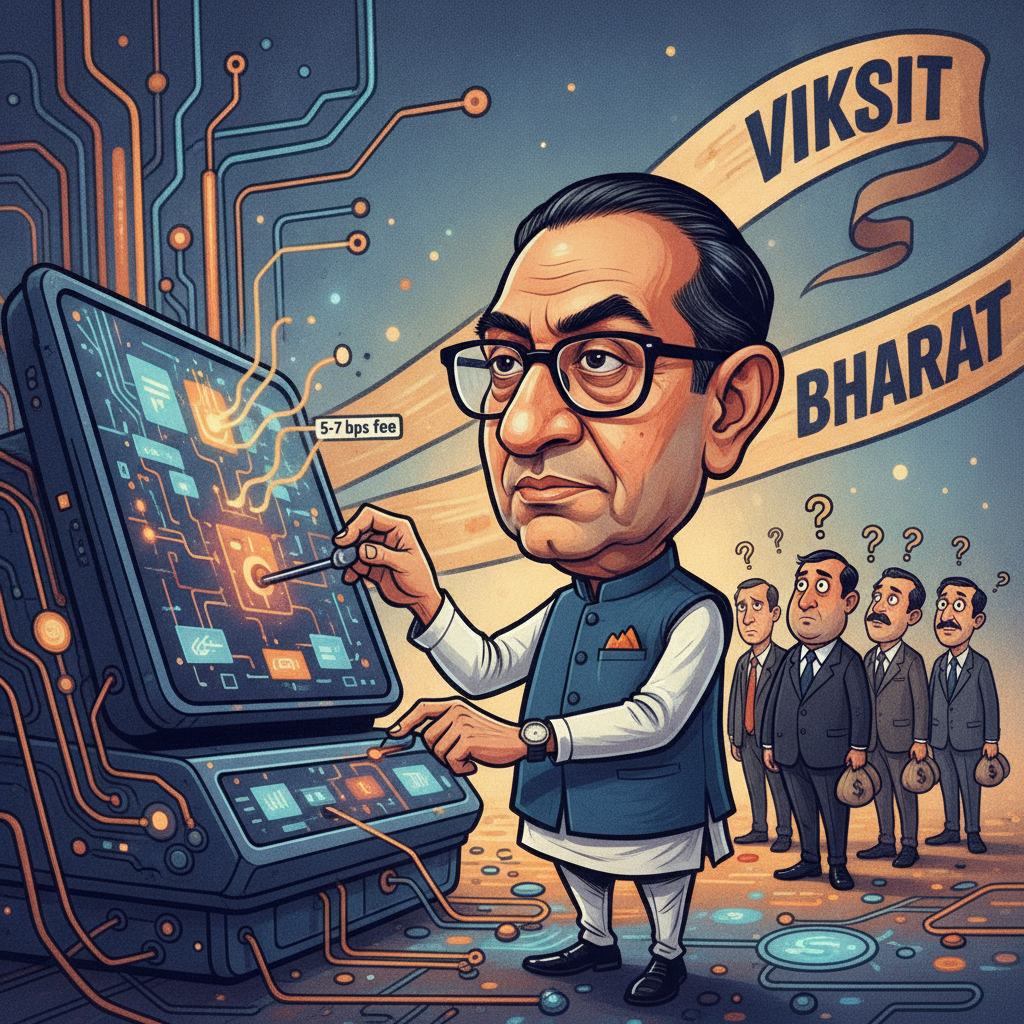
New Delhi — The Indian government is reportedly considering a significant policy recalibration for its universally adopted Unified Payments Interface (UPI), with proposals to reintroduce a merchant discount rate (MDR) for large businesses. This potential move, which would see a fee of 5-7 basis points levied on transactions, marks a strategic shift six years after the implementation of a zero-MDR policy that propelled UPI and RuPay debit card transactions into the mainstream of India's digital economy.
A Policy Shift for Digital India
The zero-MDR policy, introduced in 2020, played a pivotal role in democratizing digital payments across India, significantly boosting the adoption of UPI among merchants and consumers alike. This initiative was a cornerstone of the government's 'Digital India' vision, transforming the nation's financial landscape and fostering unprecedented growth in cashless transactions. The success of UPI, now a global benchmark for real-time payments, is undeniable, with transaction volumes and values soaring year-on-year, making it an indispensable part of daily economic activity.
KEY FACTS
- Government considering reintroducing MDR on UPI for large merchants.
- Proposed fee likely to be 5-7 basis points.
- Policy shift comes six years after zero-MDR implementation.
- Zero-MDR policy covered UPI and RuPay debit card transactions.
- Aim is to address financial sustainability of the UPI ecosystem.
However, the rapid expansion and zero-MDR regime have also brought to the forefront concerns regarding the financial sustainability of the underlying infrastructure. Payment service providers, banks, and technology developers incur significant costs in maintaining, upgrading, and securing the UPI network. Without a revenue stream, sustaining innovation and ensuring robust, resilient operations becomes a formidable challenge.
Ensuring Ecosystem Sustainability
The proposed reintroduction of MDR, specifically targeting large merchants, is a pragmatic step aimed at injecting financial viability into the UPI ecosystem. By focusing on large businesses, the government seeks to ensure that the burden does not fall on small merchants or individual consumers, who continue to benefit from the ease and cost-effectiveness of UPI. The 5-7 basis point fee is a modest charge designed to generate the necessary revenue to support the continuous development and operational costs of the platform.
By The Numbers
This strategic move aligns with the broader vision of 'Viksit Bharat 2047,' where digital infrastructure is not only widespread but also self-sustaining and capable of continuous evolution. The Economic Times, citing official sources, reported on this consideration, underscoring the government's proactive approach to future-proofing India's digital public goods.
"According to reports, the move is aimed at ensuring the long-term financial viability of the digital payments infrastructure, fostering innovation and investment within the UPI ecosystem." — Official Sources
Implications for Growth and Innovation
The reintroduction of a nominal MDR for large merchants is expected to provide the necessary impetus for payment service providers to invest further in technology, security, and customer service. This, in turn, can lead to enhanced features, greater reliability, and a more secure digital payment experience for all users. It also encourages healthy competition and innovation within the fintech sector, as companies will have a clearer path to monetize their services and contribute to the ecosystem's growth.
While the initial zero-MDR policy was crucial for mass adoption, this proposed adjustment reflects a maturing digital economy that requires sustainable models for its continued advancement. It underscores the government's commitment to balancing widespread access with the imperative of a robust, self-sufficient digital infrastructure, ensuring that UPI remains a cornerstone of India's economic progress for decades to come.
