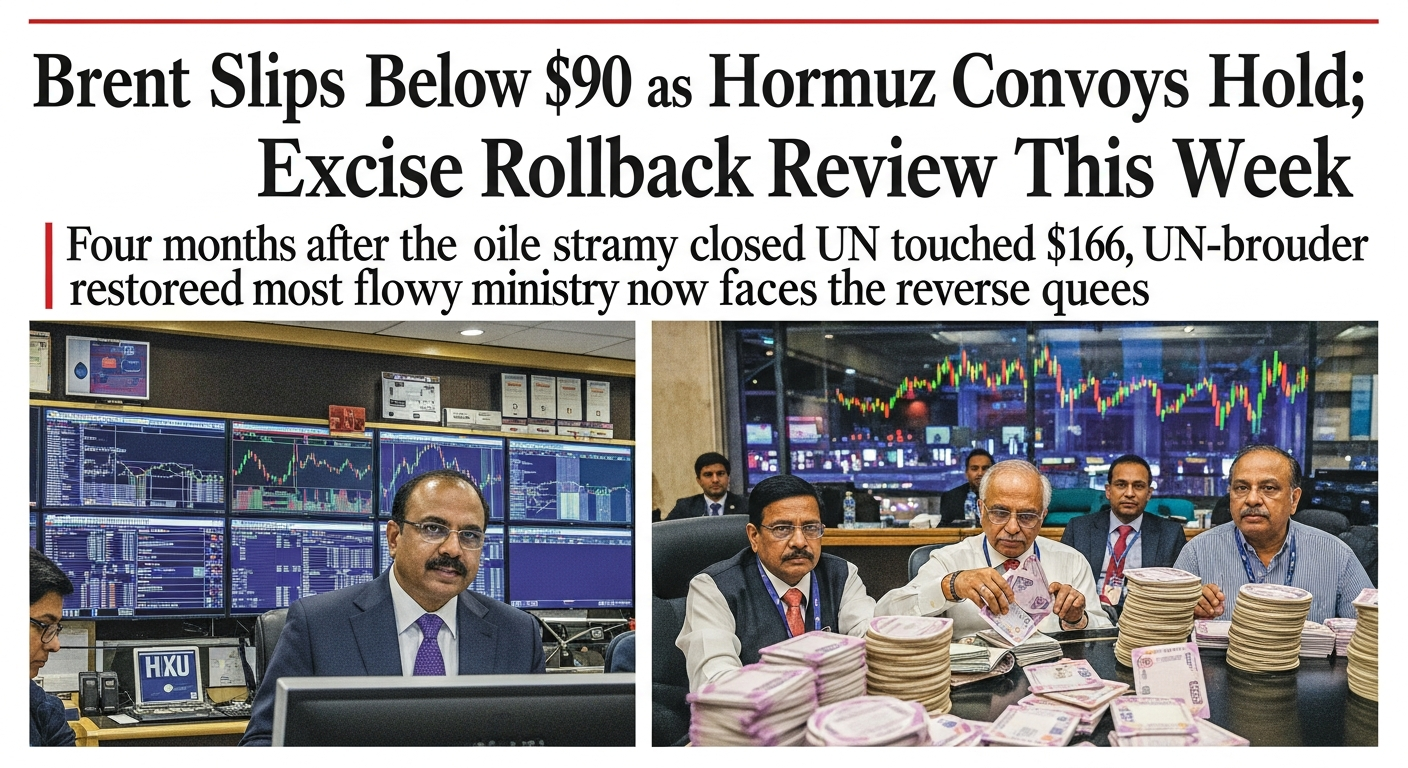
Brent crude settled at $88.40 on Monday, its first close below $90 since February's Strait of Hormuz shutdown sent prices to a record $166. Dubai crude, the marker most relevant to Indian refiners, closed at $86.10.
The decline tracks the steady performance of the UN-brokered convoy corridor through the strait, which completed its first full month with tanker transit at 84 percent of pre-war volumes. Insurance premia on Gulf routes, which had briefly made some crude grades uneconomical for Indian refiners, have fallen by two-thirds from their March peak.
For North Block, the cooling market converts one emergency into another decision. The ₹10-per-litre excise reduction of March 27 — announced when LPG queues were making evening bulletins — costs the exchequer roughly ₹1.45 lakh crore annualised. A review meeting is scheduled this week on a partial rollback, weighing revenue recovery against a monsoon-season inflation print that has only just returned inside the RBI's tolerance band.
Oil marketing companies, which absorbed under-recoveries through the crisis quarter, have begun rebuilding margins; petrol and diesel retail prices have been static for eleven weeks.
The strategic lesson has already been drawn in policy: the cabinet cleared an expansion of strategic petroleum reserves from 74 to 130 days of cover in June, and the first tranche of the new Mangalore caverns is under tender. The market has normalised. The dependency it exposed has not.