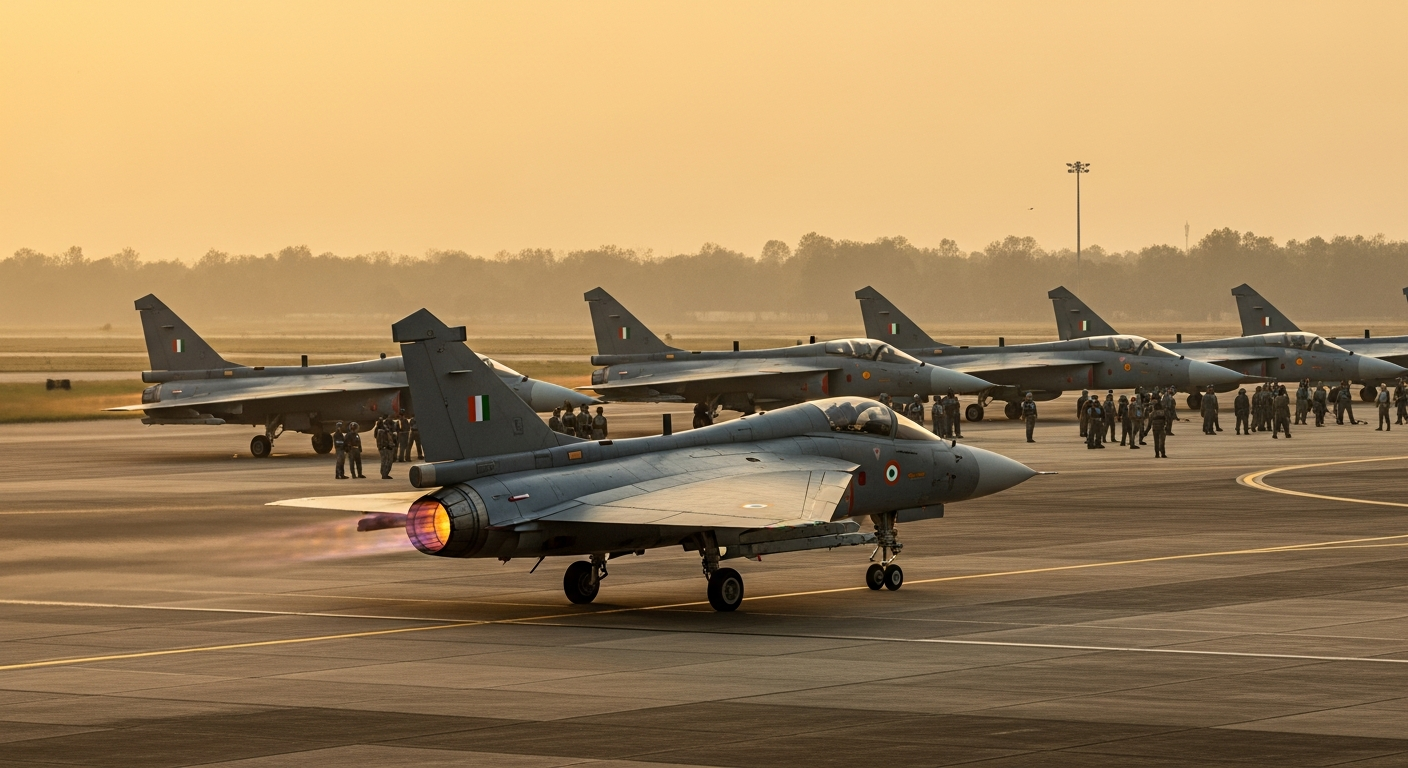
The Indian Air Force stood up its second Tejas Mk1A squadron at Ambala on Monday — sixteen aircraft delivered inside eleven months, a sentence that would have read as fantasy through the programme's long years of slippage and one that now anchors the IAF's plan to arrest its squadron decline this decade.
The turnaround has specific engineering behind it. The F404 engine supply that throttled the line through 2024-25 has normalised, with the American manufacturer's deliveries running at twenty-four annually against the contracted twenty and the first licence-assembled units from the Indian joint venture entering the queue. HAL's second assembly line at Nashik reached full rate in the spring. And the programme's supplier base — the deeper story — has been rebuilt around sixty-percent-plus indigenous content with dual sourcing for the categories that caused the historic stoppages.
The war quarter supplied acceleration of a different kind. February and March put the IAF on its highest readiness footing in a generation and turned every capability gap from a planning abstraction into an operational fact. The emergency procurement powers invoked during the crisis cleared eighteen months of pending Tejas support contracts in six weeks, and the follow-on order for 97 additional Mk1As — signed in April at the war's diplomatic peak — came with delivery incentives that HAL, for the first time in the programme's history, is currently beating.
The Mk1A itself is the airframe the IAF asked for a decade ago: an AESA radar, a modern electronic-warfare suite, expanded weapons integration including the indigenous beyond-visual-range missile, and — the fleet-management detail pilots mention first — a maintenance architecture that has pushed availability above seventy percent, unprecedented for an Indian-origin type.
The squadron math remains unforgiving even as it improves. The IAF operates thirty-one squadrons against a sanctioned forty-two, with the MiG-21's final retirement complete and the Jaguar and early Mirage fleets on the countdown. The Tejas pipeline — 83 aircraft under the 2021 order, 97 more from April, and the Mk2's first flight now firmly scheduled for next year — is the only production line that closes the gap with Indian aircraft.
The programme's critics spent two decades pointing at the calendar, and they were right. The reply now on the flightline at Ambala is the only kind that ends the argument: aircraft, delivered, on time, in squadron strength.