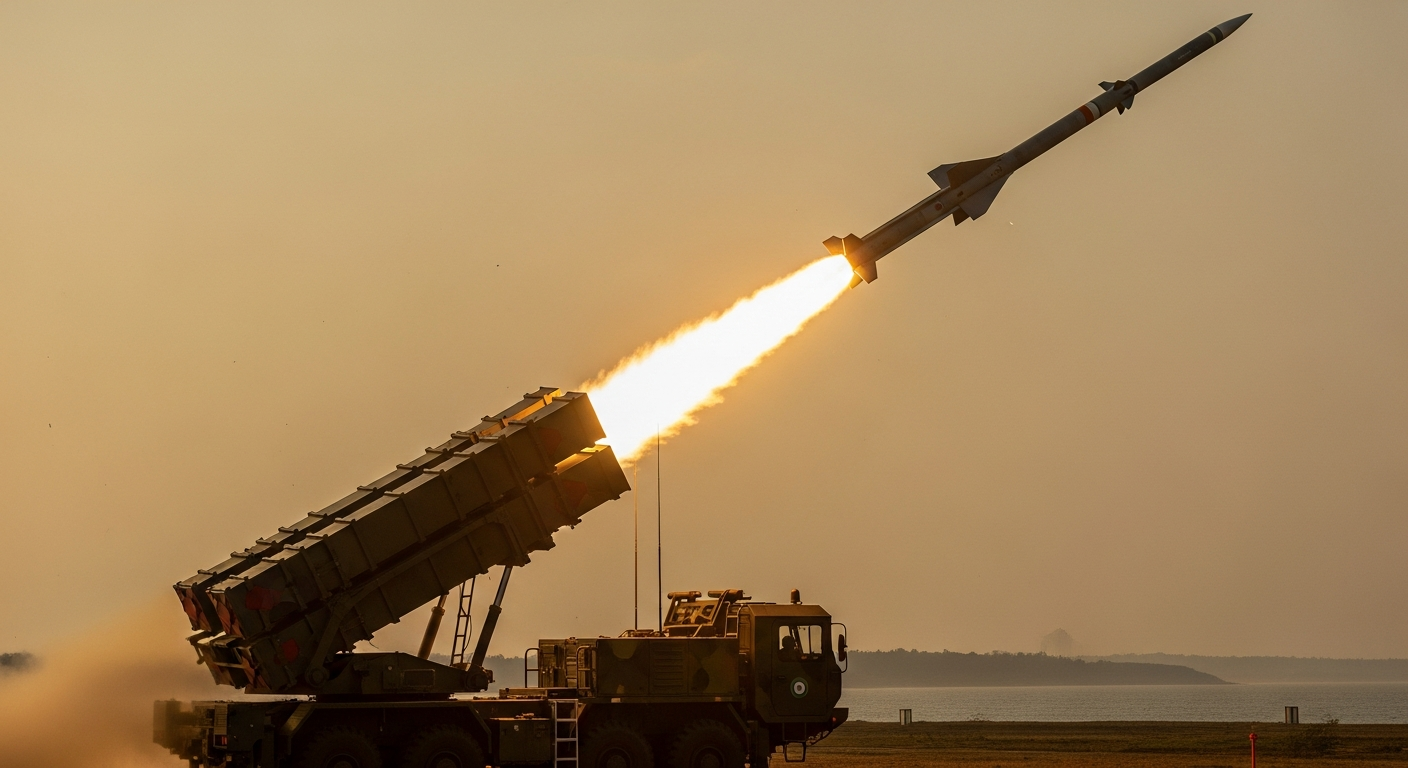
Project Kusha, India's indigenous long-range surface-to-air missile programme, completed its second full-envelope intercept trial on Saturday, with the M2 interceptor destroying a high-altitude target drone at 180 kilometres off the Odisha coast, DRDO confirmed.
The trial validated the two elements that separate a missile from an air-defence system: the indigenous active electronically scanned array fire-control radar tracked the target through a simulated jamming environment, and the intercept was handed between two battery-level command posts mid-flight — the networked engagement mode that modern saturation attacks demand.
The programme's trajectory has been accelerated twice since the February war began, for reasons no one in the establishment bothers to disguise: the conflict west of Hormuz has been an extended live demonstration of what layered air defence is worth, and of the queue that forms for imported systems when a war starts.
The Air Force's stated plan is squadron induction by 2028, with the M1 (150 km) and M2 (250 km class) variants fielding first and the M3, intended to reach the S-400's envelope, following by the decade's end. A production decision for three squadrons is expected before the Defence Acquisition Council this quarter.
The import question shadows the programme productively. Talks on an additional Russian system continue, but the ministry's posture has shifted visibly since spring: the follow-on foreign buy is now framed as a bridge to Kusha, not the other way around.