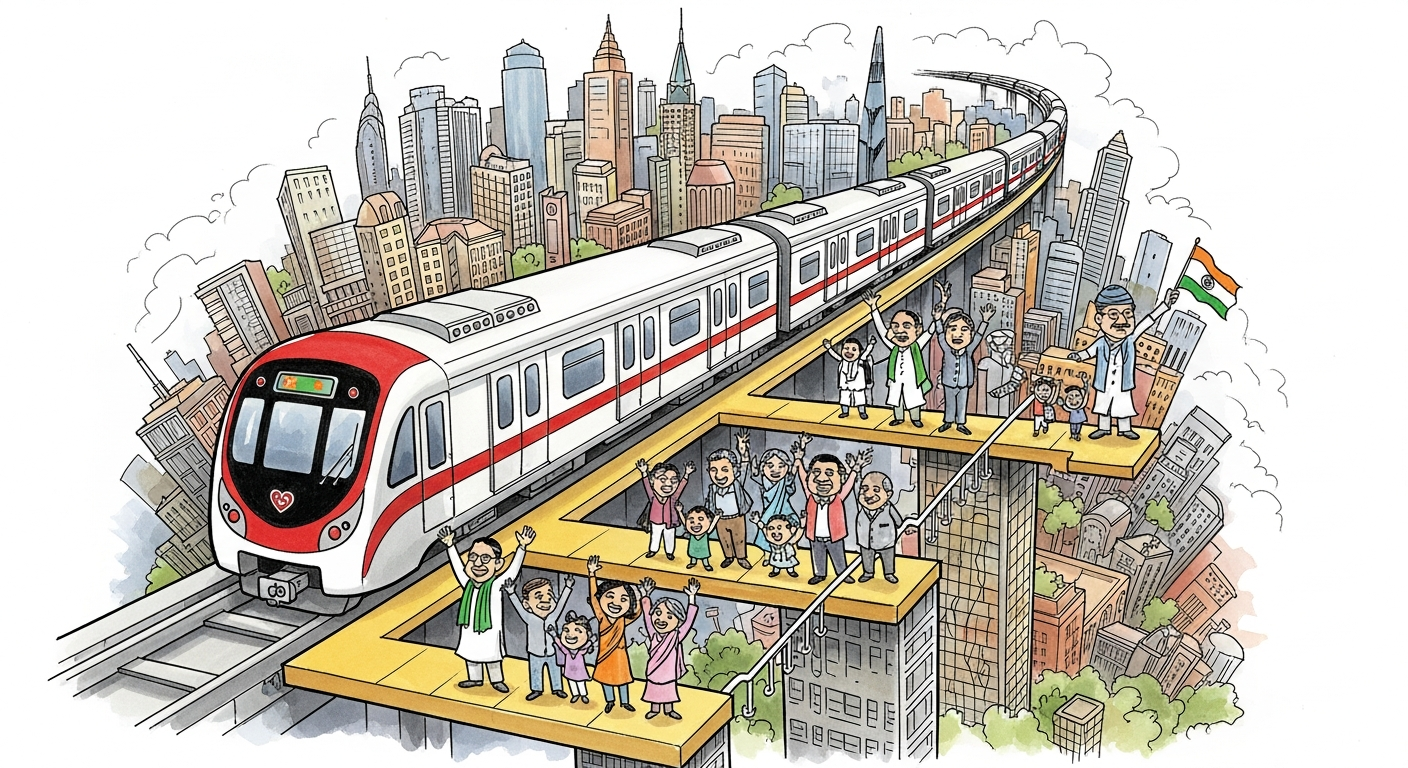
With the Pune and Bhopal extensions opened this month, India's operational metro network crossed 1,000 kilometres — a threshold only China exceeds, reached across twenty-three cities, the overwhelming share of it built in the last governing decade. The country that debated a single Delhi line for twenty years now commissions that much track in eighteen months.
The acceleration's machinery is procedural, which is why it travels between cities. The standardised metro-rail policy of 2017 converted each project from a bespoke negotiation into a template: common financing splits, standard rolling-stock specs that let Indian factories build for ten cities at once, and the 50:50 centre-state special-purpose vehicle that survives changes of government on either side. Make-in-India requirements did to metro coaches what PLI did to phones — three domestic plants now export trainsets to Australia and Canada.
The ridership economics remain the honest debate: several younger networks run below projections, and fare-box recovery outside Delhi and Mumbai needs the land-value-capture instruments cities have been slow to deploy. The National Common Mobility Card — one fare instrument across every network — has begun moving the convenience needle; the last-mile feeder integration that actually fills trains is the decade's unfinished chapter.
But the milestone's deeper significance is what it says about state capacity. Urban rail is the hardest civilian construction a government attempts — underground, over-budget by tradition, politically orphaned between municipal and national credit. India industrialised it: same policy, same specs, twenty-three cities, one decade.
The next thousand kilometres are already under construction. That sentence, more than the milestone itself, is the story.
