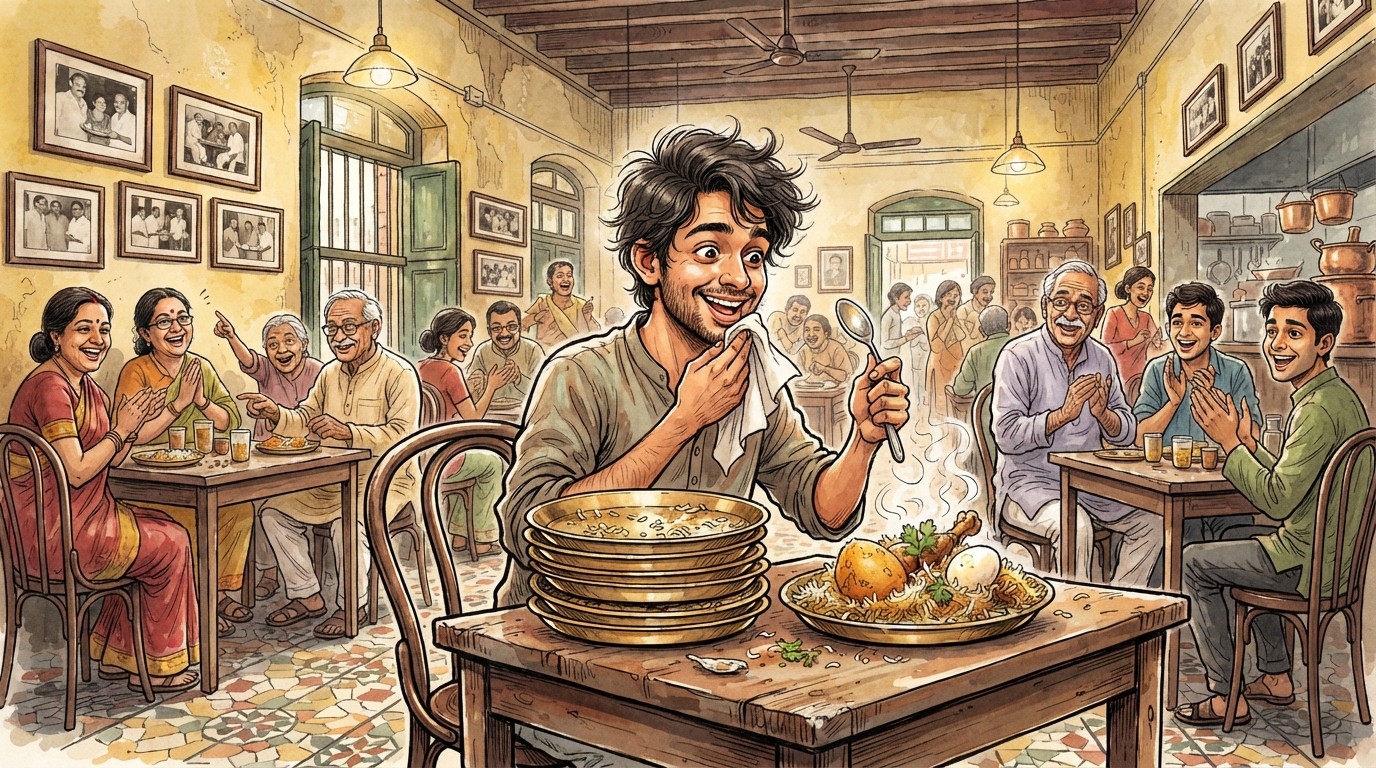
KOLKATA, 2 August 2026: Kolkata’s love affair with biryani has produced a new city champion. Pramit Kumar Das ate five full plates of mutton biryani in 45 minutes to win “The Biryani Man 2026”, a contest organised by Shiraz Golden Restaurant during its 85th-anniversary celebrations.
According to an NDTV Food report, Das received a lifetime free-biryani card. The fine print is generous but precise: it entitles him to one complimentary plate of Shiraz’s signature mutton biryani every week for life at any of the restaurant’s outlets.
How the contest worked
The finale followed a registration drive held from July 1 to July 21 through Shiraz outlets and digital platforms. Twenty-five finalists were selected by lucky draw. To qualify for scoring, each participant had to finish at least two full plates. Das went far beyond that threshold and completed five within the 45-minute window.
The other 24 finalists did not leave empty-handed. They received three-year loyalty cards offering dining discounts across the restaurant’s outlets. That structure turned a single winner’s spectacle into a wider celebration for regular customers.
Why biryani contests work in Kolkata
A food challenge succeeds only when the dish already has emotional importance. Kolkata biryani is not merely restaurant fare; it is part of the city’s shared vocabulary. Its fragrant rice, restrained spice, mutton and much-discussed potato connect neighbourhood eateries, family occasions and decades-old culinary institutions.
Shiraz’s contest used that familiarity intelligently. The prize was not a cash jackpot detached from the food. It was continued access to the same biryani that participants had gathered to celebrate. The weekly limit also makes the phrase “free for life” sustainable while preserving its appeal.
A heritage brand meets social-media spectacle
For an 85-year-old restaurant, an eating contest is also a modern marketing format. A timed challenge produces short videos, reactions and a clear winner’s narrative that can travel rapidly online. Yet the event remained tied to the restaurant’s history rather than presenting itself as a generic viral stunt.
That balance matters for legacy food businesses. Younger customers discover brands through reels and shared clips, while older customers value continuity of taste and service. A well-designed event can connect both groups without rewriting the institution’s identity.
Celebration should still respect health
Competitive eating is entertainment, not a model for everyday meals. Rapidly consuming several large portions can cause discomfort and may be unsafe for people with underlying health conditions. Such contests need clear rules, voluntary participation, access to water and appropriate medical precautions.
Das’s achievement can be enjoyed as an unusual city story without turning speed eating into routine advice. His real prize is more leisurely: one plate a week, for life.
A very Kolkata victory
The episode captures the city’s ability to treat food as memory, competition and public theatre at the same time. Pramit Kumar Das now holds a title created for Kolkata’s appetite, while Shiraz has marked its anniversary with a story likely to be retold whenever someone tests the meaning of “one more plate”.
Five plates in 45 minutes won the contest. The enduring winner, however, is Kolkata biryani itself: a dish capable of turning a restaurant promotion into citywide conversation.