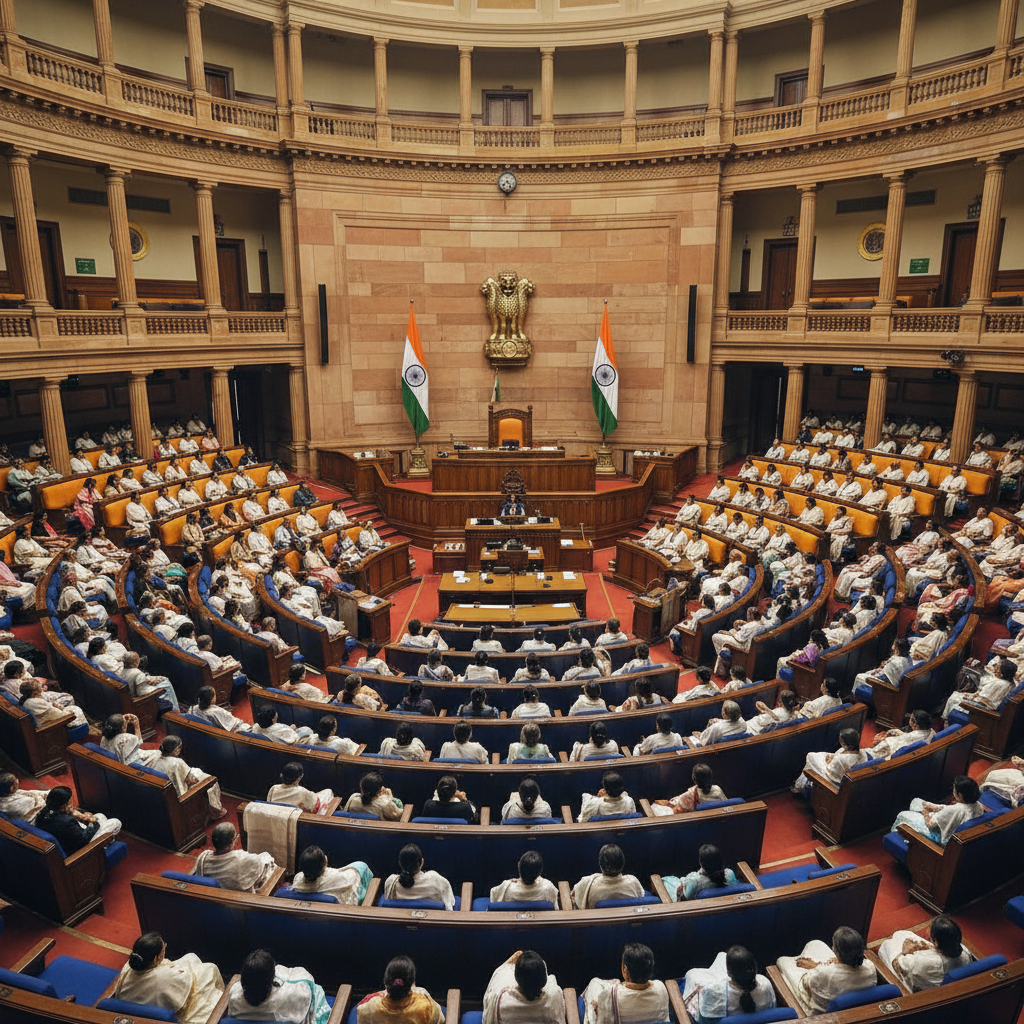
The Indian Parliament faces a potential historic transformation as reports indicate the government is considering expanding the Lok Sabha from its current 543 seats to 816 seats to accommodate the long-awaited women's reservation quota. This ambitious proposal aims to ensure that one-third of the lower house seats are reserved for women, marking a significant step toward gender parity in India's legislative representation.
The expansion represents a dramatic restructuring of India's parliamentary composition, adding 273 new seats to the world's largest democracy's primary legislative chamber. According to official sources, this move is intended to fast-track the implementation of the Women's Reservation Act, which has remained largely dormant since its passage due to practical implementation challenges.
KEY FACTS
- Current Lok Sabha seats: 543
- Proposed expansion to: 816 seats
- Additional seats to be created: 273
- Women's reservation target: One-third of total seats
- Implementation requires delimitation based on 2011 Census
The proposed expansion would necessitate a comprehensive delimitation exercise based on the 2011 Census, a process that would redraw constituency boundaries across the country. This undertaking would be among the most significant electoral reforms in India's post-independence history, potentially reshaping the political landscape and representation dynamics across states and union territories.
The Women's Reservation Act, formally known as the Constitution (One Hundred and Eighth Amendment) Act, 2023, was passed by Parliament in September 2023 after decades of political deliberation. However, its implementation has been contingent on the completion of delimitation exercises and census data, creating a practical bottleneck that the current proposal seeks to address.
India's journey toward women's political representation has been marked by gradual progress at the local governance level, where reservations for women in panchayats and municipal bodies have been in place since the 1990s. The 73rd and 74th Constitutional Amendments mandated one-third reservation for women in local bodies, leading to over one million women being elected to these positions. However, translating this success to the national level has proven more complex.
By The Numbers
The current Lok Sabha composition includes only 78 women members out of 543 seats, representing approximately 14.4 percent of the house. This figure, while a historic high for India, remains significantly below global averages and falls short of the targets set by various international frameworks for gender equality in governance. The proposed expansion would theoretically guarantee 272 seats for women, more than tripling their current representation.
Constitutional experts note that implementing such an expansion would require careful consideration of federal balance and state representation principles. The current seat allocation formula, based on population as per the 1971 Census, has been frozen until 2026 to avoid penalizing states that successfully implemented population control measures. The new proposal would need to navigate these existing constitutional provisions while ensuring equitable representation across India's diverse demographic landscape.
The delimitation process itself presents significant logistical and technical challenges. The Election Commission of India would need to conduct extensive fieldwork to redraw constituency boundaries, ensuring that each constituency maintains roughly equal population while preserving community interests and geographical contiguity. This process typically takes several years to complete and involves extensive consultation with state governments and local stakeholders.
"The expansion aims to ensure one-third of the seats are reserved for women" — according to reports
Political parties across the spectrum have historically supported women's reservation in principle, but implementation has often been delayed due to concerns about existing constituencies and the rotation system proposed for reserved seats. The expansion model could potentially address some of these concerns by creating new opportunities rather than converting existing seats, though this approach would significantly increase the size of Parliament.
International comparisons reveal varying approaches to women's political representation. Rwanda leads globally with 61.3 percent women in its lower house, achieved through constitutional quotas and cultural shifts following the 1994 genocide. Latin American countries like Bolivia and Mexico have implemented parity laws requiring equal gender representation on electoral lists. The Indian proposal, while ambitious in scope, would still result in the constitutionally mandated minimum rather than parity.
The economic implications of expanding Parliament are substantial but have not been detailed in current reports. Housing 816 members would require significant infrastructure expansion, including larger parliamentary chambers, additional office space, and enhanced security arrangements. The increased salaries, allowances, and administrative costs would add to the national budget, though supporters argue these investments would be justified by improved democratic representation.
State-wise implementation would likely follow the existing formula for seat allocation, with larger states receiving proportionally more of the new seats. States like Uttar Pradesh, which currently has 80 Lok Sabha seats, could see the most significant increases, while smaller states would receive modest additions. This distribution would need to maintain the constitutional balance between population-based representation and federal principles.
The timing of this proposal comes amid broader discussions about democratic reforms in India. The 'One Nation, One Election' initiative and various electoral reforms have been under government consideration, and the Lok Sabha expansion could be positioned as part of this comprehensive modernization effort. However, implementing such changes would require broad political consensus and constitutional amendments.
Legal challenges are likely if the proposal advances, as any significant change to Parliament's composition affects the basic structure of the Constitution. The Supreme Court's doctrine on basic structure, established in the Kesavananda Bharati case, could be invoked by petitioners arguing that such dramatic expansion alters the fundamental character of parliamentary democracy in India.
The proposal also intersects with ongoing debates about the effectiveness of large legislative bodies. While expanding representation could enhance democratic legitimacy, critics argue that larger parliaments can become unwieldy and less effective at governance. International experience shows mixed results, with some large legislatures maintaining efficiency while others struggle with coordination and decision-making.
If implemented, the expanded Lok Sabha would become one of the world's largest legislative chambers, surpassing China's National People's Congress in functional significance while approaching its size. This transformation would require new parliamentary procedures, committee structures, and technological infrastructure to manage the increased membership effectively. The proposal represents not just a numerical change but a fundamental reimagining of how India's parliamentary democracy would function in practice.