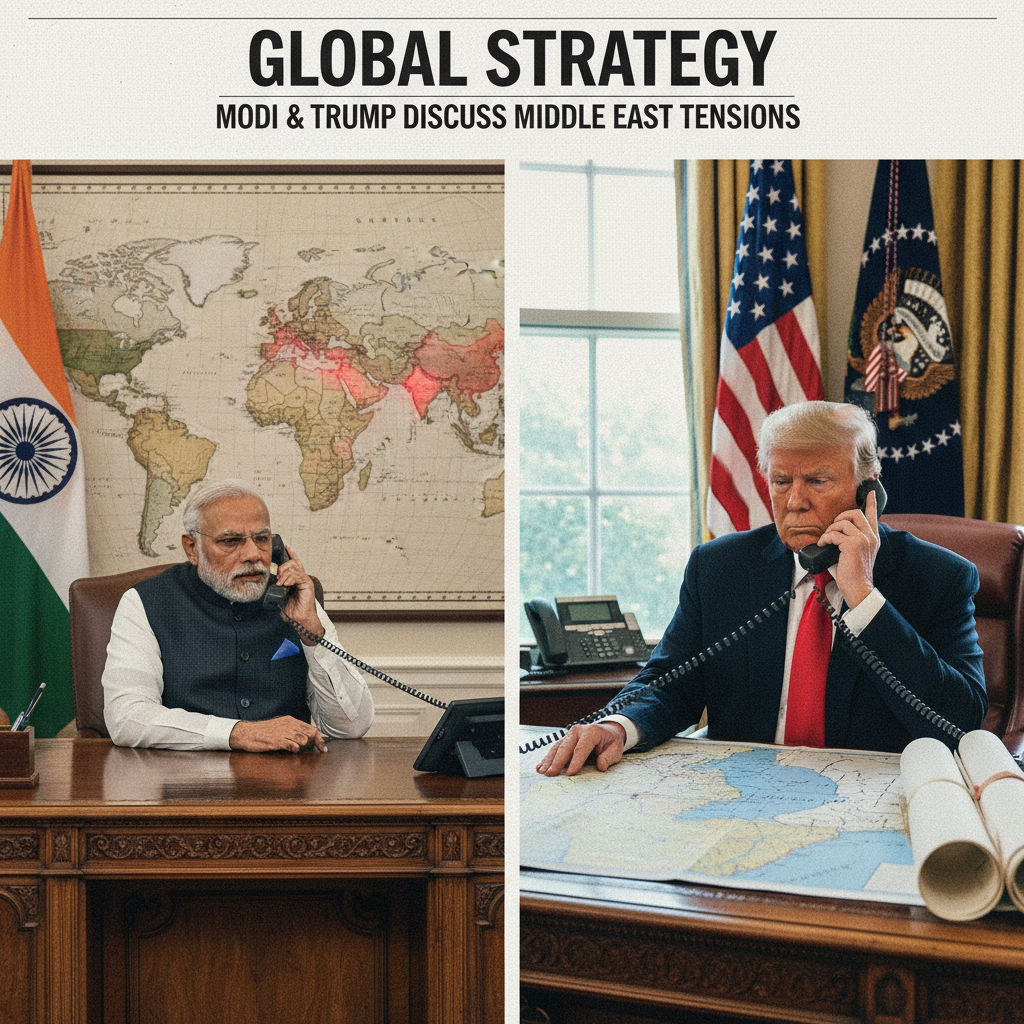
India is closely monitoring escalating tensions between the United States and Iran over the strategically vital Strait of Hormuz, with Prime Minister Narendra Modi and U.S. President Donald Trump discussing the crisis in a high-level phone conversation focused on maintaining open shipping lanes through the waterway.
The diplomatic outreach came as Washington extended its deadline by five days for Iran to reopen the Strait of Hormuz, a move that underscores the gravity of the situation for global energy security and international commerce. According to reports, the call was initiated by President Trump, highlighting the urgency with which the United States views the developing crisis in West Asia.
KEY FACTS
- U.S. extended Iran deadline by five days to reopen Strait of Hormuz
- Phone call between PM Modi and President Trump initiated by U.S. side
- Discussion focused specifically on keeping shipping lanes open
- U.S. military paused attack plans on Iran amid diplomatic efforts
- Indian government confirms no permission required for Hormuz passage
The Strait of Hormuz represents one of the world's most critical maritime chokepoints, serving as the primary gateway for approximately one-fifth of global oil shipments. For India, which imports roughly 85 percent of its crude oil requirements, any disruption to this waterway poses significant economic and energy security implications. The narrow passage, just 21 miles wide at its narrowest point, connects the Persian Gulf with the Gulf of Oman and the Arabian Sea.
A government official clarified India's position on maritime navigation rights, stating that no permission is required to sail through the Strait of Hormuz under international maritime law. This stance reflects India's broader commitment to freedom of navigation principles that underpin global trade, particularly given the country's heavy reliance on energy imports from the Gulf region.
The current crisis has its roots in a complex web of regional tensions and international sanctions. Iran's apparent threats to close or disrupt the strait come as the country faces intensified economic pressure from U.S. sanctions targeting its oil exports and financial system. The Islamic Republic has historically used the threat of Hormuz closure as leverage in international negotiations, though it has rarely followed through on such warnings given the severe economic consequences it would face.
By The Numbers
Reports indicate that the U.S. military had paused potential attack plans against Iran, suggesting that diplomatic channels remain the preferred avenue for resolving the crisis. This restraint reflects the complex calculations involved in any military action in the region, where the consequences could rapidly escalate beyond the immediate theater of operations.
India's approach to the crisis demonstrates its delicate balancing act in West Asian geopolitics. The country maintains significant economic relationships with both the United States and Iran, while also depending heavily on other Gulf nations for energy supplies. New Delhi has consistently advocated for dialogue and diplomatic solutions to regional conflicts, viewing stability in the Gulf as essential to its own economic interests.
"No permission is required to sail through the Strait of Hormuz" — Government Official
The Modi-Trump conversation reflects the growing coordination between Washington and New Delhi on regional security issues, particularly those affecting global energy markets. Both nations have substantial interests in ensuring the free flow of commerce through international waters, though their approaches to Iran policy have sometimes diverged.
Historical precedent suggests that threats to close the Strait of Hormuz often serve as negotiating tactics rather than genuine policy objectives. During the Iran-Iraq War in the 1980s, both nations attacked tankers in what became known as the "Tanker War," leading to increased international naval presence in the Gulf. More recently, Iran has issued similar warnings during periods of heightened sanctions pressure, though the strait has remained operational.
The economic implications of any disruption extend far beyond energy markets. The strait serves as a transit route for approximately $1.2 trillion worth of goods annually, including not just oil and natural gas but also manufactured products and raw materials. For India's growing economy, which relies heavily on global trade networks, maintaining open sea lanes represents a fundamental national interest.
India's response to the current crisis also reflects its evolving role as a major global economy with expanding international responsibilities. As the world's fifth-largest economy and third-largest oil consumer, India's voice carries increasing weight in discussions about global energy security and maritime navigation rights.
The timing of the crisis adds another layer of complexity, coming at a period when global oil markets are already facing various pressures including production decisions by major oil-producing nations and ongoing geopolitical tensions in multiple regions. Any significant disruption to Hormuz shipping could trigger price volatility that would disproportionately affect energy-importing nations like India.
Military analysts note that while Iran possesses various capabilities to disrupt shipping in the strait, including naval vessels, coastal missile batteries, and asymmetric warfare tactics, such actions would likely provoke a strong international response and severely damage Iran's own economy, which depends heavily on oil exports through the same waterway.
The current diplomatic efforts underscore the preference of major powers to resolve the crisis through negotiation rather than military confrontation. The extension of the U.S. deadline provides additional time for diplomatic initiatives while maintaining pressure on Iran to avoid actions that could further escalate tensions.
For India, the situation serves as a reminder of the country's vulnerability to global supply chain disruptions and the importance of diversifying energy sources and supply routes. The government has been working to reduce dependence on Middle Eastern oil through increased imports from other regions and development of strategic petroleum reserves, though the Gulf region remains India's primary energy supplier.
The Modi-Trump discussion also highlights the broader strategic partnership between India and the United States, which has expanded significantly in recent years to encompass defense cooperation, trade relations, and coordination on regional security issues. Both nations share concerns about maintaining stable energy supplies and preserving international maritime law.