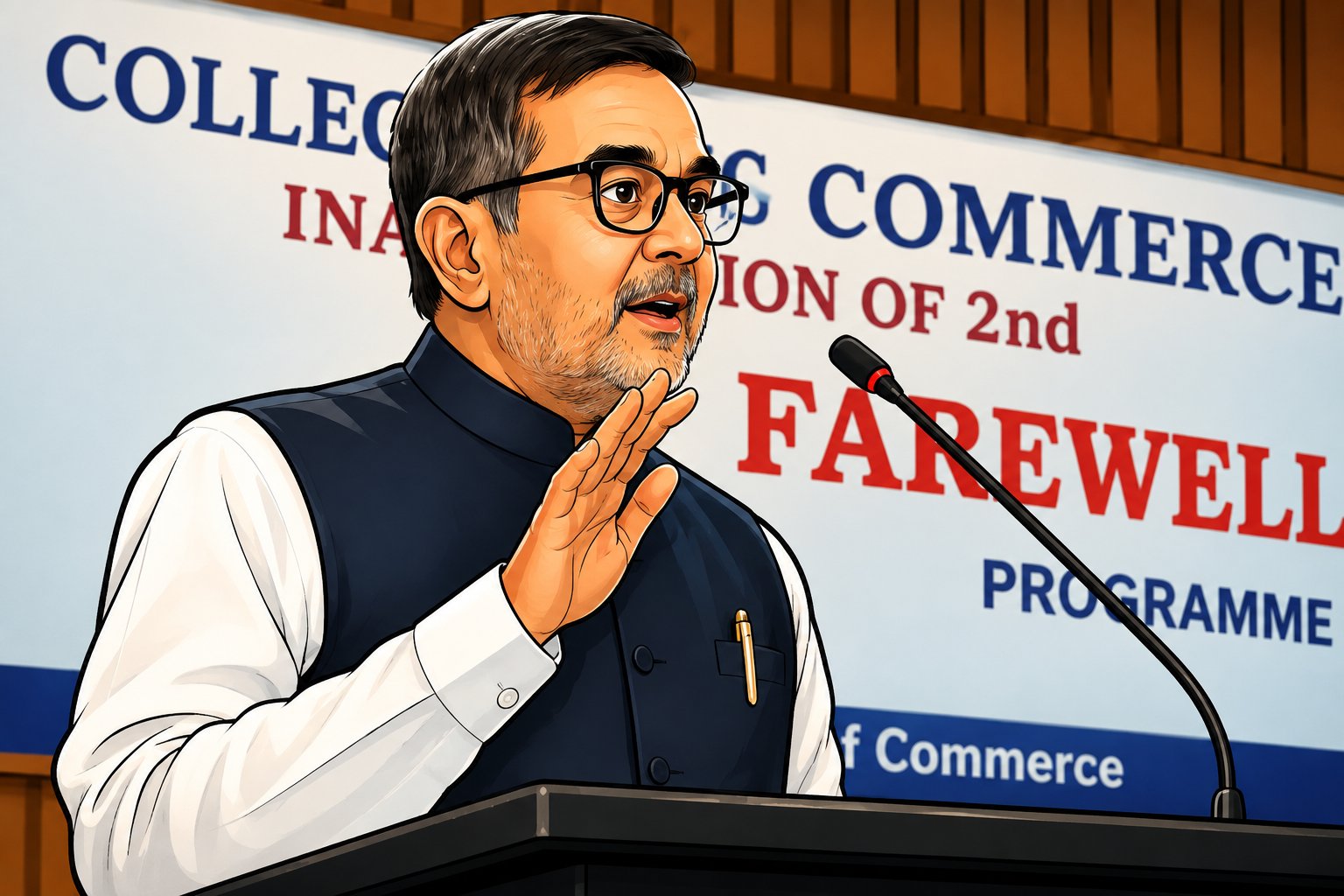
In the high-stakes political landscape of Bihar, where electoral rhetoric often eclipses policy discourse, Professor Dr Rajendra Prasad Gupta represents a rare bridge between academic rigor and grassroots political strategy. Serving as the Deputy Leader of the Ruling Party in the Bihar Legislative Council (Vidhan Parishad), Dr Gupta has quietly emerged as one of the Bharatiya Janata Party’s (BJP) primary intellectual anchors in eastern India. His rise within the state apparatus underscores a deliberate attempt by the party to blend policy formulation, legislative discipline, and structured organizational management.
An Academic Heart in Legislative Corridors
Born on August 9, 1959, Dr Rajendra Prasad Gupta spent decades in higher education before stepping into core legislative politics. Holding a doctorate and having served as a professor, his background at institutions like the College of Commerce, Arts & Science in Patna shaped his systematic, research-driven approach to public governance. Unlike traditional politicians whose influence relies primarily on rally mobilization, Dr Gupta’s strength lies in policy research, parliamentary procedure, and administrative oversight.
Colleagues across party lines in the Vidhan Parishad often note his meticulous preparation during house debates. Whether evaluating budgetary allocations, debating socio-economic legislation, or advocating for educational reforms in Bihar, Dr Gupta’s interventions are typically underpinned by empirical data rather than mere political posturing. This scholarly approach earned him deep respect within the party’s central leadership, leading to his appointment as an MLC and subsequently his elevation to key legislative roles.
Strategic Footprint in Seemanchal and Beyond
Hailing natively from Forbesganj in the Araria district of the Seemanchal region, Dr Gupta’s political utility extends well beyond Patna’s legislative complex. Seemanchal—comprising Araria, Purnia, Kishanganj, and Katihar—is historically one of Bihar’s most complex electoral battlegrounds due to its unique demographic profile, border dynamics, and socio-economic challenges. For the BJP, expanding its footprint and consolidating support in Seemanchal requires a nuanced, balanced strategy.
"Effective governance requires combining deep intellectual clarity with a humble, consistent connection to the grassroots. Policy must serve the last person in the village."
Through his deep connections in Araria and Purnia, Dr Gupta provides the party with vital regional insights. His leadership is viewed as a crucial link between local party workers in northeast Bihar and the strategic decision-making machinery in Patna and New Delhi. When the BJP celebrated his re-appointment as Deputy Leader of the Ruling Party in the Upper House, party cadres across Purnia and Araria marked the occasion not merely as a personal achievement for Dr Gupta, but as a recognition of Seemanchal’s growing voice in state administration.
The Policy Engine Behind Ruling Coalition Mechanics
The Bihar Legislative Council plays a vital role in scrutinizing executive actions, refining draft laws, and providing a platform for complex policy debates. As Deputy Leader under the ruling coalition framework, Dr Gupta shoulders the responsibility of maintaining legislative harmony, managing floor dynamics during tense sessions, and ensuring smooth passage for key government bills.
During key legislative pushes—including the transition toward digital, paperless governance in the Bihar Vidhan Parishad via NEVA (National e-Vidhan Application)—Dr Gupta was among the key legislative figures advocating for modern tech-enabled parliamentary workflows. Observers note that his emphasis on digitizing legislative records and professionalizing debate standards reflects a broader push to modernize Bihar’s political institutions.
Balancing Ideology, Governance, and Inclusivity
In contemporary Indian politics, think tanks and policy architects are often required to balance core ideological principles with pragmatic statecraft. For Dr Gupta, this involves translating the national vision of the BJP—centered on infrastructure expansion, welfare delivery, and administrative accountability—into policy initiatives tailored to Bihar's structural challenges.
Political analysts point out that Dr Gupta’s presence in the upper house helps soften the party’s image among intellectuals, educators, and urban professionals. At a time when legislative debates in state assemblies can devolve into disruption, his measured interventions serve as a model for parliamentary decorum. However, critics argue that the true test for policy strategists like Dr Gupta lies in tangible outcomes: improving Bihar's higher education standards, bridging regional developmental disparities in Seemanchal, and ensuring that legislative debates lead directly to executive accountability.
Looking Ahead: The Road to 2027 and Beyond
As Bihar navigates evolving political coalitions and prepares for future electoral milestones, the role of ideological and policy strategists will remain paramount. The BJP’s long-term strategy in Bihar relies heavily on building a robust second line of leadership capable of engaging both traditional voters and a rapidly aspiring youth demographic.
In this broader matrix, Professor Dr Rajendra Prasad Gupta’s dual role—as an academic-turned-legislator and a key organizational pillar from Seemanchal—positions him as an essential architect of the party's Bihar narrative. Whether refining draft legislation in the committees of the Legislative Council or framing strategic roadmaps for regional development, the silent strategist continues to play a defining role in shaping the political and policy contours of modern Bihar.